


 Shkruar nga Pamfleti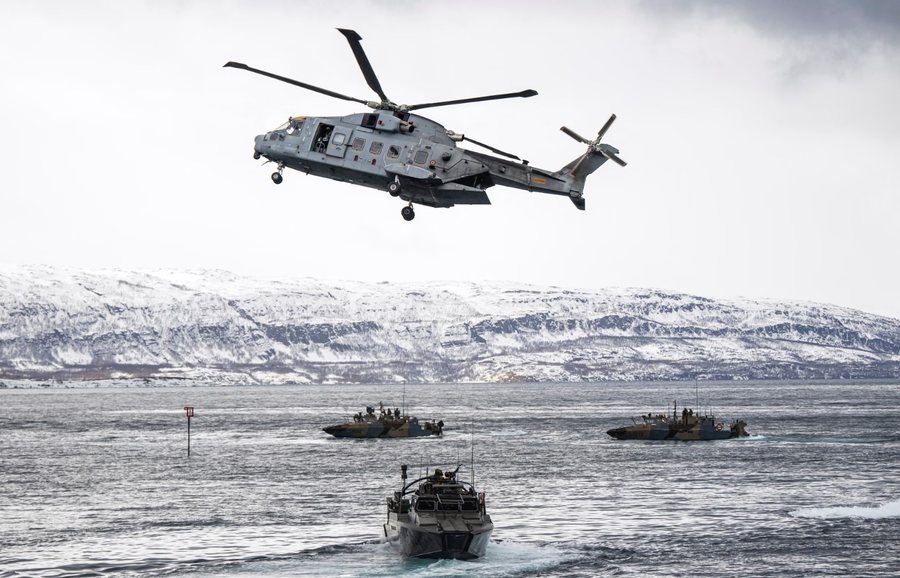
The NATO chief has carefully dismissed the possibility of 'survival' without US support, but in the Trump era, arguments for autonomy are growing...
NATO Secretary-General Mark Rutte was clear and direct during a meeting this week with members of the European Parliament in Brussels: “If anyone thinks that the European Union, or Europe as a whole, can defend itself without the US, keep dreaming. You can’t. Neither can we.”
He also warned that if Europe wants to replace American nuclear deterrence, current defense spending must double, a major challenge that he described with irony: "So, good luck!"
His comments angered some MEPs. The former Dutch prime minister, known for his straightforward style and comical moments when he called Donald Trump "Dad", had previously worried some MEPs by defending the US president's interests in the Arctic.
French Foreign Minister Jean-Noël Barrot later responded: “Europeans can and must take responsibility for their own security. The US agrees. This is the European pillar of NATO.”
While Spanish Foreign Minister José Manuel Albares proposed a more ambitious approach: “We must move towards a European army,” emphasizing that Europe needs all kinds of deterrence, economic, political and military, in its hands.
However, a European army has always raised more questions than answers: Will it be an EU army, or a European army? A new force from Brussels, or a reinforced version of existing structures?
Sophia Besch, senior fellow at the Carnegie Endowment for International Peace, noted: “For supporters, it is a visionary goal, while for critics it is a symbol of excess, and it is so vague that we never discuss the details.”
Behind the often contradictory public tone, there is a consensus that European NATO members should contribute more. Kaja Kallas, the EU’s foreign policy chief, said this week: “NATO must become more European to maintain its strength. Europe must rise up. No great power in history has delegated survival and survived.”
The NATO alliance pledged last year to increase defense spending to 5% of national income by 2035. The EU, which includes 23 of the 27 NATO countries, has launched an 800 billion euro spending plan. But after a long period of historical inaction, can Europe act decisively?
Camille Grand, former deputy secretary general of NATO, told The Guardian: “The Europeans are moving in the right direction and they can do it. This requires a sustained effort over several years and the acquisition of the right capabilities to reduce dependence on the US.”
However, Europe's ability to remain independent does not have a precise start date. Grand said: "We cannot say that on January 1, 2030, Europeans will be fully autonomous."
But the date matters, because policymakers, responding to warnings from security services about a possible Russian attack, say Europe must have a credible deterrent by 2030.
From the perspective of military planners, 2030 is “tomorrow,” but Europe can make significant progress in strategic capabilities such as intelligence, satellites, long-range missiles, airlift and ballistic defense. Grand added that this also requires “honest conversations with the US” to get some American capabilities beyond 2030.
However, Trump's threats about Greenland and his inconsistent stances on Ukraine have called into question Washington's engagement in the crisis.
Tobias Billström, the former Swedish foreign minister who helped his country join NATO, remains convinced that the US would come to Europe's aid if Article 5 of the collective defense treaty were to be invoked. He stressed that the US benefits from NATO, especially from the location and military capabilities of Arctic members such as Finland, Sweden, Norway and Iceland.
Billström, now at Nordic Air Defence, a start-up developing low-cost drone interceptors, warns: “Regardless of the outcome of the war in Ukraine, Russia will remain retaliatory and committed to hybrid action. It will have very clear incentives to be aggressive towards us for the foreseeable future.” / Adapted from “The Guardian”






Lini një Përgjigje