


 Shkruar nga Abbas Milani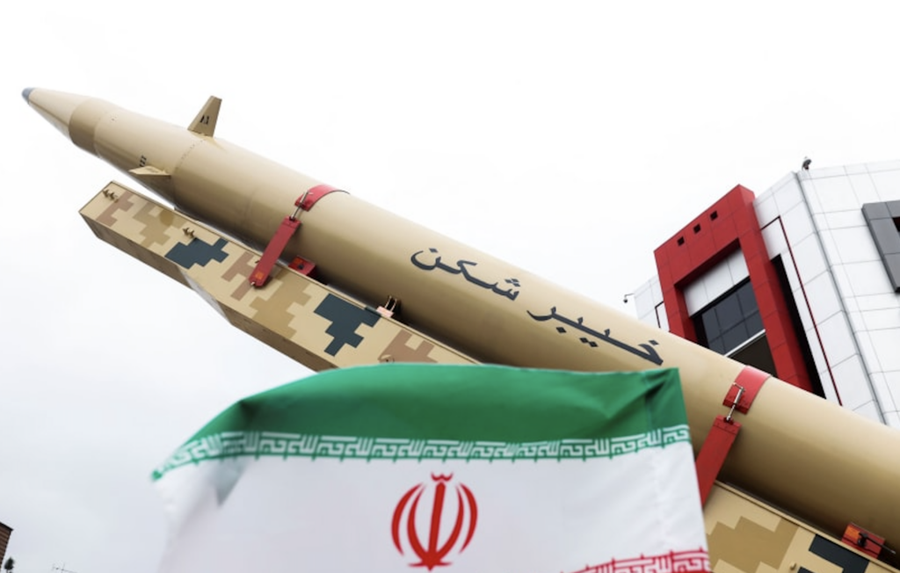
Israel, the US, or Russia cannot and should not determine Iran's future.
Because of Supreme Leader Ayatollah Ali Khamenei, Iran has spent nearly four decades in conflict with Israel, which he calls a "cancer" in the region that must be destroyed. Without regime change by the people of Iran, there can be no long-term stability and development there and in the region.
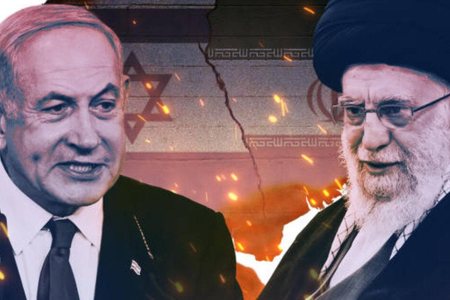
According to an ancient Iranian aphorism, when a madman throws a stone into a well, it takes 10 wise men and women to pull it out. The madman was Iran’s Supreme Leader, Ayatollah Ali Khamenei, currently isolated due to massive Israeli attacks. And now many people in Iran and around the world are trying to save the well. Because of Khamenei, Iran has spent nearly four decades in conflict with Israel, a state he calls a “cancer” in the region that must be destroyed. At the same time, the regime managed to avoid a confrontation that was unwanted by the Iranian people, but also unjustified in terms of national interest.
Iran’s rulers could rely on bluffs and self-aggrandizement, proxy militias like Hezbollah, Hamas in Gaza, or the Assad regime in Syria, the reluctance of many Israelis to risk a full-scale war, but also on the ability to use its nuclear program to win concessions from Western powers. That was until a few days ago. The regime had many warning signs about its great weakness at home and isolation in the region. Then came the return of Donald Trump to the White House, Israel’s brutal but efficient destruction of Hezbollah in Lebanon and Hamas in Gaza, economic collapse – evident in the massive devaluation of the currency, truckers’ strikes, and severe gas and electricity shortages – and a growing wave of civil disobedience by women, due to the forced covering of the face and body with the headscarf.
But rather than soften their stance, Iran’s leaders resorted to their old playbook: bombastic boasting that they were capable of building a nuclear bomb while insisting that their nuclear program had never had any military component. They also wasted a lot of time on the ridiculous question of whether negotiations with the Trump administration for a new nuclear deal should be “direct” or “indirect.” After all, Khamenei had declared categorically that there should be no direct talks with the “Great Satan.”
While in its labyrinth of self-deception, the regime failed to grasp the extent of its weakness, Israeli Prime Minister Benjamin Netanyahu acted differently. Faced with a growing chorus of Israelis demanding an end to the humanitarian catastrophe it had caused in Gaza, Netanyahu found the moment to launch a long-awaited and carefully prepared attack.
Israel’s extraordinary infiltration of Iran’s security apparatus allowed it to destroy Iranian defenses in a short time, killing two-thirds of its top military and intelligence commanders in the first two days of the attacks. And whether intentional or not, Trump’s offer to negotiate seems to have lulled the regime into complacency. The regime and its ideological backers have repeatedly blamed others, especially the West, Israel, and Saudi Arabia, for every failure they have faced.
Of course, each of the latter has made grave mistakes at times. Israel's ongoing violence in Gaza against innocent Palestinians - who, like the Iranians, are hostages to a radical nihilistic ideology - is a concrete example. Netanyahu has also poisoned a well that others will have to save with great wisdom and prudence. As in the case of the Palestinians, the lives of innocent Iranian citizens must also be protected. The people of Iran and their democratic aspirations are the only hope for regime change.
Israel, the US or Russia cannot and should not determine Iran’s future. However, the West and Israel need a clear short- and long-term strategy to advance this goal. Such a strategy must include an immediate cessation of violence against civilians. Of course, like Hamas in Gaza, the regime in Iran has built many military installations and enrichment centers in residential neighborhoods. Urging Tehran’s 14 million citizens to evacuate so that Israel can destroy these facilities is to use a cure that is worse than the disease.
On the other hand, any agreement with this brutal and hypocritical regime will be broken as soon as its leaders believe they have been freed from their current predicament. Therefore, the only solution to Iran’s nuclear conundrum is a democratic Iran, which means supporting democratic voices within Iran, aided by voices in the Iranian diaspora.
More than 10 years ago, my colleague Siegfried Hecker and I wrote an article suggesting that Iran, starting with the Shah in the 1970s, should have followed South Korea's example and given up highly enriched uranium in favor of civilian nuclear technology.
We argued that uranium enrichment only raises doubts about the peaceful purposes of a nuclear program. It is impossible to predict how a democratic society could handle such a complex issue, even in the best of times. But only a democratic Iran can resolve this debate.
Without regime change by the people of Iran, there can be no long-term stability and development there and in the region. Democratic societies are much more likely to choose what Aristotle once called the Golden Mean, seeking the middle ground between extremes.
In any case, Iran, a regional example for the past century, where the average age of the population is only 32 years old, cannot help but benefit from the end of a regime steeped in the dogmatism of a centuries-old cabal./ Adapted from "Pamphlet" by "Project Syndicate"
*Note: Abbas Milani, director of the Iranian Studies Program at Stanford University, USA.




Lini një Përgjigje