


 Shkruar nga Rami G.Khouri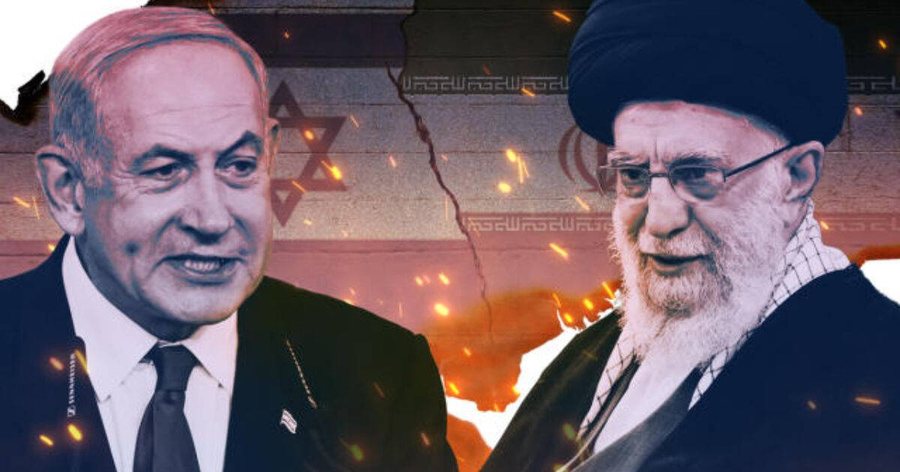
No one knows what awaits Israel or Iran, whether there will be a way out of the war, or whether the US will join it. However, some dynamics are decisive...
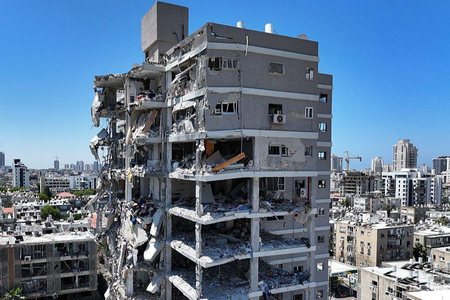
Israel’s attacks on military, civilian, and infrastructure facilities across Iran, and repeated Iranian retaliatory attacks against targets throughout Israel, have shaken the existing balance of power throughout the Middle East.
But the grave consequences of this new war for the region, the world economy, and energy supplies will only become clear in the coming weeks. It is already clear that Israel’s surprise attack did not deal a devastating blow to Iran’s nuclear sector, its military assets, or its regime.
Meanwhile, missile and drone attacks from Iran on Israel suggest that this war could continue for weeks or longer. The media and public political sphere are now overloaded with propaganda and wishful thinking from both sides, making it difficult to discern the results and impacts of the war.
For now, we can only expect the fighting to continue for several weeks or longer, and for key facilities in both countries to be attacked, as the Israeli Ministry of Defense and the Weitzman Institute were attacked a few days ago, along with nuclear facilities, airports, military assets, and oil production facilities in Iran.
So, interested observers and analysts should remain humble and patient, while unfolding events clarify the critical dimensions of this conflict, which have long been dominated by propaganda, wishful thinking, displays of force, strategic deception, and nationalist ideological fantasies.
This round of fighting between the US and Israel on one side and Iran on the other has sparked global reactions, indicating that this is another battle between Western imperial/colonial powers and those in the Middle East and the Global South, who are resisting this centuries-old onslaught of control, subjugation and chaos.
We cannot yet know where this war will lead, but we can identify several vital dimensions that we should monitor closely as the battles unfold.
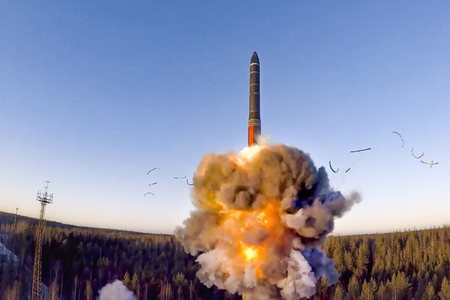
First, continued attacks by Iran and Israel will clarify their respective offensive and defensive capabilities, particularly in terms of missiles, drones, and defenses available against them.
Iran has been anticipating such an attack for at least a decade. Therefore, we must assume that it has also planned many counterattacks, while reinforcing its key military and nuclear research facilities.
Second, we will soon discover the true role of the US in this war, although it is fair to say that the Israeli attack is being seen as a joint US-Israeli effort. This is because of Washington's almost complete responsibility for financing, equipping, maintaining, supplying and defending the Israeli armed forces.
But also the defense of Israel at the UN, the International Criminal Court and other forums, or even the shared political goals of both countries to overthrow the Islamic Republic and replace it with a puppet regime, subservient to Israeli-American priorities. Trump claims that this is not his war.
Third, Israel's attacks on Iran, Palestine, Syria, Yemen, Iraq, and Lebanon can only happen because of the US's legal commitment to Israeli military superiority in the Middle East. The entire Middle East, and much of the world, sees this as a war between the US, Israel, and Iran.
Fourth, we will soon learn what non-military weapons each side can use to weaken the other. Missiles and drones are a start, but we should expect unconventional warfare attacks against civilian, infrastructure, digital, and financial sector targets that make life difficult for everyone.
Fifth, another important factor that will only become clear over time is how this conflict affects domestic politics in both countries. Iran and Israel each suffer from deep internal divisions and dissatisfaction with their regimes. So the way the war plays out could fragment and weaken each country, or unite their citizens.
Sixth, it is important to see how Arab leaders will react to events, especially those who chose to develop much closer financial, trade, and defense ties with the US, as we saw during Trump's recent visit to the Persian Gulf last month.
Over the past three years, some Arab leaders have sought closer, neighborly relations with Iran, while others have moved closer to Israel. Arab leaders and governments who choose the US and Israel as their main allies, especially in the security field, while continuing attacks on Gaza and Iran will provoke anger and opposition from most of their people.
This will make governments more autocratic, which will only worsen the legacy of modern Arab autocrats who ignore the rights and well-being of their people.
Seventh, if Washington becomes more directly involved in defending Israel, we are likely to see a backlash from voters in the US, especially among Trump supporters who do not want the US to be involved in further wars.
Eighth, the coming weeks will test the reach and capabilities of Iran’s allies across
the Middle East, particularly Hezbollah, Hamas, Ansar Allah in Yemen, and the Popular Mobilization Forces in Iraq. All have been weakened recently by Israeli-American attacks, and both their willingness and ability to support Iran are unclear.
Ninth, Israeli Prime Minister Benjamin Netanyahu sees this attack as the latest step in his strategy to reorganize the Middle East, to make all states dependent on Israeli approval of their strategic policies. Some are already dependent.
And tenth, we will find out in time whether this strategy will reorganize the Arab-Middle Eastern dynamics, or the internal Israeli-American ones. The cost of this war to Israeli citizens is a great but vital unknown. Israelis now know how people in southern Lebanon or Gaza feel.
Millions of Israelis have been displaced, have emigrated or have taken refuge in bunkers and safe rooms. This comes after two decades, in which all Arabs, including the Palestinians and Hamas, have expressed their willingness to coexist peacefully with Israel, if Israel recognizes the right of the Palestinians to national self-determination, and the relevant UN resolutions that aim to guarantee the security and legitimacy of the state of Israel and Palestine.
The US-Israeli attack on Iran will intensify the forces that are already destroying the legacy of international law and the UN system in the Middle East, and in much of the world. / Adapted from "Pamphlet" "New Arab"
*Note: Rami G. Khouri, associate at the American University of Beirut and the Arab Center in Washington.



Lini një Përgjigje