


 Shkruar nga Pamfleti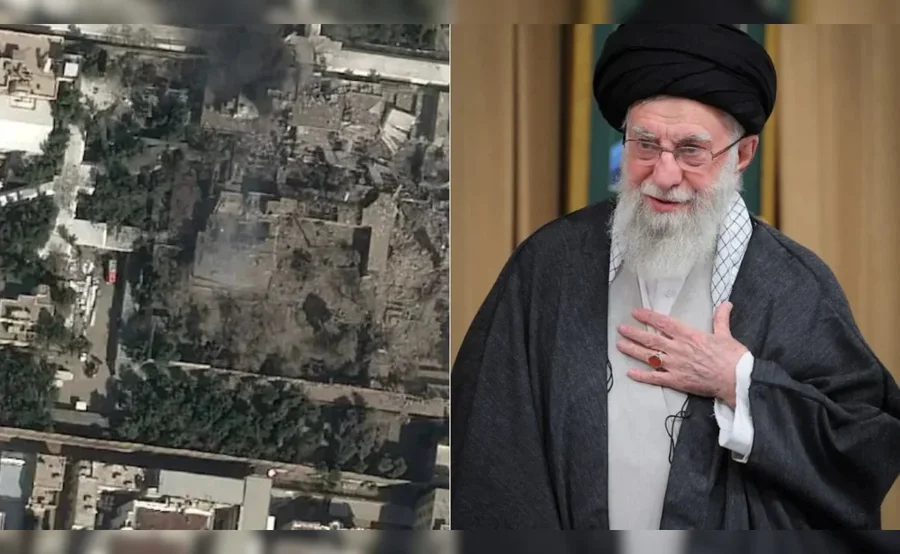
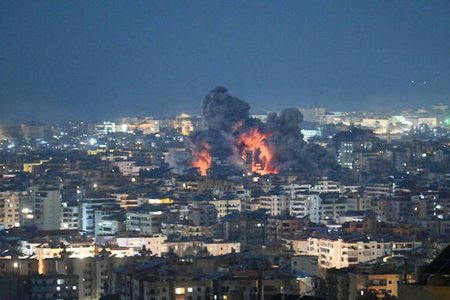
Iran's leadership is publicly rejecting any possibility of negotiating with US President Donald Trump to end US-Israeli attacks, but behind the scenes, secret efforts appear to be underway to initiate contacts.
According to officials briefed on the matter, a day after the attacks began, Iranian intelligence officials approached the CIA indirectly through a third-country intelligence agency, proposing to discuss terms for ending the conflict.
According to the New York Times, US officials are skeptical that this initiative is a genuine effort to reduce tensions. They say that, at least for now, neither the Trump administration nor Iran seem willing to seek an immediate way out of the war.
The White House and the Iranian government did not respond to requests for comment, and the CIA also declined to make any statement.
However, this contact raises a crucial question: whether there are still officials in Iran who could broker a ceasefire agreement, at a time when the country's leadership is in turmoil and its top officials are being killed in Israeli strikes.
Israeli officials, who want a protracted military operation that would inflict maximum damage on Iran's military capabilities and potentially topple the country's government, have urged the United States to ignore this approach. For now, the proposal is not seen as serious in Washington.
Trump himself, after leaving the possibility of negotiations open for days, wrote on social media Tuesday that it was now “too late” to talk to Iran. Speaking to reporters later, he noted that many of the Iranian officials the US had considered as potential future leaders have already been killed in strikes.
This covert approach and the destabilization of the Iranian leadership highlight the fundamental dilemma facing Washington: what form of power might emerge in Iran after the war. Initially, Trump had spoken of the possibility of a popular uprising that would overthrow the regime. Now he seems more pragmatic, considering the possibility of more moderate forms of power emerging from within the existing political system.
However, Trump administration officials are expected to demand that Iran abandon or drastically limit its nuclear program, ballistic missile program and support for groups like Hezbollah as a condition for ending the bombings. In exchange, Trump has hinted that he may allow Iran's surviving leaders to retain their political and economic power.
The US president has even cited the example of Venezuela as a model for a possible solution. After Maduro's arrest, his successor agreed, under threat of further pressure, to hand over control of oil exports to the US with limited conditions for political reform.
However, analysts warn that the development of the crisis in Iran is extremely difficult to predict. Before the attacks began, the CIA had prepared an intelligence assessment of possible scenarios regarding the form of leadership that could emerge after a military operation. According to officials, none of the scenarios was associated with a high degree of certainty, since the unknown factors are numerous.
Some consider it unlikely that the opposition will take power. More attention is being paid to the possibility that a group of Revolutionary Guard officers will emerge as the dominant force.
At the same time, analysts warn that the Iranian state could lose control in remote areas of the country dominated by ethnic minorities, such as the Kurds, or even collapse completely, leading to chaos and violence similar to that seen in the civil wars in Syria and Libya.
It also remains uncertain whether a popular uprising would lead to a Western-friendly regime. Some analysts believe that a new state emerging from a war is unlikely to develop into a liberal democracy.



Lini një Përgjigje