


 Shkruar nga Pamfleti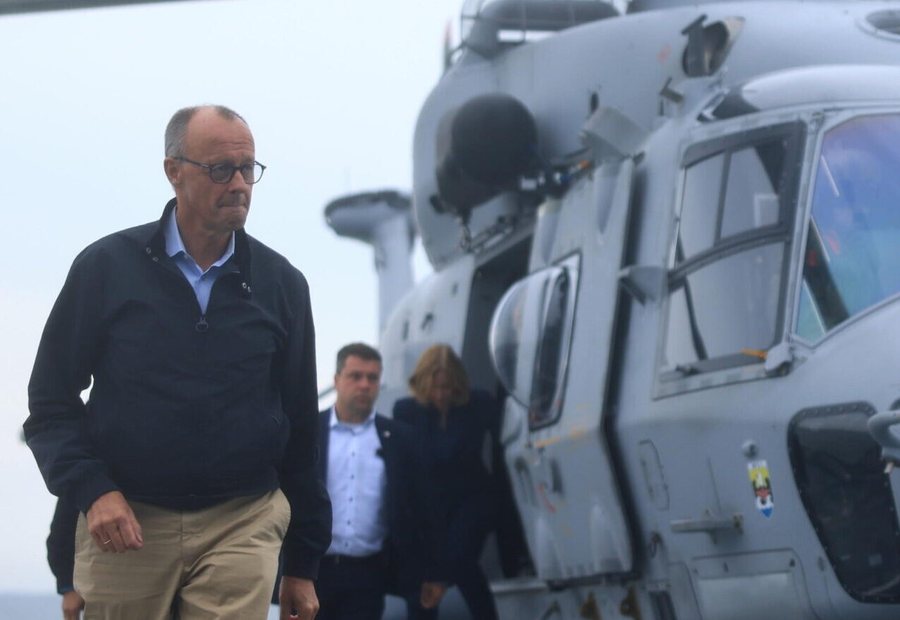
Berlin is preparing to become a logistics hub in the event of war...
As Berlin hospitals grapple with leaking roofs, flooded basements during heavy rains and understaffed wards, the Berlin Senate and the Bundeswehr are drawing up a comprehensive plan to protect civilian healthcare facilities. The aim is to make Berlin war-ready.
In the event of a conflict with Russia, the capital would have to serve, within a few days, as a logistics center for materials, personnel and, above all, wounded from the eastern fronts of the war. This issue was reported by the Berliner Zeitung newspaper.
MP Alexander King of BSW, Sahra Wagenknecht's party in the Berlin parliament, submitted written questions to the Senate again. The answers, obtained exclusively for the newspaper, paint a disturbing picture of Europe's most populous country, which is in fact preparing for war.
Over 1000 injured every day
First, the NATO summit in Riga in 2023 was taken as a starting point, where resilience objectives for civil infrastructures, including transport, media and healthcare, were set. On this basis, in July of this year, the senator responsible for health, Ina Czyborra, together with healthcare institutions, presented the plan for the “civil protection of hospitals”.
According to Czyborra, Berlin should become a logistical hub to the east in case of emergencies. Critics like King see it as a disguised form of militarization, presented as a crisis prevention measure. King told the Berliner Zeitung that NATO, the federal government, the Bundeswehr and the Senate want to make our civilian infrastructures war-ready. He added that the Senate’s statements do not seem to indicate their role or involvement in implementing the resilience goals, which he said means that “they are either not telling the whole truth or they do not want to see the connections.”
The Senate's answers are at times astonishing in their clarity. According to their calculations, in a NATO-Russia conflict, Germany could see over 1,000 wounded every day. For Berlin, this would mean up to 100 wounded people to be treated every day in local hospitals, in addition to the already high number of patients. The health system, which is facing a severe shortage of doctors and nurses, as the Berliner Zeitung reports, could collapse; especially when war wounded need intensive care beds, operating rooms and highly specialized personnel.
Hospitals in collapse, Merz thinks about war
While billions of euros are being channeled into military reorganisation and special funds, the state admits that it has no clear information on the needs for rebuilding its clinics. Hospitals have been asking for urgent investment for years, from fire protection and isolation rooms to functional operating theatres and more staff training. King stresses: Urgent civilian investment in hospitals is needed, focusing on the needs of Berlin patients, not war games. Questions about cooperation with the Bundeswehr continue to receive unclear answers. He says it is scandalous if full implementation is not a local responsibility; this could mean that the Bundeswehr is influencing procurement and reconstruction priorities.
Berlin as a NATO hub
The plan envisages Berlin becoming a hub for material and personnel to the war theaters in the east. A formulation that makes conflict a possible reality. As we reported in InsideOver, Berlin is pursuing an increasingly belligerent stance under the leadership of Friedrich Merz. On the one hand, the chancellor has declared the need to reform the welfare system, calling it no longer financially sustainable in its current form. On the other hand, Vice Chancellor Lars Klingbeil, during a visit to Kiev, promised an additional 9 billion euros in military and financial aid to Ukraine each year, bringing the total value by 2022 to over 50 billion euros.
Such decisions take on particular significance at a time of crisis for the German economy. According to the German Chamber of Commerce and Industry, Germany risks a recession for the third year in a row. The automotive industry lost 50,000 jobs in just one year, while steel production fell by 12 percent. For the first time in 10 years, more than 3 million Germans are unemployed. On August 29, the Federal Employment Agency reported an increase of 46,000 unemployed people to a total of 3.025 million in August, bringing the unemployment rate to 6.4 percent. The solution to economic stagnation and crisis is rearmament. The object is to create a financial bubble with the help of American funds such as BlackRock and Vanguard, whose shares in Rheinmetall are approximately 10 percent. And if this would cause war in Europe with Russia? Merz is not at all worried; the goal is to allow his former employer, BlackRock, to profit as much as possible. / Adapted "Pamphlet" from "Inside Over"







Lini një Përgjigje