


 Shkruar nga Pamfleti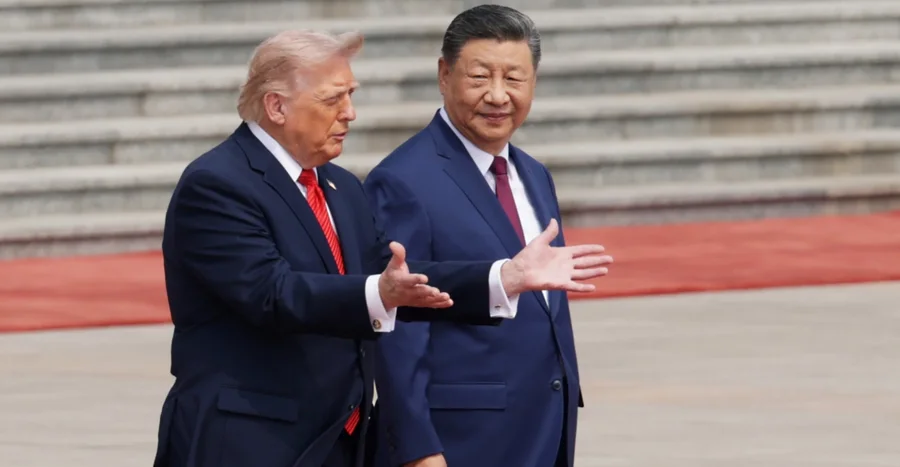
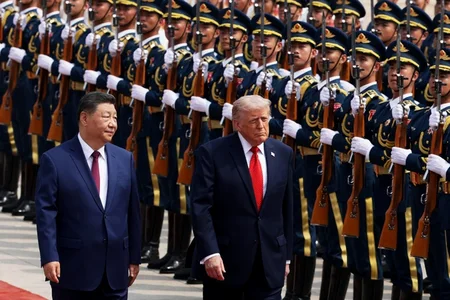
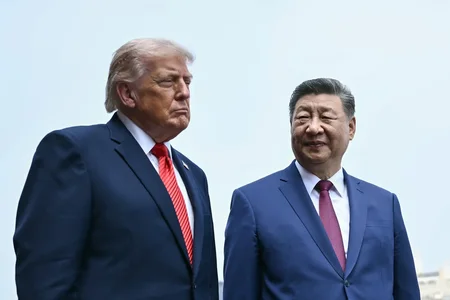
War with Iran is on the long list of issues affecting US-China relations, as Donald Trump meets with Xi Jinping in Beijing at a time of high geopolitical tensions.
US officials have suggested that Washington wants greater Chinese involvement to pressure Tehran to reopen the Strait of Hormuz.
However, analysts say Beijing will not intervene without a deal and is likely to demand concessions from the US, particularly regarding Taiwan.
China maintains significant influence in Iran through the two countries' trade and energy ties. Despite US sanctions, Beijing continues to buy Iranian oil, while Washington has repeatedly expressed concerns about Chinese exports of products - via rail - that could also be used for military purposes by Tehran.
Until recently, the Iranian issue was not a major area of confrontation between the two superpowers. However, in recent years, the US-China strategic rivalry has intensified significantly.
The main "strategic" competitor
Washington now sees Beijing as its main global competitor, as China's economy and geopolitical influence continue to grow.
During his first term, Donald Trump officially labeled China a “strategic competitor” of the United States. Washington’s 2017 National Security Strategy stated that Beijing uses economic incentives, pressure, and indirect military threats to advance its political and strategic agenda.
Joe Biden's administration has continued the same line, describing China as the "main challenge" to American foreign policy.
The United States has strengthened its alliances in the Asia-Pacific region, while relations between the two countries have further deteriorated due to tariffs, sanctions, the South China Sea, the Covid-19 pandemic, and most notably Taiwan.
Tensions peaked in 2022 with the visit of then-Speaker of the House of Representatives, Nancy Pelosi, to Taiwan, and a new crisis followed when the US accused Beijing of sending a "spy balloon" into American airspace.
Since returning to the White House in 2025, Trump has appeared to place less emphasis on great power competition. His administration's new security strategy places more emphasis on the Western Hemisphere and less on confrontation in Asia and the Pacific.
However, tariffs and trade disputes remain a serious point of friction, while the crisis with Iran and the Taiwan issue could further intensify tensions.
Taiwan is Beijing's top priority
Analysts say Taiwan is a top priority for Beijing. Although the United States officially adheres to the "one China" policy, it continues to arm Taiwan and strengthen trade relations with it, but without officially recognizing its independence.
Donald Trump has yet to approve a new $14 billion arms package for Taiwan, which has already been approved by Congress.
Analysts believe that China may ask Washington to be clearer about opposing Taiwan's independence in exchange for putting pressure on Iran over the Strait of Hormuz.
Professor Stephen Herlin told Al Jazeera that Beijing sees the Trump administration as "perhaps more vulnerable or more open" to Chinese positions on Taiwan.
"The Chinese will likely try to persuade Trump not to proceed with the Taiwan arms sales deal, which is essentially on his desk," he said.


Lini një Përgjigje