


 Shkruar nga Gjergj Zefi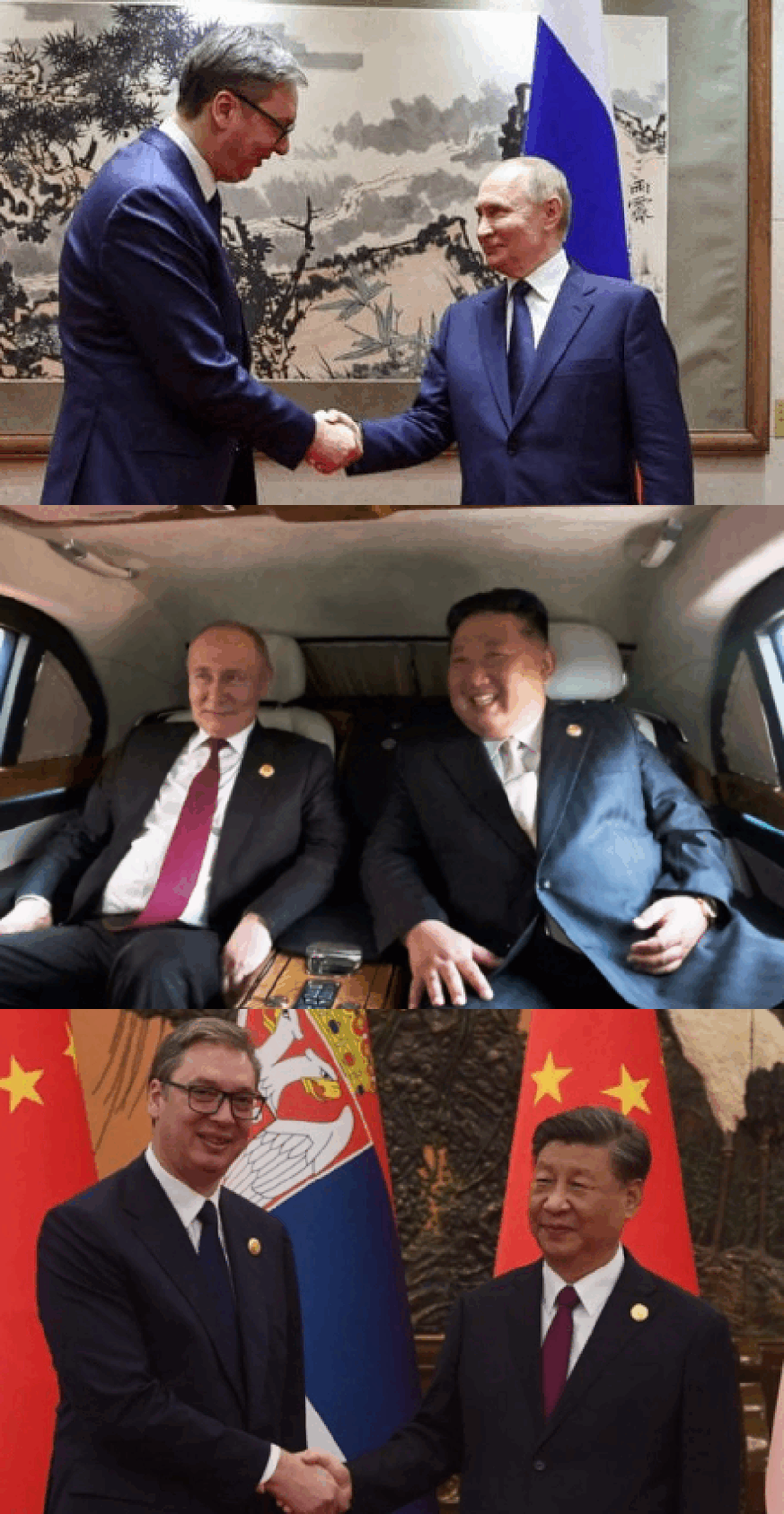
At a time when dictatorships unite to challenge the West, Serbia embraces the East, the EU sleeps and Albania fails to even define its diplomatic vocabulary...
On September 4, 2025, in Beijing, a moment was marked that will be remembered as a turning point in the global rivalry for dominance.
China organized a grand military parade, the largest of the decade, attended by the most defiant leaders of the current international order: Vladimir Putin, Kim Jong-un, and host Xi Jinping.
With uniforms, tanks, missiles and speeches laden with anti-Western rhetoric, this military spectacle was followed by the Shanghai Cooperation Organization (SCO) summit in Tianjin, which gave the event clear strategic dimensions.
Seemingly a ceremonial event, in essence a cold message to the West: the world is on the verge of a new era, with the Beijing-Moscow-Pyongyang axis attempting to overthrow the liberal international order led by the US and NATO.
In this global scenario, the Balkans is not simply a peripheral observer, but a frontline zone where the clash between democratic values and authoritarian interests is deepening.
Serbia, present at the summit through President Vučić, continues to play the role of the "Trojan horse" in the heart of Europe, moving in parallel with relations with the EU and alliances with Moscow and Beijing.
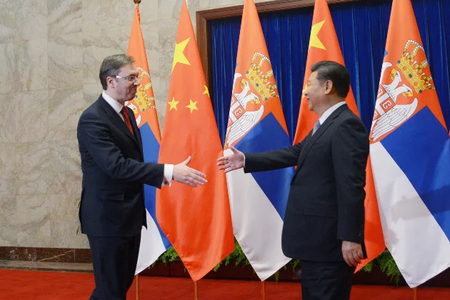
Serbia, which has not exhausted itself with sanctions against Russia, goes to Beijing, hugs Xi, greets Putin and sends signals to the EU that “we are for dialogue and peace”, while buying drones from China and laying the foundations for a gas pipeline with Russia. This is called diplomacy with three gates: one for the West, one for the East, and one for narrow personal interests. The Balkans are champions in this discipline. This behavior, silently tolerated by Brussels and very carefully by Washington, risks dismantling the entire security architecture in the Western Balkans.
Events in China are clear signs of the formation of an authoritarian bloc, which in addition to military force, is also building economic and technological cooperation networks, including investments in artificial intelligence, a new development bank, and a unified narrative against the "hegemons" of the West.
In this geopolitical confrontation, small countries are the ones that are hit first. And the Balkans, with the unhealed wounds of history and new ethnic and religious polarizations, become a favorite object of influence for Chinese, Russian, Iranian, and any other power that seeks to deepen divisions and undermine the European project.
In this atmosphere, Albania must step out of the role of spectator. With its strategic position, a member of NATO and in negotiations with the EU, it has a historical obligation to articulate a clear security doctrine for the Balkans. Enough with reactive policies. We need advanced diplomacy, intelligent capacity building, reinforced cyber defense, and real alliances with other Euro-Atlantic countries that share the same risks. Strategic silence is no longer an option. Because in the global chessboard that is being reshaped, those who do not move are eliminated.
On the other hand, Europe must wake up from the illusion of an unreal stability. The new order is no longer written only by diplomacy and trade, but by tanks and the coded messages of authoritarian leaders. And in this new global text, the Balkans are on the front page. The question is no longer whether it will have influence, but who will control it. / Pamphlet



Lini një Përgjigje