


 Shkruar nga Gjergj Zefi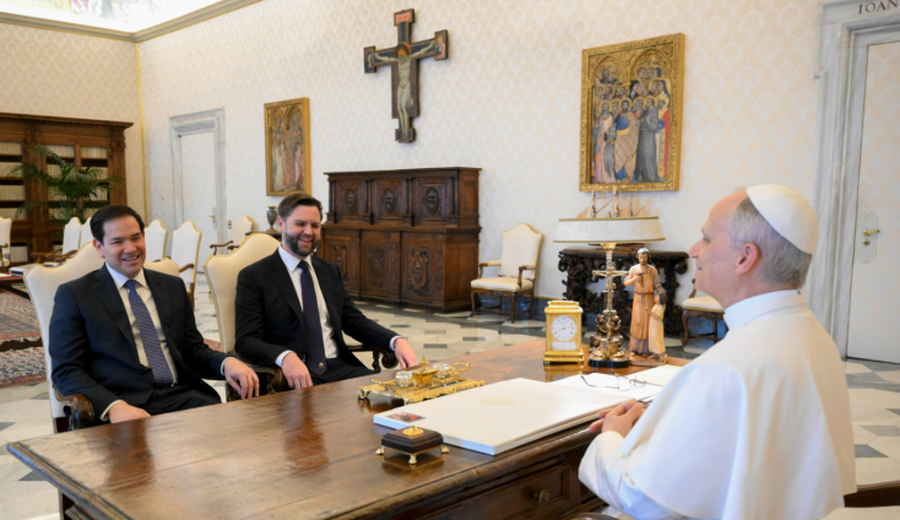
Rubio offers a hand of cooperation, Vance applies pressure; a dual American strategy to reformat the relationship with Europe without breaking the alliance.
On stage at the Munich Security Conference, US Secretary of State Marco Rubio spoke like a classic diplomat: the US and Europe “belong to each other”, linked by history, culture and values. A year earlier, in the same hall, JD Vance raised the alarm about the crisis of “European culture” and deviations from traditional freedoms. Two tones, two styles, two approaches. The question that arises is straightforward: are we dealing with a change of course, or with a calculated strategy with two voices?
In diplomacy, pronounced differences are not always divisive; they are often choreography. The Donald Trump administration has perfected this technique: one speaks the language of historical proximity, the other uses the language of political pressure. One reassures, the other warns. It is not a contradiction; it is an architecture of pressure. America is not moving from its strategic core; it is increasing its room for maneuver.
Rubio did not undo Vance. He balanced him. The soft message was not a retreat from criticisms of migration, climate or globalization; it was a repackaging of them. If Vance spoke of a crisis of European identity, Rubio spoke of the need for Western unity. But both refer to the same diagnosis: the West must reconfigure itself in the face of a multipolar world, where China and Russia challenge not only military power but the economic and cultural model.
So, are we changing course? No! We are changing tactics. America is testing the limits of European patience, moving between rhetorical closeness and strategic pressure. It is “one nail and the other horseshoe” diplomacy: striking to produce a reaction, appeasement to avoid disengagement. The ultimate goal is not distancing Europe, but reshaping it as a stronger partner financially, militarily, and politically.
Europe understands this game. That is why the reactions in Munich were cautious: welcome for Rubio's tone, but no illusions about the American course. European strategic autonomy is not being articulated out of fear, but out of realism. Because if America negotiates more strongly with its allies today, tomorrow it may demand more than verbal solidarity.
In the end, the difference between Rubio and Vance is not a rift; it is an orchestration. One builds the bridge, the other imposes the toll. And in this new reality, Europe must decide whether to be a co-author of the new rules, or simply their object. American diplomacy has not become softer; it has become more sophisticated./ Pamphlet



Lini një Përgjigje