


 Shkruar nga Fadil Lepaja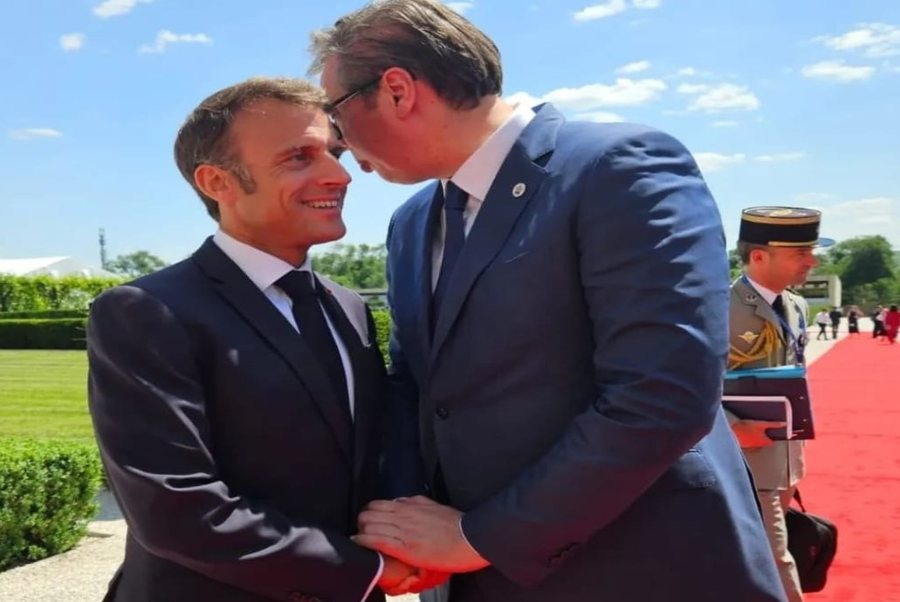
There is a caste of clero-nationalists in all the Serbian elites, who really want to fight for the old Serbia and its eastern politics, but do the Serbian youth and citizens really want to fight for the past?
But in Europe, they happily go? The messages of a visit show that Serbia's road to Europe is Nolens Volens. Seen from this perspective and post festum, President Macron's visit raised a lot of dust in the Balkans and it was generally not recorded how explicit his demands and formulations were to the Serbs. The clarity of the message was confusing for all those who are already used to Serbia being brave on its European path and turning a blind eye to the many blunders and whims of this policy, in order to maintain a balance which, as it seems, even in the EU itself, has been exceeded.
Undoubtedly, the visit of the head of the CIA will have sent the same messages, even more direct, but Macron's speech, although it has the introduction of the traditional friendship of France with Serbia, in fact, made it clear that Serbia there is no other alternative.
Macron also showed the path that Serbia will definitely follow if it will not be a currency for the Russians. The fate of coins for change, especially in Russian politics, is well known, especially since Serbian independence was the result of Russia's "changes" with the former Ottoman Empire, and now the opposite may happen, if Serbia accepts this role. "Only in the bosom of the European Union of sovereign states that share the same vision for their future, Serbia will be able to remain Serbia", he says.
Although it seems supportive, Macron's language, as never before, left no doubt that Serbia will no longer be allowed to lead a neutral policy, or to be good with the two warring parties. This is not only about Russia and the "necessity of a unique front" against the brutal invasion of Ukraine, but it is about the future and the vision of what kind of Europe we want to live in, expressing sure that the Serbian and French youth think alike about the common future.
In his speech regarding Kosovo, he was also completely clear when he spoke about the rights of the Serbian minority in Kosovo and the Ohrid agreements. The Serbs in Kosovo are a minority, but they will enjoy minority rights and have an association of municipalities, he promises France's strong commitment in this direction. His statements regarding the steps of the Kosovar government go in the same direction. The exercises of the Italian carabinieri on the bridge and the readiness of KFOR to protect all parties show the contours of the new policy: Kosovo will extend its sovereignty, in cooperation with the EU and the Serbian community.
Serbia will either walk itself to Europe or be dragged along, Macron's subtext can be clearly read. Now, it seems that there was no other way, since Serbia did not understand concessions as good will but as weakness of Europe. In order to dismantle the permanent conflict mechanism led by Serbia and to ensure the implementation of the Ohrid agreement, Macron and the head of the CIA, despite media speculation and local politics, will force both sides to adhere to directions and dynamics of the Western military and political bloc. There is no other way but to be involved in the process, where all parties must consider the priorities of war and peace on the continent.
So, it is not that Serbia has begged the EU for membership. She has blackmailed the EU to accept Serbia as it is in its ranks for the sake of peace, but Macron's message was exactly the opposite. Serbia is in Europe, with geography and history, although with the latter, the Serbs and the region need to work a little more.
"It is time that together, without excessive passions, we look at history so that it no longer constitutes an obstacle, as it still is today, between us and, even more, between the countries of the region where all are invited to be together in the arms of the European Union. Historians of all our countries – EU members and candidate countries, can perhaps help us on this path by engaging in a collective work on this.”
There is a caste of clero-nationalists in all the Serbian elites, who really want to fight for the old Serbia and its eastern politics, but do the Serbian youth and citizens really want to fight for the past?
It is an old Serbian song, which sings to Serbian soldiers who happily go to fight for their country.
"Serbian goes to soldier with joy, two drag him, three hit him". Where is Serbia going: to Europe or to war? Is Serbia heading towards Europe or is it being dragged along, with grace or not? What is certain is that with the war in Ukraine, the strategy of the EU and the West towards the Balkans has completely changed. If it was once intended to preserve the Line of Theodosius established as early as 395, which divided the Roman Empire into the Eastern and the Western, now that line will disappear completely and Serbia can no longer be something in the middle, so if the elite of its Europe, Europe loves it.
However, if Serbia, dominated by Russian politics, chooses not to align itself politically and militarily with Europe, then... in fact, this alternative is not seen in the recent messages received by the Serbian government and state. / Pamphlet


Lini një Përgjigje