


 Shkruar nga Pamfleti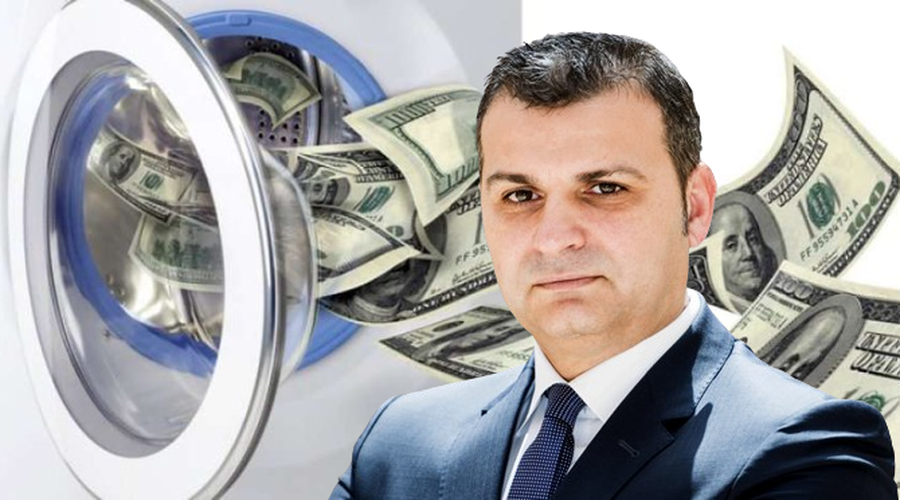
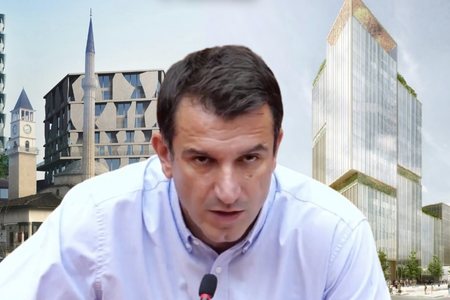
A report of the Economic Commission in the United Nations has described Tirana as one of the seven main European capitals with high levels of the unaffordability of buying a home. To underline this housing analysis, the UN report stated that price increases may have been influenced by money laundering.
"Up to 32 percent of residential and commercial properties sold in the first half of 2021 were purchased by non-residents; money laundering has probably been a contributing factor to the increase in prices in Tirana and in the coastal areas," says the report dedicated to Albania.
The dirty money of crime that is cleaned in constructions in Tirana has often been the subject of foreign reports, but this year there has been another phenomenon dedicated to the criminalization of the economy: the rapid fluctuation of the value of the euro and the lek in the exchange rate.
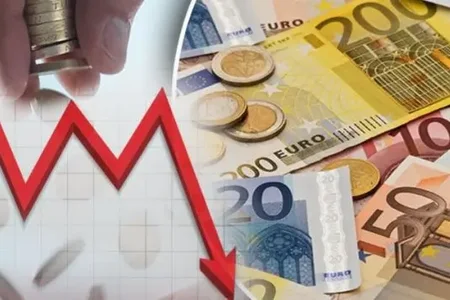
During the summer months, when the euro reached an unprecedented devaluation, the Bank of Albania was forced to strengthen measures to mitigate the negative effects on the economy. From the 160-220 million euros that he had planned to buy from the domestic market, he decided to add another 80 million euros, bringing the limit to 300 million euros.
The decision was taken after the euro went almost 1 to 1 with the lek, increasing the losses to the exporting companies, increasing the loan payments in lek or devaluing the value of the immigrants' money.
In an explanation he gave for these fluctuations, Governor Gent Sejko said that the devaluation of the euro was a consequence of 1) the flow of tourists that doubled this year, 2) as a result of money brought by immigrants and 3) as a result of foreign investments.
"We have an increase in income from tourism that has almost doubled, from direct investments. We have real estate purchases and increased remittances. These 3 channels have sufficient sources of inflows in foreign currency, mainly in euros", said Sejko during the summer.
The governor's explanation also matches that of the government. Even the former finance minister, Delina Ibrahimaj, listed the same reasons for the devaluation of the euro, emphasizing the high number of tourists who had come to our country.
But in the last weeks of November, the euro suffered a rapid decrease that bluffs not only the explanations of the bureaucrats, but also the measures taken by the Bank of Albania. This Friday, the euro was exchanged for 101 lek, while day by day its value is catching up to those of July and August.
The point is that the tourist season is already over. The justification for the high number of tourists does not hold, while the Bank of Albania is proving powerless to curb the phenomenon. This is no coincidence. Cleaning dirty money is taboo for Sejko, who has never dared to go beyond the red lines set by the government.
A more realistic explanation of these exchange rate fluctuations seems to be the one made by export merchants, who have felt the loss of money in their pockets from the devaluation of the euro. According to them, the strengthening of the lek had nothing to do with economic development or with foreign investments and the flow of immigrants, but with the crime money that is thrown into the market to be cleaned.
In a letter they sent to the World Bank, the International Monetary Fund and the EBRD, they complained that "The large and temporary fluctuations that severely damage exporters and tourism seem to be also affected by informal or criminal money in the Albanian economy, mainly in real estate and profitable businesses".
The Rama government took concrete steps to pave the way for the flow of money that Albanians keep abroad through a draft law on fiscal amnesty. But the initiative, which would allow each immigrant to bring up to 2 million euros to Albania, has been strongly opposed by foreign ambassadors and is currently being held in abeyance.
In addition to exporters, another layer that is harmed by the devaluation of the euro are also those families that are helped by Albanian immigrants, as their remittances lose value. About 26% of Albanian families live completely or partially on remittances from immigrants and have been significantly affected by the strengthening of the lek./ Lapsi.al


Lini një Përgjigje