


 Shkruar nga Ilir Çumani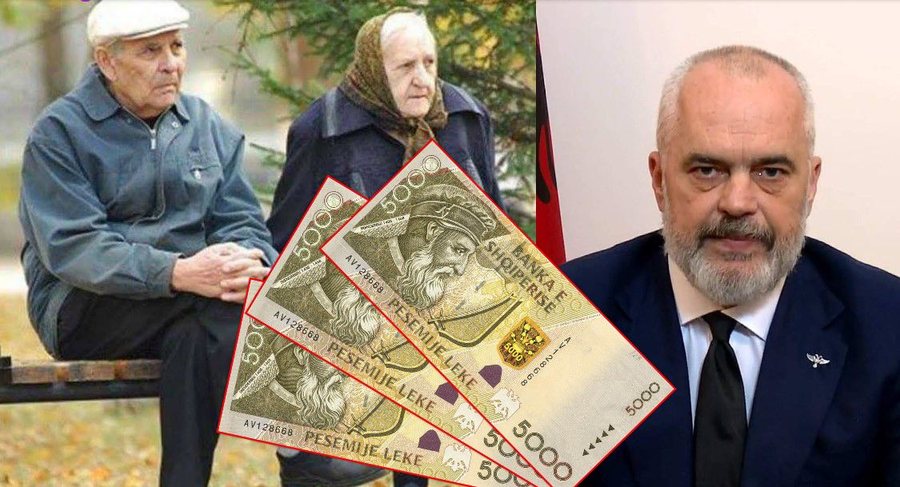
This is not humanism, because the state is not an NGO, nor a Church, nor a Mosque; it is not a charitable foundation, and in no way can it behave as such. But what is really happening in our country is an oriental theater of public mercy, where the government appears as the savior of those it has actually abandoned...
Every year-end, when the streets are filled with lights and cities try to simulate an atmosphere of collective joy, the Albanian government revives the ritual of distributing a bonus of 100 or 150 euros to pensioners and several other social categories.
Prime Minister Edi Rama uses this “gift” as a venting mechanism, as a quick financial injection to dampen anger and soften discontent, to curb the social revolt that has been accumulating year after year among the majority of Albanians. The bonuses are projected as an act of “generosity”, but are increasingly interpreted as a tool of political manipulation, a tactic that aims to give the government an aura of sensitivity and compassion in a reality where promises have failed to materialize.
The show is always the same: camera, lights, manufactured enthusiasm, light smiles, soft language, envelopes passing from one hand to the other. An almost ritualistic scene, curated down to the last detail. But behind all this theatrical illumination lies a heavy silence: the absence of any serious policy that would guarantee pensioners, the needy and ordinary citizens a decent life, without the need to wait for December as if it were the only day when the state remembers them.
This is not humanism, because the state is not an NGO, nor a Church, nor a Mosque; it is not even a charitable foundation, and in no way can it behave as such.
But what is really happening in our country is an oriental theater of public mercy, where power appears as the savior of those it has actually abandoned.
Sociologically, this model does not contribute to the real empowerment of the needy; on the contrary, it produces a form of institutionalized poverty, which continues to be reproduced across generations through mechanisms of structural inequality.
It is a system that does not heal social wounds, but uses them as a facade to justify its own existence.
Let's put it this way: an Albanian pensioner does not need year-end gifts. He needs a system that works every day of the year. He needs not to feel the fear of the next month, nor the weight of choosing between medicine and bread. He needs not to count the days of old age as if they were debts to the state, but as years of their contributions that the state returns with respect, dignity and care.
Because old age is not a luxury. Old age is the most basic right that a civilized state must guarantee to its citizens. And a state that is dedicated only to the scenography of charity on camera is not a social state; it is a propaganda apparatus that has lost touch with reality.
Philosophically, the alms of power is the lowest form of the state-citizen relationship. It is not built on institutional responsibility, but on a kind of feudal nostalgia, where the ruler remembers the poor from time to time, to create the illusion of mercy.
This dangerous model fosters dependency, not emancipation. It keeps the citizen “grateful,” not empowered. And while the government produces spectacle, the painful reality remains unchanged: pensions among the lowest in the region, healthcare built on the patient’s own burden, prices that are rising out of control, and a labor market that offers no stability for ordinary families.
The truth is that the handouts of power don't simply mask economic shortcomings; they mask a moral and institutional failure.
Because the mission of a government is not to give gifts. Its mission is to build a system that makes gifts unnecessary.
And this is precisely where the drama of the situation lies: the Albanian state is not building social security, but is building scenes. It is not creating dignity, but dependence. It is not investing in long-term policies, but in short-term narratives. This is why pensioners today feel invisible, ignored, marginalized. Because systems are not built with videos, with spectacles and magical views provided by drones, but with will. They are not built with temporary generosity, but with ongoing responsibility.
And here lies the cynical paradox: while pensioners, lower-level administration, and vulnerable and marginalized groups get a "breather" for only a few days, an unjust system of distribution of public goods that is completely and extremely disproportionate continues to function within the Albanian state.
Today, Albania is a country where 38 categories of high-ranking officials benefit from huge salaries, privileges and bonuses at European levels, while the ordinary administration receives ridiculous rewards, salaries remain minimal, and pensions are undignified, cynical and denigrating.
In no democratic country on the continent does such a dramatic disproportion exist. In Belgium, the Netherlands, Denmark or France, Italy, Germany, etc., the ratio between the pay of senior officials and the average salary is much more balanced than in Albania.
Even in the countries of the region: Kosovo, Serbia, Macedonia and Montenegro, this phenomenon is not noticed.
Where states have functioned as organisms of centuries of industrialization, the official's salary is not simply an individual reward, but a barometer of social justice and the logical functionality of the administration.
Ndërsa në Shqipëri, piramida e pagave është përmbysur me kokë poshtë: zyrtarët e lartë marrin shpërblime që nuk i gjen as në disa vende të BE-së, ndërsa punonjësi i thjeshtë ka të ardhura që nuk mbulojnë as koston e një shporte bazike ushqimore.
Ky realitet nuk është vetëm ekonomik, është politik, social dhe thellësisht moral.
Kur një qeveri përdor bonuse modeste për të qetësuar popullin, por i mban privilegjet e saj të paprekura, ajo ekspozon natyrën e vërtetë të një modeli qeverisës që funksionon si kleptokraci moderne: një sistem që e sheh shumicën si statistikë dhe pakicën si përfitues permanent.
Në historinë shqiptare, pushteti ka përdorur gjithnjë metoda manipulative të “qetësimit” të shumicës së popullit të abuzuar prej keqqeverisjes, përmes injektimit të “kartës së mëshirës sociale”, qoftë me bukë e spektakle, qoftë me privilegje të kontrolluara.
Por, në dallim nga periudhat autoritare të shekullit XX, sot disproporcionet janë transparente: të gjithë i shohin, të gjithë i dinë, të gjithë i krahasojnë. Çdo qytetar i thjeshtë është i ekspozuar ndaj pamjes së një shteti që shpenzon më shumë për privilegje vertikale sesa për shërbime publike horizontale në formë kapilare.
Nëse e analizojmë në thelb, “politika” e bonusit si “shpërblim” për pensionistët dhe shtresat në nevojë, nuk është gjë tjetër, veçse një strategji e vjetër, idhnake e djallëzore; një strategji apo mjet politik i një pushteti të lëkundur tashmë nga arkitektura e shtetit prej qëndrimit gjatë në qeverisje, i zhytur në skandale korruptive të pafund, i padhembshur njëkohësisht dhe aspak social, i veshur me retorikën e re të propagandës dixhitale.
Ky është një akt i shpejtë, por i pamjaftueshëm: një eksperiment djallëzor i regjimeve autoritare që synon të mbajë në letargji vetëdijen qytetare, ndërgjegjen kolektive, nervin e revoltës, të pakënaqësisë dhe të protestës legjitime popullore.
Por stabiliteti politik dhe social nuk ndërtohet mbi përkohshmërinë, as mbi 100 euro që zhduken brenda ditës nga çmimet e papërballueshme dhe kostoja e lartë e jetesës.
Nuk ndërtohen dhe nuk fuqizohen shtyllat e kohezionit social mbi një shtet ku privilegjet e majme të 38 kategorive të zyrtarëve të lartë shembin çdo ide dhe bjerrin standard të meritokracisë.
Problemi është më i thellë se aq: shqiptarët nuk po revoltohen vetëm nga varfëria, por nga pabarazia dhe padrejtësia sociale. Një vend i varfër mund të jetë i qetë. Por një vend i pasur për të privilegjuarit e pushtetit dhe i varfër për shumicën dërmuese të shoqërisë është gjithmonë i trazuar në shpirt. Aty lind pakënaqësia e brendshme, ajo ndjesi kolektive se shteti nuk punon për qytetarin, por qytetari punon për privilegjet e pamerituara të një pakice që sundon egërsisht, pa pasur kurrfarë empatie e dhembshurie.
Sociologists have clearly described this phenomenon: when citizens lose faith in the justice of the distribution of public wealth, they also lose faith in the institution, in the law, in politics, in voting. Small rewards do not change this trend, and often even deepen the social gap that leads to the abyss.
The state is not based on end-of-year charity bonuses. The state is based on justice, on balance, on respect for the dignity of the citizen. Albania can no longer accept a governance model that endlessly feeds and fattens the minority and “pacifies” the poor majority through alms. This disproportion is not only economic, but also ethical; not only financial, but also historical.
Essentially, the issue is not about the amount given, nor the period it is given. It is about the principle that the government has turned social policies into a propaganda instrument. And this is a damage that affects not only pensioners, but the very morale of the state.
A country does not move forward by keeping people waiting for gifts, but by making them masters of their own lives. By giving them security, opportunities, dignity. By giving them a state that functions not because it "wants to," but because it has the obligation to function.
If we want a society that moves towards Europe, we must reject the logic of a government that distributes small pieces of the pie of public goods to the people and great privileges to itself.
Albania deserves a new model: a state that does not distribute "bonuses like social mercy cards", but guarantees justice; that does not distribute handouts, but creates real opportunities; a government that does not appease the revolt of the people tired of injustice and ruthlessness, but avoids it by showing justice.
Only then will the people not wait like beggars at the door of a prime minister who distributes alms to get the state's attention every year, because the state must have its citizens by its side every day, looking them straight in the eye.
And until Albania has a government that understands this basic truth, the end-of-year envelopes will remain simply the most bitter symbol of a state that chose to appear "merciful" instead of being just.




Lini një Përgjigje