


 Shkruar nga Mero Baze
His analysis was chilling and of course too bold to say in such a wide audience but very friendly with him, it was a crushing of the schematization of socialist realism, making a party secretary a negative character and discretizing the immorality of a state that tried to appeared puritanical.
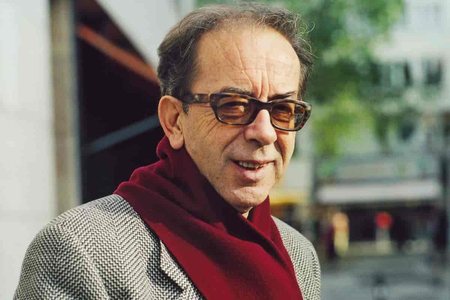
I found these notes in a student notebook some time ago. It was October 1986. Ismail Kadare had announced a meeting with students at the "Student" City Cinema, a year after the banning of the novel "Nata me Hënë".
Being engaged in the editorial office of the "Studenti" newspaper, I had to take notes on his entire conversation with the students. Çerçiz Loloçi, who had organized the meeting, provided me with a corner at the end of the tribune where I could listen to his answers and pass on the hands and questions from the hall, most of which were asked in writing as they did not want to be identified.
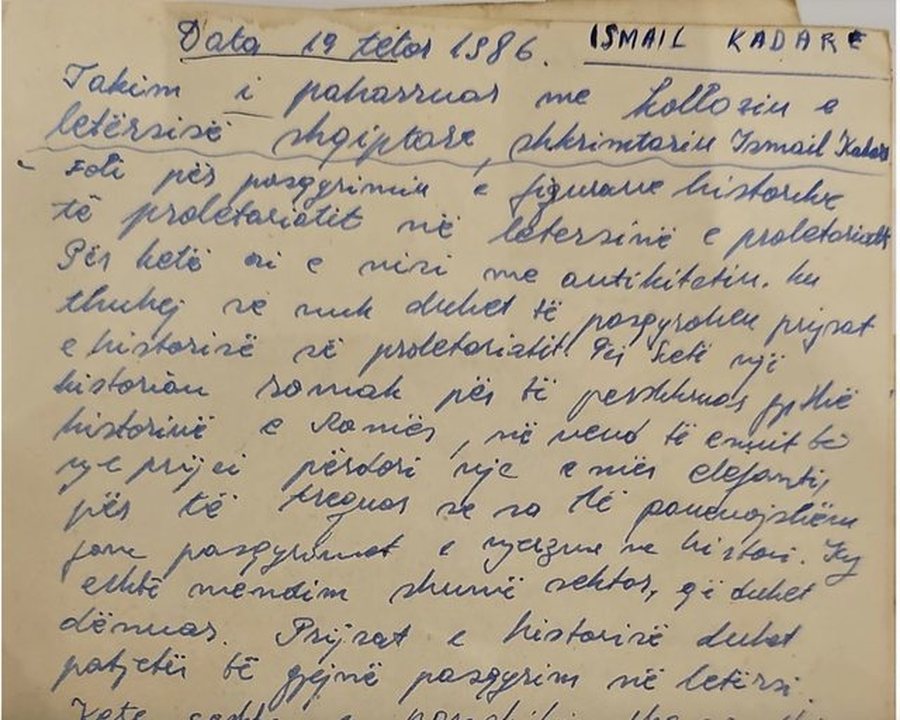
It was also the first time I saw him so close and met Ismail Kadare. The meeting started with questions about the role of historical figures in literature, bringing up the figure of Enver Hoxha in "The Great Winter".
Ismail defended the idea that the reflection of historical figures in literature does not produce a cult of the individual, if there is a realistic view. That argument brought out the fact that there was no serious literature about the greatest figures of communism in the world. Thus he said that for Marx it is only a novel "The Youth of Marx" by a Soviet author that he described as mediocrity. He also said that there are some mediocre romantic descriptions of Lenin who turned the world upside down. The same for Stalin.
"When I decided to write "The Great Winter", I decided to make a Rembrandesque description. Yes. And I did:".
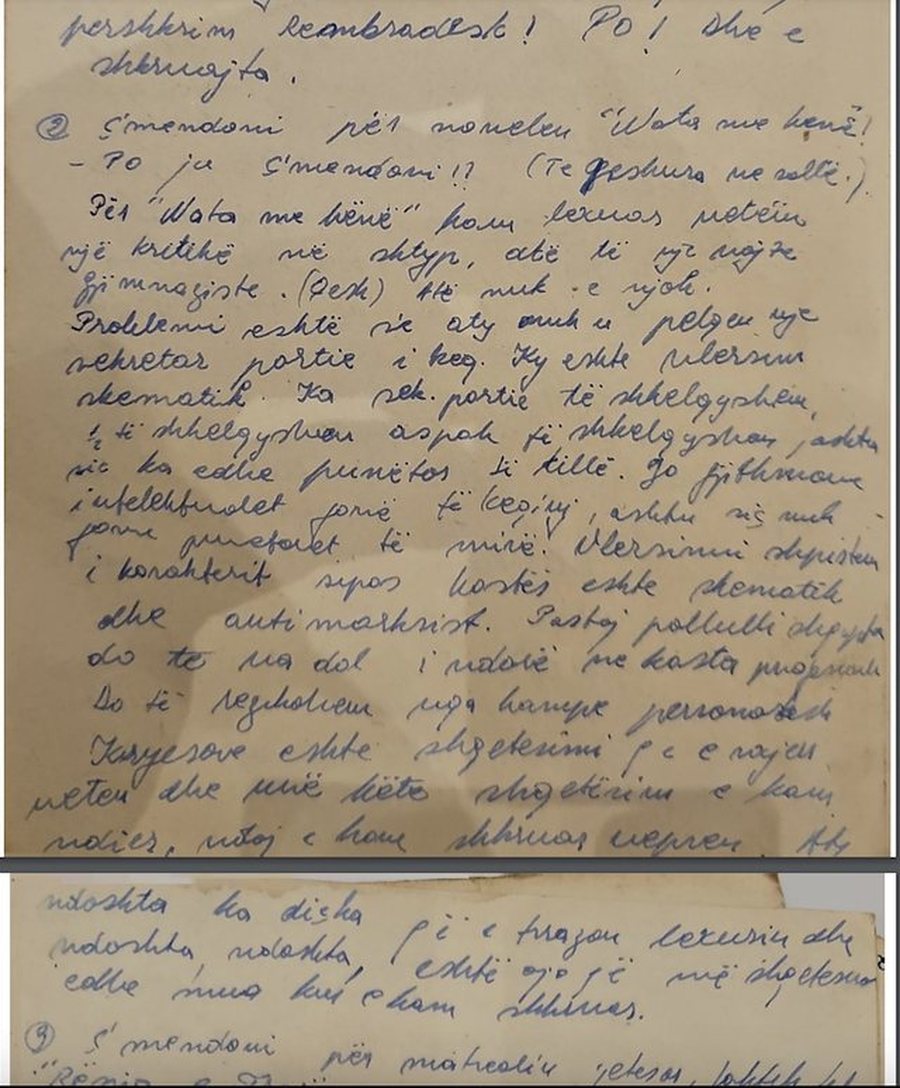
Then came the question about the novella "Night with the Moon", which I am reproducing from the block as I have taken notes.
"What do you think about the novel "Night with the moon"?
- You are going crazy (Laughter in the hall).
For "Night with the Moon" I have only read one review in the press, that of a high school girl. (laughs) I don't know her.
The problem is that they don't like a bad Party Secretary there. This is a schematic estimate. There are excellent half-excellent and not-excellent party secretaries, just as there are such workers. Intellectuals are not always bad, just as workers are not always good. The spiritual assessment of character by social caste is schematic and anti-Marxist. Then the Albanian people will leave us divided into professional castes.
The main thing is the concern that brings out the work, and I felt that concern, so I wrote the work. Maybe there is something there that disturbs the readers, and maybe it is also what disturbed me, who wrote it."
His analysis was chilling and of course too bold to say in such a wide audience but very friendly with him, it was a crushing of the schematization of socialist realism, making a party secretary a negative character and discretizing the immorality of a state that tried to appeared puritanical.
His thesis that if we fall into this scheme, we will have to divide the Albanian people into professional castes, to understand who is good or bad, was electrifying for the students who were keen to catch what they could from his words.
His haunted look when he saw the positive reaction in the hall was accompanied by an unfinished smile, without address and without joy as if he felt sorry for those who were not in the hall, and were not listening to what was happening there.
Below, the conversation continued about the vital material in "The Fall of Troy", the novel "Cold Blood", "The Homer File", his views on Russian dissidents, American literature, then a French lecturer who taught French in Philology on French literature answered you, etc.
He also spoke about the novel "Krushqi are frozen" which was related to the events of 1981 in Kosovo and showed that the main character is the wife of the writer Esad Mekuli, a doctor, who was accused by TANJUG for what is written in the novel. He also spoke about Ivo Andriç and his novel "Ura mbi Dri", where he said that he speaks well of the Albanians even though he is involved in a political story against the Albanians. It is about Ivo Andric's memorandum about the Albanian issue in the former Yugoslavia. In the end, he spoke about the "Monster" but without giving many explanations.
After a few days, every student interested in literature or politics knew by heart what he had said in that hall. Fortunately, I took notes, but even without finding this block I remembered everything.
And that's enough as an answer for all those who don't want to admit that Ismail Kadareja was the only spiritual food for the Albanian society and especially the Albanian youth who sought beyond what the tastes of the regime in Albania offered.



Lini një Përgjigje