


 Shkruar nga Denis Dyrnjaja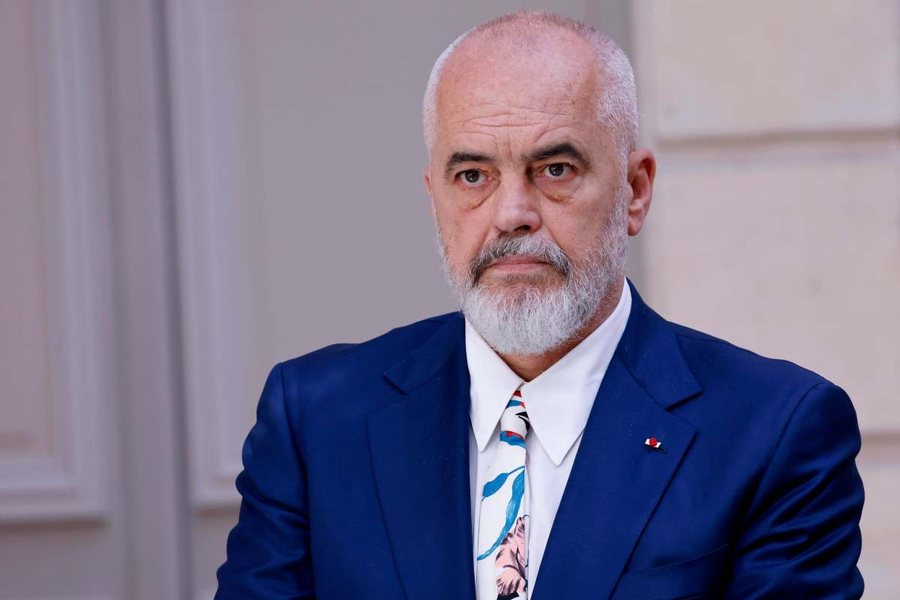
This is why the announcement of the new government, although still pending, is not experienced as an important institutional moment, but as an artistically heralded event, where names matter less than the idea that Rama knows everything, Rama decides everything, Rama is everything.
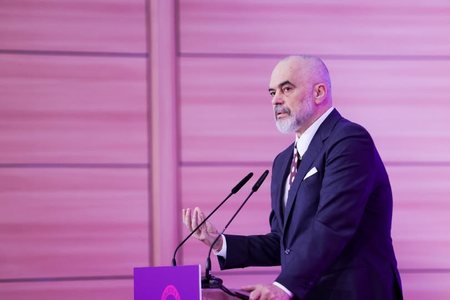
On the eve of his fourth term in office, Edi Rama is no longer simply a politician who wields power. He has become a figure who represents not only power, but also the art of wielding it. Rama should no longer be imagined as a painter with canvas and paint, working in an art studio, but as an artist of a political scene where everything is projected, colored and realized by him.
In these 10 years of prime ministerial power, Edi Rama has built a special style of governing, exercising power to gain continuity of power. It is like a kind of superior art. In this dimension, the fourth mandate, it seems, is no longer a challenge to prove himself, but a personalized theater, where he is simultaneously the author, the protagonist and the critic of himself.
This is why the announcement of the new government, although still pending, is not experienced as an important institutional moment, but as an artistically heralded event, where names matter less than the idea that Rama knows everything, Rama decides everything, Rama is everything.
This extreme personalization of power is the strongest coloration of this fourth mandate. For the first time since the advent of pluralism, a political leader has managed to make power a complete extension of his personality. The government is not a team, it is a reflection of the leader's authority and political humor. Ministers are no longer representatives of politics or expertise, but extensions of the prime minister's will and imagination.
Then the question in the philosophical dimension of political art is; what happens when an artist "paints" his face with the paint of power? He no longer creates art for the public, but transforms himself into a work of art. Rama is now a political installation in motion. That is what he seems to believe, at least from the public perspective. But the problem with art that becomes power is that it does not adapt to criticism, does not accept correction or reflection. Because, for example, any criticism of the government is taken as a personal criticism of the picture created by the author and any debate as an attack on the author of the work.
In his fourth term, Rama has no rivals. There are only spectators, some applauding, some leaving the hall, and there are those who still hope for the lights to turn on and for a different act to begin. But as long as he himself enjoys himself in the mirror of power, change remains something undefined and unchanged, while often from different angles or prisms it resembles a colorful brushstroke in the painting of frozen ministerial portraits, even when they laugh idiotically, or when they remain surprisingly serious.
So now we are dealing with the artist of power, who no longer paints walls, but realities. And now more and more often, after all this endless visual and verbal spectacle, the fundamental question remains; Is Edi Rama still a political leader, or has he now become a painter with all the power in his hands, a power in a personalized portrait? And the portrait is so big, that there is no room for anyone else within the frame.


Lini një Përgjigje