


 Shkruar nga Simon Kuper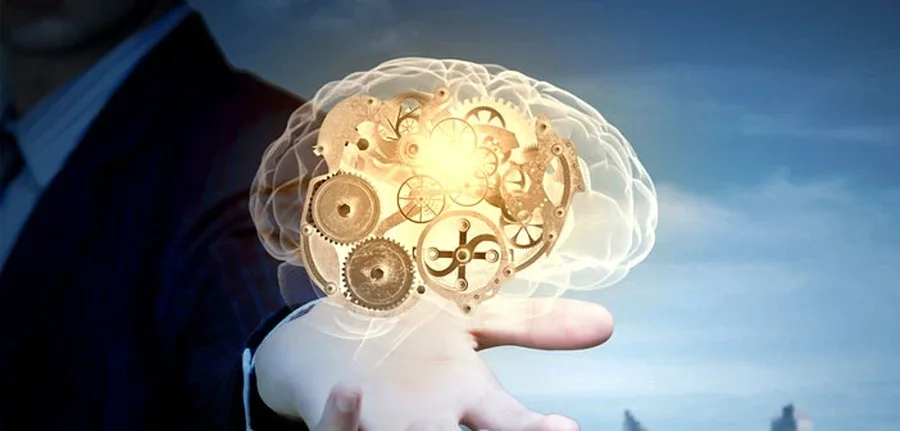
Artificial Intelligence is the latest in a series of inventions that have made humanity dumber.
A class of students in Paris was taking an exam when a student's phone fell into his hand. The children had handed over their phones when they entered the classroom, but this boy had a second one. It is alleged that the invigilators let him take it and continue using ChatGPT to answer questions.
French rules say he should have been banned from taking the 'baccalauréat', the school's final exams. The school fears that if he did, he would have to expel half the class. This is education in the age of artificial intelligence.
I understand the child. School may be the last time he is not allowed to let Artificial Intelligence do his job. Handing over the task to a machine will hinder his knowledge and intelligence. But then, his generation may not have much need for either. These qualities can disappear painlessly, just as happened with sword fighting or blacksmithing.
Artificial Intelligence is just the latest in a series of inventions that have made humanity dumber. We have given our mathematical skills to calculators, our memory to Google, and our navigation to Google Maps. Sometime in the 1990s, the international rise in IQ, which had been going on for decades, began to reverse.
Later, Google Translate handled foreign languages for us, while social media broke our habits of concentration and reading. The FT’s John Burn-Murdoch reports: “In a range of tests, the average person’s ability to reason and solve novel problems appears to have peaked in the early 2010s and has been declining since 1990.” Adult literacy and numeracy have stagnated or fallen in most developed countries, says the OECD club of rich nations.
Then, on November 30, 2022, OpenAI released ChatGPT. Experts debate whether AI will replace human workers and, ultimately, kill us all. The discussion among university professors is less speculative. They can peer inside the heads of the next generation and report that AI is already making children dumber. The professorial essay lamenting the death of thought has quickly become a new literary genre. Students are increasingly using large language models to write assignments and summarize reading lists.
A professor of foreign literature at a major American university told me, “I used to assign entire novels to my undergraduates. A decade ago, I could count on them to read five pages or so. Now the machine reads for them.” University administrators, realizing that it is nearly impossible to prevent fraud through AI, are giving in to it, signing partnerships with AI companies. Perhaps the university’s goal will now become to teach you how to use AI.
This allows our brains to atrophy. Even scientists at Microsoft Research, employed by a major player in the AI race in business, found that as workers move from performing tasks to overseeing AI output, the effects are twofold: “efficiency gains” and “risks of reduced critical thinking.”
How do we preserve our intelligence? The answer might be: “What’s the point?” People who protect their minds by rationing the use of artificial intelligence may become less efficient workers because the great linguistic models, even with their errors and hallucinations, are already smarter than we are. Humans lost their sword-wielding and weaving skills as machines took over most of the fighting and weaving. Thinking and writing may go the same way. For anyone who imagines we’ll limit artificial intelligence for the good of humanity: we didn’t with social media and climate change.
Parts of our brains may wither away into evolutionary remnants, like the wings of birds that lost the need for flight in the absence of predators. Our children may be liberated from thought. One day, even Donald Trump's speech may seem to them of an inscrutable complexity, just as Jimmy Carter's presidential language must seem to many contemporary Americans.
I used to think that once AI started thinking, humans might be drawn to jobs that required empathy, like babysitting or tennis coaching. That was naive. Now "AI companions," essentially chatbots that can study your personality and aim to please you, are surpassing humans in social interaction.
One such platform, Character.AI, “says it handles 20,000 queries per second,” or about a fifth of Google’s estimated search volume, reports MIT Technology Review. Character.AI is now being sued by the mother of a Florida teenager who died by suicide after his relationship with an artificial intelligence companion. (A judge rejected the company’s claim that its chatbots were protected by the First Amendment.) One day, this column will be written by a bot, but better./ Adapted from “Pamphlet” by “Financial Times”








Lini një Përgjigje