


 Shkruar nga Harold James
 Modern American-style fascism has obvious roots in the past...
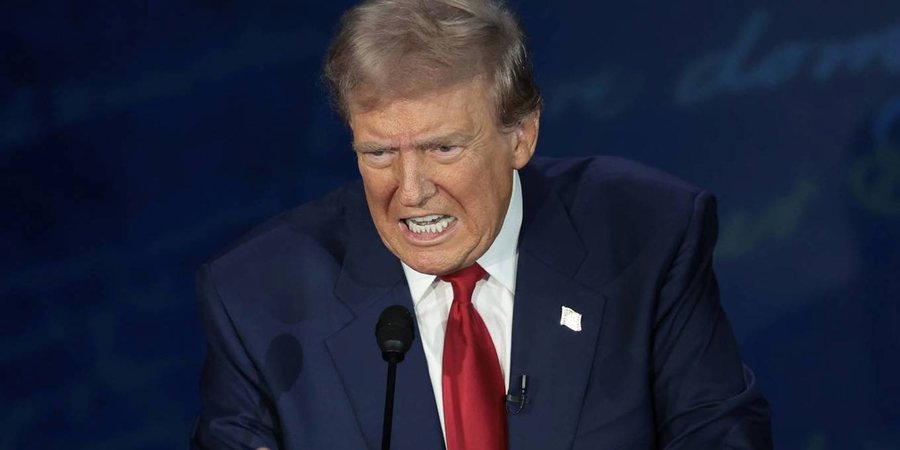
No one knows what the US presidential election will bring. One possibility is that the Trump bubble will burst, allowing a return to normalcy in America and around the world. But it's also possible that the United States will slide toward a radical, militarized authoritarianism that would set a new norm for despots in other countries.
Political scientists are not the only ones who see some troubling historical parallels. According to Donald Trump's longest-serving chief of staff, General John Kelly, the former president "fits the epithet of fascist", by which he means "an authoritarian, ultra-nationalist far-right ideology and political movement, led by a dictatorial leadership, centralized autocracy, militarism, violent suppression of opposition and belief in a natural social hierarchy".
Modern American-style fascism has obvious roots in the past. In his 2004 novel The Plot Against America, Philip Roth drew on real historical figures and events to present his counterfactual scenario in which Charles Lindbergh is elected president on a radical, isolationist, anti-Semitic program entitled “ America First".
And some analysts and historians would go back even further, not just to the 1930s, but a century ago, to the populist rhetoric and depraved racism of President Andrew Jackson. In any case, episodes of the collapse of democracy always raise the same troubling question.
Is it a peculiar feature of the culture that has gradually eroded the political system, or are we dealing with a deeper, innate human tendency that can only be kept under control by appropriate institutional arrangements? Of course, the most famous case of the descent into barbarism is that of Germany between the 2 world wars.
To explain the country's slide into political violence, fascism, militarism, and ultimately genocide, some analysts have pointed to inherent German cultural tendencies, from Martin Luther's virulent anti-Semitism to the abdication of 19th-century German liberals in the face of political power. radical based on Bismarck's "Blood and iron" motto.
Like this year's US presidential race, the German elections of the 1930s were very close. In each case, Adolf Hitler and his party won a much smaller share of the vote than Trump is likely to receive on November 5. After winning 37 percent of the vote in the July 1932 election, the Nazi Party fell to 33 percent in the November contest of the same year.
Even in the unfree elections of March 1933 - when the Communist Party was outlawed and voters subjected to mass intimidation - the vote for the Nazis was below 44 percent. Hitler himself received only 30 percent of the vote in the first round of the spring 1932 presidential election, and 37 percent in the second round.
Thus, Hitler did not rise to power because of great popular support. Rather, it happened because of traditional institutions: the military, the bureaucracy, the police force and above all the business community. As with corporate America today, the top leaders of German industry were divided.
Although many of them were suspicious of the Nazis, they did not fully recognize Hitler's radical agenda. Georg Solmssen, the president of Germany's largest bank (Deutsche Bank), was baptized a Protestant, but his grandfather had been a Jewish rabbi and his father had been a banker who became part of the world of finance because Jews were excluded from civil service.
A quiet and highly intelligent man, he saw the Nazis as a threat, mainly because of the socialist and populist elements of their program. Their rabid anti-Semitism, he assumed, was merely an electoral tactical ploy. Solmssen did not realize what Nazism was really like until April 1933, when it was too late.
But he was not the only one. Many good people lacked the imagination to comprehend the scale of violence that Hitler would soon use. Within the German establishment, the prevailing belief was that the demagogue could be tamed. But this dangerous view was based on an illusion.
After all, the political context had changed radically. The post-World War I reparations system, created at the Versailles Peace Conference in 1919, had severely limited Germany, along with its room for maneuver. But by 1933, the international system had disintegrated.
Two years earlier, the Japanese army had provoked a border incident in the Chinese province of Manchuria, and then rushed across the border, ignoring the League of Nations and its covenant prohibiting "aggression".
Moreover, as the global economy was suffering from the Great Depression, there was little incentive to continue playing by the rules of the old economic system. Nationalism and autarky thus became increasingly attractive as cost-free strategies to raise Germans' living standards.
Again, there are some ominous parallels with the present moment. Most, if not all, international institutions are showing signs of their age, and the United Nations system is paralyzed by major divisions over Russia's war against Ukraine and Israel's campaigns against Hamas, Hezbollah, and perhaps soon Iran.
However, unlike the early 1930s, the world economy is still highly interconnected and interdependent. Therefore, any move towards true autarky would not be without pain. On the contrary, the costs would be extremely visible to Americans and the rest of the world, and above all to financial markets.
In this context, it is impressive to hear prominent figures in the world of finance such as Larry Fink of BlackRock say that the US election "doesn't matter" to the markets. Why don't other figures in the field like Warren Buffett come out and say something? They seem to be copying the behavior of German business leaders before January 1933.
Because international economic ties can constrain national political action, their disruption risks causing a major financial shock. Depending on how this election plays out, the time may soon come when Americans (and everyone else) will be very grateful for the constraints that come with a globalized economy.
Few events are more sobering and discrediting to those who support bad policies than severe financial crises that destroy the livelihoods of voters and degrade their living standards./ Adapted Pamphlet from "Project Syndicate"
Note: Harold James, professor of history and international relations at Princeton University, USA.







Lini një Përgjigje