


 Shkruar nga Frrok Çupi
The surprise of the beginning, which I don't know if they noticed, is the double title of the Festival itself. This time it was 'Songs of my country', written on one side of the front and 'Bejkë e Bardhë', on the other side. Last year it was only 'Bejka e Bardhë'.
It seems to me that the performance of the Festival, if it had a form, has the form of waves of 'local' songs, as our colleague calls the polyphonic song that I will talk about later.
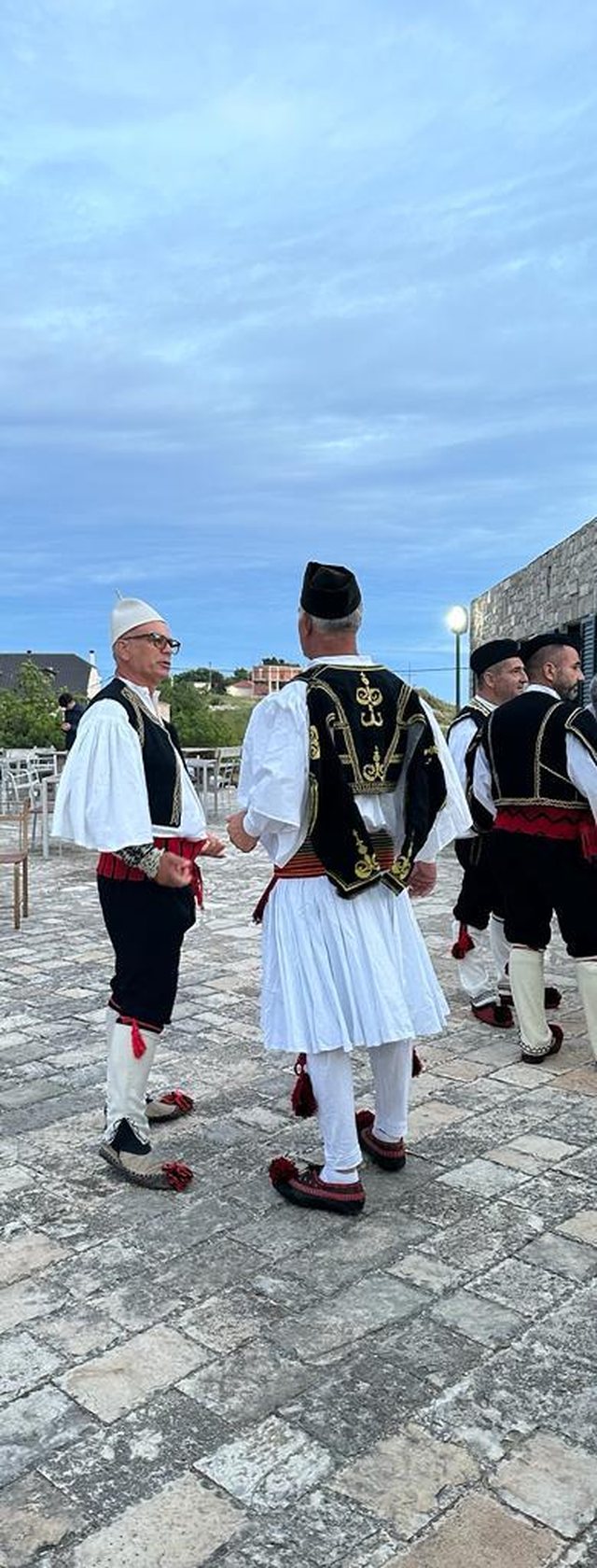
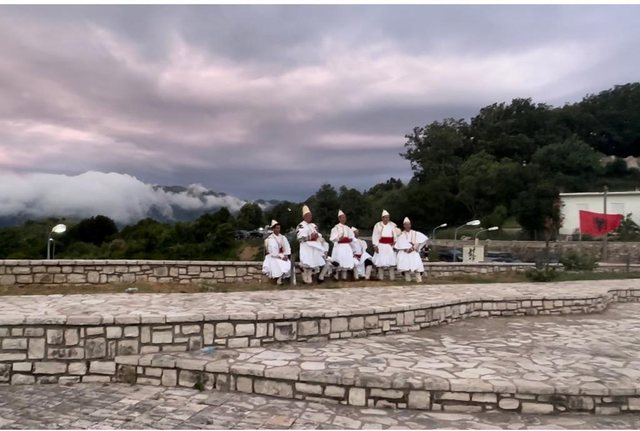
The Fourth National Festival 'Songs of my country', May 9-10 in Pilur, may appear strange if you dig for miracles, otherwise it is that well-known, even special festival, that the whole world sees and enjoys on the balcony of Zeus in Pill.
But it is also strange, or should I say that this year before the festival came his Čudia, and in the background - himself.
The surprise of the beginning, which I don't know if they noticed, is the double title of the Festival itself. This time it was 'Songs of my country', written on one side of the front and 'Bejkë e Bardhë', on the other side. Last year it was only 'Bejka e Bardhë'.

Each part comes from the other, and vice versa.
Bejka e Bardhë, comes from Vasillo Koka. The singer Vasillo herself is now known by the name 'Bejka e Bardhë', whoever is looking for her in the village, asks the other 'Oh, have you seen Bejka e Bardhë today?' instead of telling her mother's name.
And the magnificent song of Bejka Bardhë comes from Lefter Çipa. Lefter Çipa- Homeri under Çıke, when he went to the cemetery on the hill, left the Festival in the second edition.
Ever since Edward Lear, the famous English artist of the 19th century, passed through these parts, he said that in Pilur there are abysses of song and poetry.
Here the amazing, never ending:
Now the Bejka Festival has turned into a Nationwide Festival. See what is the mountain of Chika that holds us as if in its bosom:
This is called 'chick' by the sea in the South, but in the south there is no word for 'chick'; Chikas play and sing in the North of the homeland.
Even the dance that almost woke Lefter from the grave, at this southern festival, on June 9, was the Tropoja Dance danced by the art chicks.
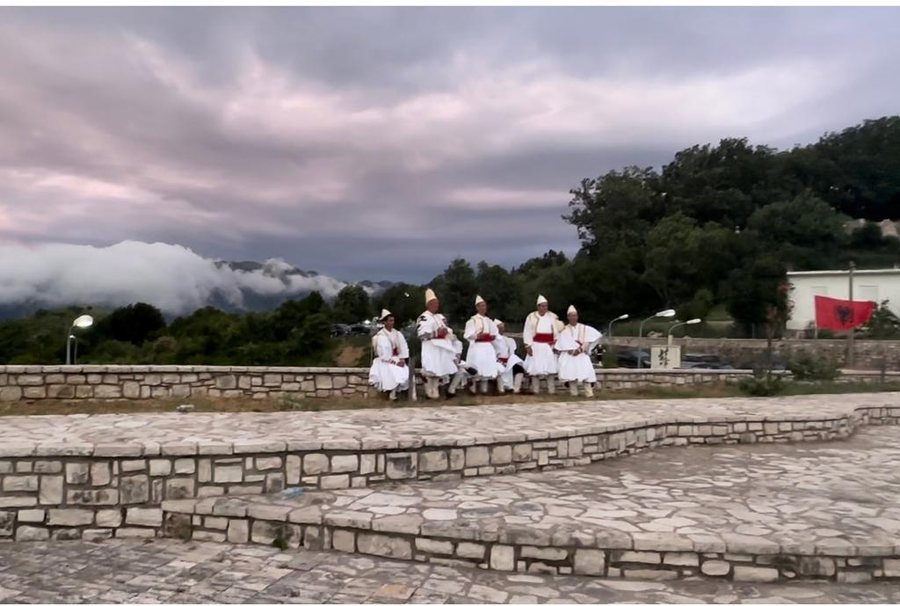
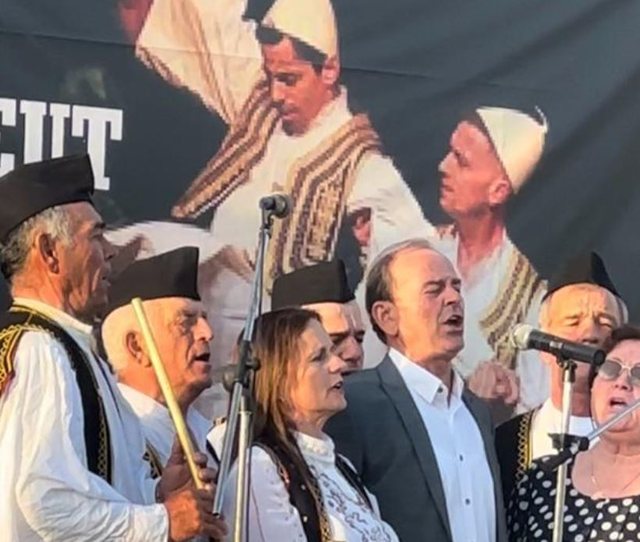
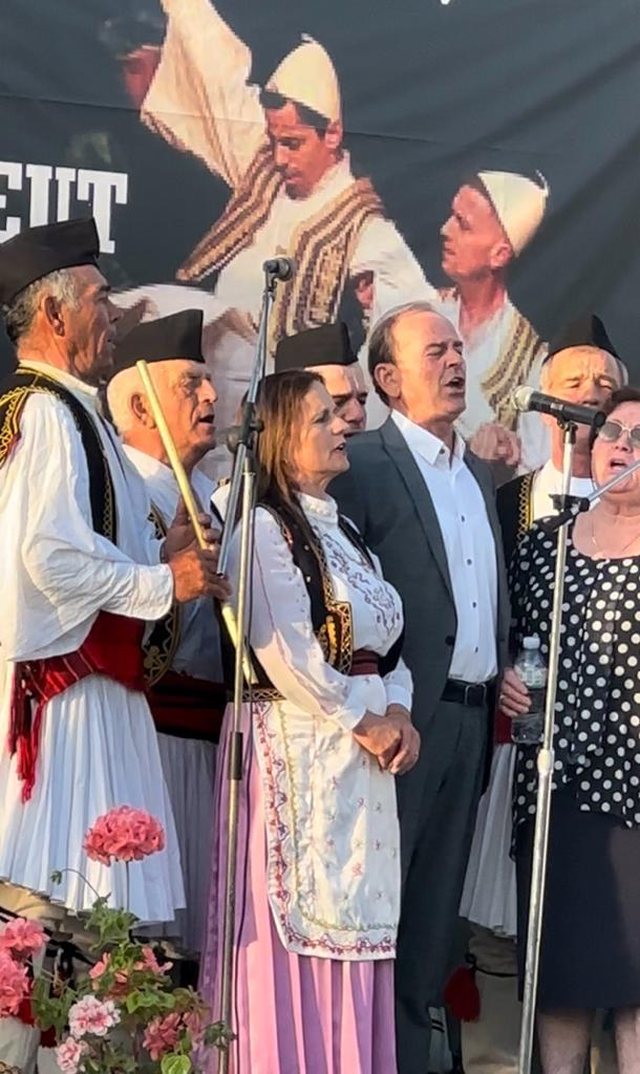
On the podium of the Festival, the song thundered, sometimes by one group and sometimes by another group. But in the stone square where once was the richest library of the three regions from Tirana to Butrint, (which was burned with the advent of democracy), the additional part takes place that we can call the 'Wonder of the Festival'.
If the song comes from great artistic trials, the Wonder is gathered here not as a song, but because of the magic of the song.
A man with the shadow of Lefter Čipa gets on and off the podium and plays the whole role of the master of the house. When he was the brother, he did the 'big one', while now Kristo has the burden. He also sings, composes, and directs, just like his brother.
The Çipa family can now be called the 'dynasty of Art'. From the most ancient, to the 30-year-old poet Akri, they all make up the dynasty. Polo Çipa, an immigrant to Greece, has come with his local song group and called it the 'diaspora group'.
Here everyone looks like what they want. Above the head of Vaso, the owner of the village bar, who serves us whatever we want as if it were a 'butterfly', there is the name of the bar 'Bejkë e Bardhë' and a painting of Bejkë's head. You can't believe how similar they are: Bejka and Vaso with curly hair.
I found this motif in Shkodër with the owner of Rozafa in front of the castle. His name is Ritvan, but now he also calls himself 'Arusha'. It held stones as large as the pyramids of Cheops, and that's why they named it. He loves it as much as the name given by his mother.
In the square paved with steel stone slabs, chairs are placed for the guests, but without any care in order as for 'leadership'.
However, political leaders come and make room for themselves at the front.
Even when they don't exist they create 'miracles'
Deputy Vullnet Sina, who is also a supermarket entrepreneur, came to the podium and said that 'I will donate my salary and allowances for the month' to the Festival. As for the salary, he donates this small salary that has not yet been increased, while there is no allowance at all in May.
Piluriots fall to the tail of the flute.
Bujar Leskajt was asked from the podium to give the certificate of the Selenica group. In fact, they gave him the honor as a gesture, since he is from the opposition, he looks like an orphan. But he did not accept. Selenica voted for the left, Bujari could not violate the principles. Those in the group were upset; one of them solved it:
"My name is also Bujar - he said. Generous to Generous, you are giving yourself the certificate!' That's what labi did with labi, one right-handed and the other an artist.
Polo that came from Patra made it more strange than the first ones:
- I want to greet all the political personalities! - he said.
"I greet Mayor Ix, Mayor Y, the other municipality, the other secretary, the other chief..., some twenty greetings, even for the municipalities that were not there at all. But he did not mention any man's name. Better did it like this, where there are names that resist why you were appointed administrator.
I was waiting for Ethem Ruka, Mevlan Shanaj, Zhani Ciko, Afërdita Onuzi..., whom I had by my side, to be called by name; at least these have stage names. But who notices artists and professors!
Art often plays a dangerous game with himself: He ignores himself, while he sings the farm foreman...
The evening of the Fourth Festival passes, it passes with wonders even 'without art'. A group of five take it seriously and sweat it out there at a table. They are the members of the jury, personalities of the national culture. Why do they tire so much for a miracle that also brings us the 'non-Art' miracle.
But Labëria's song has lit up the sky over Pilur.
Aleksandër Çipa says that he cannot call Piluri's song 'polyphonic'; much less 'Iso labe'. It is the national song of the nation, and that's it - thinks Sandri.
I said that I will talk to you about this later.



Lini një Përgjigje