


 Shkruar nga Lutfi Dervishi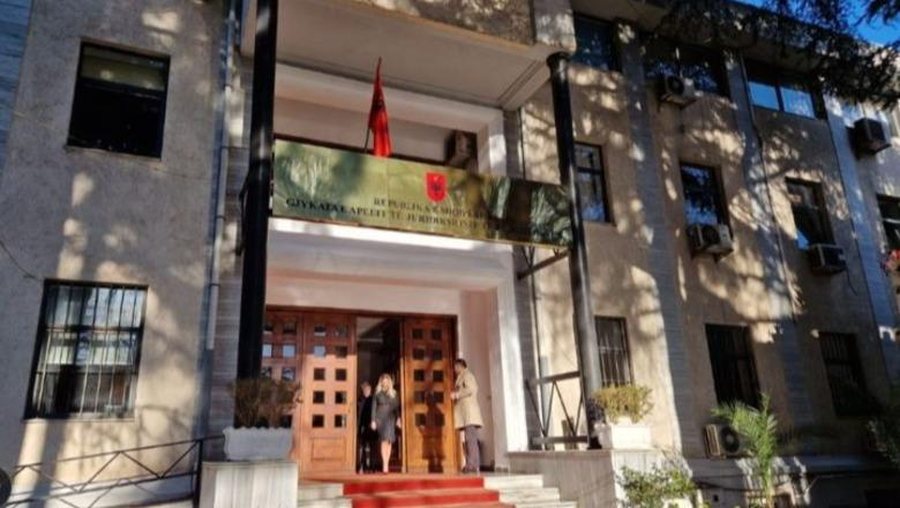
The loss of the judge's life should be a real moment of awareness, not a 24-hour Facebook status. Governing institutions must break their silence and take responsibility.
The question that remains today is not "who killed the judge?"
We are taking it for granted that politics has its own fault, the government has its responsibilities, the media and the prosecutors and the people's judges who have turned the keyboard into a Kalashnikov have their share. BUT...
The most difficult question is: Who will judge justice?
Because if she doesn't judge herself, the crowd will judge her. And the crowd knows neither law, nor canon, nor forgiveness. If the perpetrator (and with him the family members) asked for forgiveness, the crowd demands retribution!
There are many people who are angry with justice. 120 thousand files are piled up waiting for a trial. Only in the Court of Appeal, where the judge was killed at his desk, 31 judges work. There should have been 78. Every day the files increase, every day the delays accumulate, every day the dissatisfaction accumulates.
45,374 files are pending in this court, statistics for September! (33,000 files have been transferred from closed courts). About 13,000 files are added every year.
The reform promised purification, but it also brought paralysis.
Only 67% of judges and 65% of prosecutors are on duty. With less than two-thirds of the staff, the system is functioning sluggishly.
Justice at this rate is delayed so much that it takes away hope and leads to despair. And while the files pile up in the courts, the state pays the bills. In the last decade alone, 17 billion lek have been spent on unfair dismissals from the state budget.
Thousands of cases won against the administration show that injustice is not a coincidence, but a working model.
The governance of the judiciary itself has its flaws. Crime is not only related to security and buildings, but also to the functioning of the system. After seven years since the establishment of the new institutions of justice reform, no court (except the High Court) has an appointed president. The High Judicial Council, which should guarantee the functioning of the system, has not yet approved the regulation for court heads.
The loss of a judge's life should be a real moment of awareness, not a 24-hour Facebook status. Governing institutions must break their silence and take responsibility.
The judiciary should have come up with an emergency plan long ago to fill the empty seats in the courts. At the current pace, it will take 13 years to fill the empty seats in the courts and the prosecutor's office! It simply cannot continue like this.
The injustice or the feeling of injustice is so great that some of the victims do not see the judge, but the injustice. And they consider the event as an act of reparation.
There are people in the justice system who see people as if they were flies. They think they are superhuman. They think they can do anything to anyone!
We cannot continue to normalize the idea that it is normal for a civil trial in a court instance to last 7 years, that the embassy must intervene to clarify the court decision for one of its citizens, that a judge can judge 10 cases a day, that indefinite imprisonment for trivial cases has become a refrain, or that the merger of all the Courts of Appeal is a success story! If anyone has forgotten, they should remember that the closure of the courts was done for the "new judicial map"
The exponents of the judiciary, whenever they appear in public, talk and demand independence. They never talk about the internal problems of justice and how they intend to solve them. They talk so much that it seems that they were created to gain independence. It seems that for them the mission is independence, that they are only concerned about that. Inshallah, the day will come when they talk about justice so that we can begin to hope, that they are beginning to think about it.
And here we return to the starting point: Who will judge justice? If the system’s leading institutions (KLGj, KLP) do not resolve the paralysis and fill the empty seats, they are inviting another trial. They are inviting retribution. No one should be fooled that this popular anger comes by chance. It is the fruit of delays, overload, and perceived arrogance. This tragedy should be the final alarm: either justice judges itself quickly and efficiently, or a trial that does not respect any rules awaits. The choice is not between reform and the status quo; it is between legal order and retribution for the mob.



Nuk e di pse te gjithe ja vene fajin vetem vonesave! Nuk jane vetem vonesat problemi! PROBLEMI KRYESOR ESHTE SE NEPER GJYKATA DHE PROKURORI, KA KORRUPSION GALOPANT!!!!! Edhe per ceshtje banale, te sorollasin qe te japesh leke.