


 Shkruar nga Roland Lami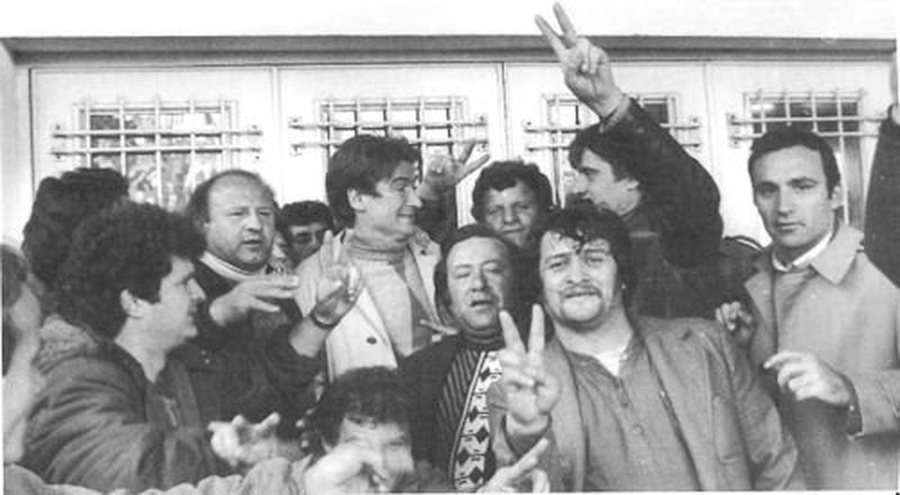
If analyzed with a critical eye, our political history resembles more a survival manual than a social project...
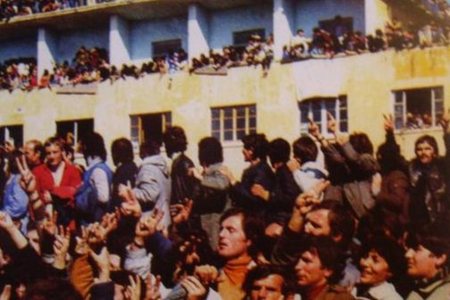
December 8, as the day that symbolizes the beginning of the movement for regime change, should prompt us to reflect on some decisive moments of the Albanian state, on the choices we have made and on those to whom we have delegated the right to reform the country at the most critical moments. This date, which marks the explosion of a new social energy, remains an invitation to review not only the leaders we have elected, but also the very logic with which we have believed in change, as well as the consequences of those decisions on the political destiny of Albania.
Albanian political history appears as a mirror where society sees not what it wants to become, but what it has learned to accept. The archetype of leader that Albanians never preferred was that of the critical thinker, the man who challenges the flow, the idealist who seeks to build a new political morality. From the battles between Zog and Noli at the beginning of laying the foundations of the modern Albanian state, then with the triumph of Hoxha against Malishova, taking the lead of the political force that he led with an iron fist until the 90s and the icing on the cake, Berisha's arrival at the head of the DP, defeating his rival Pashko, enabled the longest transition compared to the countries of his former birth.
What we can analyze today with a critical eye is the fact that the contrast between the rivals was not only political, but philosophical, a rivalry between two ways of being leaders, between the force of authority and the force of the idea, between pragmatism and idealism, between populism and doctrine, between the anthropology of the crowd and the universal norm. Society, tired of uncertainty, unaccustomed to other models than those offered by the society of the time, chose the archetype embodied by Zogu, Hoxha and Berisha. This choice was repeated as an inevitable rite at crucial moments as if the people were looking for a protector more than a guide, more an extension of themselves than a different model.
The choice of Zog over Noli at the beginning of the modern Albanian state, of Hoxha over Malishova in the leadership of the party that would take charge of the country's destiny after World War II, and most recently of Berisha over Pashko who would install the foundations of a democratic regime, helps us to understand that the taste of the masses has always privileged the pragmatic leader over the idealist, the mediocre over the rebellious intellectual, the autocrat over the liberal, and the rural over the urban. This archetype has influenced the structure of the state. Collective elections at key moments have enabled the legitimacy of autocrats, and the latter have established weak institutions.
If analyzed critically, our political history resembles more a survival manual than a social project. The masses never chose a leader who would challenge them, but one who would deceive them. On the one hand, the autocrat is cursed, on the other hand, the status quo is silently worshipped - that is what he enables. Thus, electoral decisions were born not of principles, but of benefits, not of vision, but of fear, not of political education, but of the habit of submission. The result is a history where leaders change, but the model remains the same, and society, with the same cynicism that elects them, complains about them as soon as it has put them in office.
In essence, the thesis is simple but dramatic. The masses have chosen the autocrat at crucial moments because in a way they are themselves, with their political culture shaped by hierarchy, fear, and the need for strong figures. Society recognizes and reproduces only the model it has exercised for decades within the family, institutions, and everyday relationships, where unquestioned authority prevails over dialogue, a strong voice over argument, and conviction over critical thinking. The autocratic leader is not a historical accident, but the reflection of an internalized model that appears at every level of social life and that politics simply formalizes through elections.
In this sense, the events of December 8 remind us of precisely this mentality ingrained for generations that we are unable to break away from.



Lini një Përgjigje