


 Shkruar nga Ylli Pata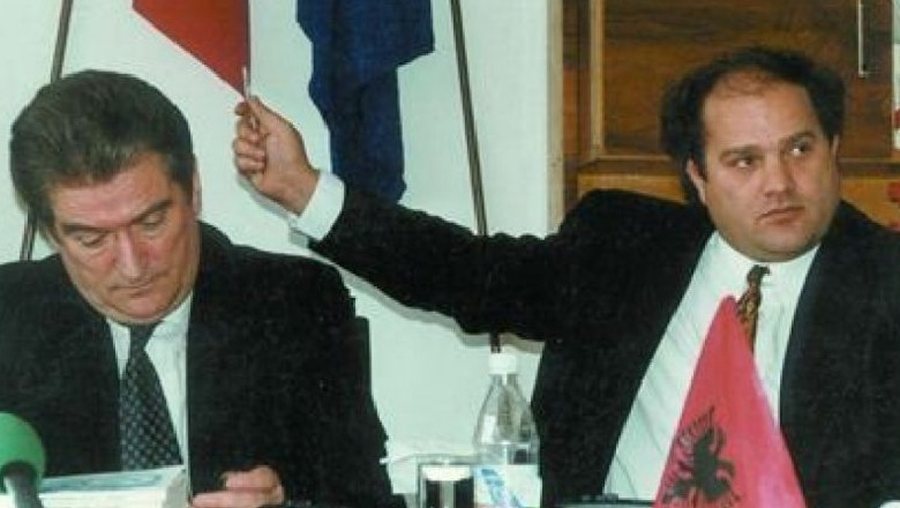
Who chose these names, who brought them up, and why? What factor was more important besides the power factor of the time and the students who revolted on December 8?
It's been 35 years since, every December, a series of controversial stories about what happened when the communist regime fell in the country began circulating in the public.
A series of stories, where there is more than one version of what happened and who the real or false heroes of that era were.
Characters who beat their chests about where they were when the revolt broke out, who was put in charge, and why others benefited.
Never in all this time have we had a clearer picture of what has happened beyond the protagonists that naturally arise and develop in such rapid periods of epochal change.
The clearest panorama of December 8 is the student revolt in the dormitories of Student City, which was decisive for the great political act.
Namely, the decree allowing political parties in the country and paving the way for universal elections to elect the country's Parliament.
It seems clear that the decision was almost ready in the head of the regime at the time, Ramiz Ali, who also had international contacts on political changes.
The student revolt was a detonator to open a political process with many unknowns. The students demanded change now and without delay. At the head of the students, a kind of leadership was formed, of which Azem Hajdari was the most well-known.
Who chose that representative, or was it a momentary improvisation of courage and initiative driven by courage? Yet another fog. Ramiz Alia agrees to meet with the students, playing cici mic for a chosen representative and for the meeting place.
It is decided that a group of students representing all the faculties will go to the Brigades Palace. They are chosen by 2 representatives for each faculty. Thus, the representation that went to meet with Ramiz Ali was not the core of the revolt in the Student City, but others who were chosen in an improvised manner by the faculties. Some of these representatives were leaders of organizations parallel to the regime such as the Communist Youth or others.
We have seen the video of the famous meeting with all the stenography broken down over and over again all these years. Very few at that meeting had a clear logic of how they would seek the big change. Many of the students, understandably, did not have the clarity that we can have today, when things have been clarified little by little.
Alia asks them if they are looking for a new party? Some of them shyly utter this request and they start talking about a “student party”. Which Ramiz Alia says you can register it with the Ministry of Justice. Accordingly, the legal or procedural aspect was prepared early on, which the head of the regime makes so simple: “register it with Enver Halili (Minister of Justice) and everything is in order”.
Excited to receive the response they were waiting for, the delegation went to Student City, where the party began. Meanwhile, in parallel with the party, the first meetings of the new party also began.
Where suddenly other characters appeared and managed to emerge at the head of the group and the new party. Which was not a student party but the first opposition to the ruling Party of Labor. It was called the Democratic Party, after some ideas that came from intellectuals inside and from Albanian territories outside like Kosovo or Montenegro.
Besides the podium that was set up in the student city, the most important one that caused a stir in the public was Voice of America, the most listened to radio station at the time. It had the most accurate information about who the future new leaders of non-communist Albania were.
Where the two most important were Sali Berisha and Gramoz Pashko, but of course there were other names: Arben Imami, Neritan Ceka, Aleksandër Meksi, Preç Zogaj, and above all Azem Hajdari, etc. etc.
Who chose these names, who brought them up, and why? What factor was more important besides the power factor of the time and the students who revolted on December 8?
What is the real role of the internationals accredited in Tirana, or even those who ran everything from the chancellery centers? Who compiled the lists and with what criteria. The founding document of the Democratic Party is more enigmatic than the founding papers of the Communist Party, which to this day are kept with great conspiracy by the Italian state archives and are not allowed to be opened.
What do these letters that were never opened hide? Perhaps nothing, but they serve to maintain the metaphorical fog that has surrounded the December coup for 35 years.
Endless versions have emerged all this time in narratives that come more chaotically, as the story lacks substance. If the real mystery is revealed, then it is easier to analyze why those that happened after December happened.
The political class that emerged from that time did not produce any heroes, but only political monsters who refuse to give way to the new generation. Which sees as aliens all these heroes who tell anecdotes with December, but whom no one understands anything.


Lini një Përgjigje