


 Shkruar nga Augustin Palokaj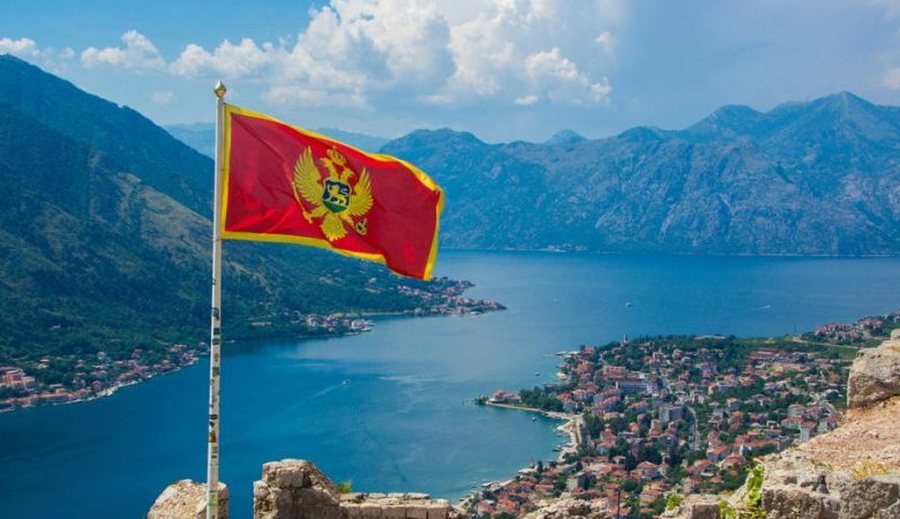
On the other hand, it would be a very important message for the EU if it accepts Montenegro as a new member country. With this, it would prove that despite the fatigue from expansion and the reserves of fear that exists for this process, integration is possible. And there is nothing easier today for the EU than to accept Montenegro.
In the stereotypes that have existed for the peoples of the Balkans, and that are used in barsoletas, Montenegrins have been given the epithet of lazy people, slow people. And there are endless barsolets on this topic, many of which have been made by Malaysians themselves. But here is a race where Montenegro has been faster than all the others that are part of this race for a long time now. Montenegro leads the race for EU membership.
So it is a front runner in the EU enlargement process. It can be said that in this race, if we compare it to long-distance running in the Olympic games, it is several laps ahead of Serbia. Or a few years before Serbia. Much before Albania and Macedonia. One can use the barsolete analogy and ask questions about how fast a process can be, like that of enlargement, in which Montenegro is the fastest.
But humor aside, Montenegro really is the most advanced country in the EU enlargement process and actually the country that Brussels most believes can become a member country in the near future. There are many arguments, circumstances and factors that go in favor of Montenegro. First, it is not a large country with the number of inhabitants, and it would not be a problem for the EU to absorb it as a new member state.
This would not be a burden on the EU, neither financially nor institutionally. With the number of members of the European Parliament, votes in the Council and the money they would receive from the cohesion funds, Montenegro could easily become a member even with the existing rules of the EU, so without having to wait internal bloc reforms that are necessary for the admission of new member countries. In terms of population, Montenegro is about the size of a suburb of Kiev, the capital of Ukraine, which is also in the running to join the European Union.
On the other hand, it would be a very important message for the EU if it accepts Montenegro as a new member country. With this, it would prove that despite the fatigue from expansion and the reserves of fear that exists for this process, integration is possible. And there is nothing easier today for the EU than to accept Montenegro.
Otherwise, the EU would remain talking about enlargement as a priority, taking steps here and there with some candidate countries, but without any concrete results. A concrete result in the enlargement process is only when a country becomes a formal member and when the number of member countries increases. A full 11 years have passed since Croatia became a member country of the EU and it still remains as the youngest member country.
Never in the history of the EU have so many years gone by without any enlargement. Ironically, in the meantime, the narrowing of the EU has occurred, the opposite of expansion since Great Britain has left. So we have on the one hand the reduction of the EU as a result, it is said that the priority is the expansion. In this situation, the admission of Montenegro in the not-so-distant future, somewhere after three to five years, would be a two-sided victory for both the EU and Montenegro. And this would send a good signal to other countries in the region that membership is possible and as a result would help the process of reforms and the process of building good neighborliness.
Just at the time when the readiness to take a giant step in the process of accession negotiations with Montenegro increased in the EU, this country entered a great political test. When the European Commission approved and published the report on the fulfillment of transitional criteria in chapter 23, which includes the area of law and order, known by the abbreviation IBAR, it was expected that several chapters of the negotiations would be closed very quickly.
Because this report was a condition for the other negotiating chapters to be closed as well. But instead of focusing on closing chapters, Montenegro took several steps to prove its closeness to Serbia and to show that the pro-Serb factor currently has great power in Montenegro. After Montenegro supported the Resolution on the genocide in Srebrenica at the UN, to balance relations with Serbia, a Resolution was proposed in the Assembly of Montenegro on the genocide in Jasenovac during the Second World War. No connection between these two events could be made at that time.
First, nobody relevant in Croatia denies the genocide in Jasenovac. Moreover, the head of state in Croatia every year marks the anniversary of this crime against Jews, Serbs and others who were opponents of the Croatian fascist regime. And today's Croatia has distanced itself in all ways from the fascist regime of the Second World War, while even in the Constitution of today's Croatia it is said that the state is based on anti-fascist war and values. Even the first president of Croatia, Franjo Tudjman, was a partisan military officer in the war and after the war, a soldier of the Yugoslav Army.
The attempt to link the crimes in Jasenovac with those in Srebrenica was therefore understood as a grave insult to Croatia. Moreover, since it comes from Montenegro, from which Dubrovnik was attacked in the last war and serious crimes were committed against Croats when Montenegro was part of Milosevic's Yugoslavia. The proponents, even those who voted for the Resolution for Jasenovac, simply performed a task suggested by Belgrade and carried out by the pro-Serbian forces in Montenegro, which seem to be mostly represented by the speaker of the Assembly, Mandić.
Apart from taking bilateral steps, declaring three pro-Serbian politicians from Montenegro persona non grata, Croatia also influenced the EU so that this episode of Montenegro does not go unrecorded. Several high-level EU visits to Montenegro were cancelled. Also, the sentence was removed from the statement of the EU summit through which Montenegro's advancement in the membership process would be welcomed. And now there is no more talk of a rapid progress of Montenegro towards the European Union.
But still, in reality, Montenegro, no matter how far it is, remains the country which can become a member of the EU as soon as possible. But this country is now passing a test to prove whether it is closer to the EU or the Serbian and Russian world. The two do not go together. Perhaps the goal of the pro-Serbian and pro-Russian forces in Montenegro is precisely to slow Montenegro down towards the EU. Because Serbia would not experience it so easily that it remains blocked and someone else from the region enters the EU. If Montenegro manages to stay out of the games of the Serbian world and the Russian world, then the road to the EU will be open.
But no double games as politicians in power have done in the last two months trying to balance between Belgrade-Moscow and Brussels. Because the EU recognizes only Serbia the right to sit simultaneously in two or more seats. Others will not be tolerated what is tolerated to Serbia. This will not be tolerated even by Montenegro. Finally, as stated in all the EU's declarations on the enlargement process, "the goal of joining the EU is an independent decision of each country, but this must also be proven with deeds". And this must now be proved by Montenegro, as for the first time doubts have been created about the orientation of this country.


Lini një Përgjigje