


 Shkruar nga Frrok Çupi
Living at altitude, what else is it? It's health. Mark has never known covid, nor viruses, nor heart and lung disease.
Vjosa had not yet fallen into bed when I picked up Mark. "I picked him up" means I called him. To pick him up in the city or in the field, as the word "pick up" means, would have been impossible. He was a resident of the city, in Rrëshen, where the altitude above sea level is only 94 meters; and he left.
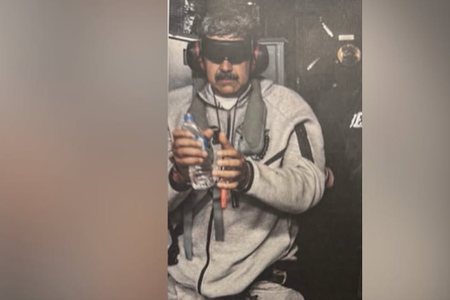
For years he has lived in Arrës, a village in Mirdita at an altitude that has never been measured, but where they have lived for generations. The village of Arrëz, from there to the north touches Tërbun, while to the west it looks at the sea. It has the closest relations with Tërbun, from where it also receives storm signals. Tërbun is about 1476 meters above sea level; and, somewhere nearby is the mountain in Arrëz. Only five or six people live in the village now, but Marku is up there all the way.
I pick it up when there are heavy storms. He opens the phone laughing; and I understand why. Because he gets to laugh at the fear of others 'how does Mark live so high' in the middle of winter.
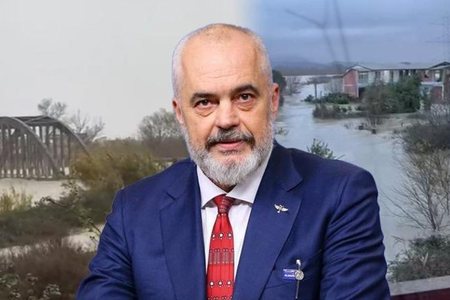
This time I was wrong about whether to take it when I heard the news and the groans of the villagers who had fallen by the rivers and the seas. Many houses were flooded. The media filmed miserable images of many deserted people.
If I had done this too, to call the man at the top out of sadness that others were being flooded at heights of 10 or 6 meters above sea level, who knows what ironic response I would have received.
But after the ice started to set in and temperatures in Arra dropped to minus 15 degrees Celsius, then it made sense. 'Then' was today, and I picked him up. He told me that everything was ice-cold; he told me that none of his livestock or poultry had been harmed; he also told me that nothing was missing. He spoke for himself with the liveliness of a boy.
He lives there at the top, not as a challenge to anyone or anything. His ancestors, parents, grandparents and great-grandparents, lived there. In two adjacent stone towers, as if they had built UFOs. With three water fountains in the yard. With nuts from which the family members took what they could for the whole year, and left the rest to be taken by the third autumn rain. Who knows where those fruits wandered in the Fan River and landed where today they say 'the houses were flooded'.
So what is it that Mark lives for, even though he may not know why?
Why do you live at altitude?... because it makes no sense to live where the waters take you.
But living at altitude is the eternal way of living. But when you have the chance to have altitude. We Albanians have it in abundance. In Mirditë and Arrëz, even more so. Living mountain by mountain, for a while, was ironized, especially during the dictatorship period. But in fact, living mountain by mountain testifies to the quality of life and pre-political democracy. Everyone, at altitude, seemed more virtuous and everyone respected the dignity of the other. It was the law. It has never happened in history that someone from the tower on that mountain despised or touched the other.
As for an addition that reporters usually make: Gjon Gazulli and Preng C. Lleshi grew up in these houses. Gazulli in the Gazull neighborhood, a fellow soldier of Gjergj Kastrioti, astronomer, mathematician and humanist. The poet Preng C. Lleshi, also a historian, the greatest polemicist with Ismail Kadarena.
Living at altitude, what else is it?
It's health. Mark has never known covid, nor viruses, nor heart and lung disease. Nor can he flood. He would laugh at the words 'the house floods'. For centuries, people built lives on high ground to escape diseases and floods.
And for prestige; and for this reason, people live at heights. Not only in Arrëz, but also in the mountains of Austria and France. A castle built high - it is written in European encyclopedias - shows the authority of the nobleman. The castle from above conveys the idea of strength and rule.
In the riverbed you are always under the fear of domination.


Lini një Përgjigje