


 Shkruar nga Pierre Haski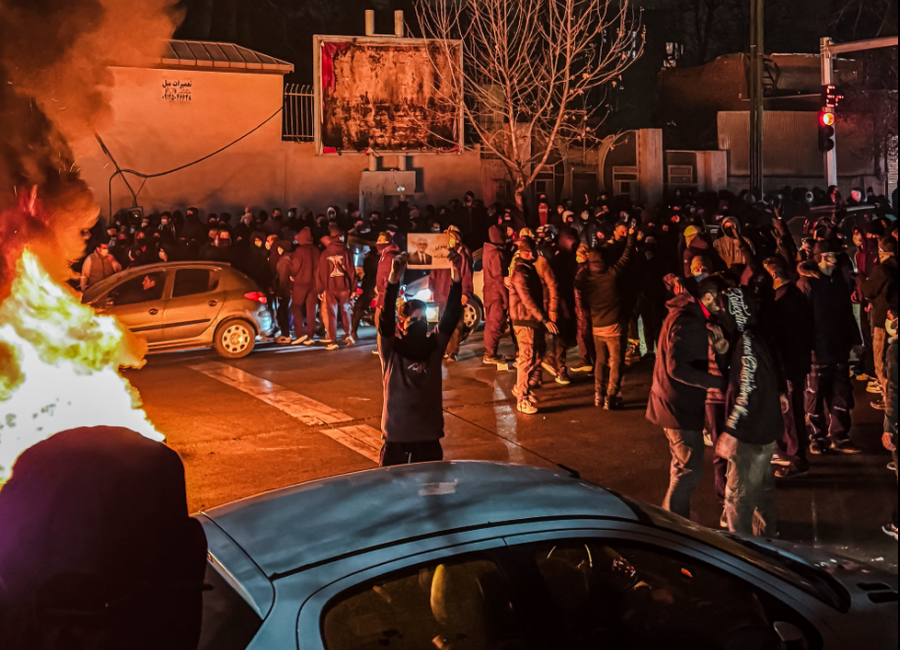
Amidst the shadows of a new war in the Middle East and desperate calls for freedom, is Washington preparing to open "Pandora's Box"? When the will of the people clashes with the global military machine, the line between liberation and chaos becomes terrifyingly thin...
Donald Trump is hesitating, and that's completely understandable. As a brutal crackdown hits Iranians, leaving hundreds and possibly thousands dead (the deliberate internet shutdown makes it difficult to accurately assess the human toll), the US president would like to keep his promise to help Iranian protesters.
In Washington, diplomatic sources confirm that he is studying various attack plans, but has not yet made a final decision. Is it possible to carry out an effective intervention in a complex country like Iran, with a major popular uprising underway?
And above all: is it right for outside forces to intervene at all? Some very committed Iranians categorically oppose the idea of outside action, such as the director Jafar Panahi, winner of the Palme d'Or at Cannes, and repeatedly convicted by Tehran's courts.
Panahi argues that “change in power must come from the will of the people, from within the country,” thus preserving the sovereignty and integrity of the movement. There are many arguments against external action, be it American or Israeli.
These include historical precedents such as Libya, where NATO intervened in 2011 to prevent a massacre in Benghazi, but ended up destabilizing the country and the entire region for an entire decade.
The methods of intervention also raise serious strategic doubts. Would it really be possible to help the protesters through a series of airstrikes, and targeted strikes against Revolutionary Guard leaders?
Wouldn't this risk playing into the regime's favor by legitimizing theories about "foreign influence," or worse, plunging the country into civil chaos that would worsen the conditions of the population? These questions cannot be ignored, despite our sincere desire to help the Iranian people.
Among the arguments in favor of intervention is the urgent need to help a population in extreme danger. It is morally intolerable to see innocent people killed simply because they chose to protest in the streets for their rights. International impotence is a powerful motivation for action. Some observers believe that the mullahs' regime could fall with one last push in the right direction. Israeli Prime Minister Benjamin Netanyahu has repeatedly expressed a desire for regime change.
Today, the goal remains the same: to overthrow a regime that sows terror inside and beyond Iran's borders. Some Iranians in the diaspora are calling for intervention because they believe it is the only way to overthrow a system that clings to power.
At the moment, various operational options are being considered. A special operation to neutralize the leadership, similar to the attempts in Venezuela, seems difficult, although Israel has demonstrated high penetration capabilities.
Invading Iran like Iraq in 2003 is out of the question, because Donald Trump prefers strong but short-lived action. So we return to the question: how can we help those who are oppressed when military action is so dangerous?
This is the dilemma that torments us all./ Adapted from "Pamphlet" by "France Inter"




Lini një Përgjigje