


 Shkruar nga Ben Andoni
What we are seeing in recent days and which has been repeated several times in the Socialist Party and Democratic Party circles is the helplessness of the Albanian individual, anarchy, the uncertainty of development and the incompetence of local government instances, over which the chaotic central government watches.
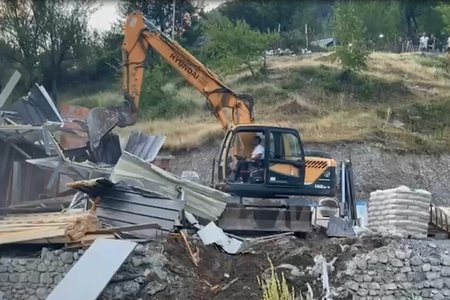
The trip of the head of the government Rama to several municipalities, the demands for mass resignations and the culmination with the meeting of the local government, the superaction against constructions in Theth, the action for the certification of dairies, among others, what may follow in the coming days, have shown that Albania does not function with institutions and structures but with individual wills. Those few exchanges of jokes between Rama and the mayors of the municipalities (visible in the situation of students in exams), have shown us that the rule of law and democracy in the country are very little in front of a single will.
Unfortunately, the most structured and institutional developments in the country have been those associated with non-democratic regimes. The first under the fascist occupation regime and the second under the socialist regime, where despite the corruption and isolation there was a greater awareness of preserving some parameters in the country. For a little knowledge: Italian engineers and specialists worked from 1915 to 1939 distributed in the technical offices of various cities of Albania, also in the Ministry of World Affairs and at SVEA (Società di Sviluppo Economico dell'Albania-Society for the Economic Development of Albania).
We see their contribution extending from the design and construction of the infrastructure system, to the drafting of Regulatory Plans and the arrangement of city centers through the construction of buildings of public interest, Selenica refers in “Albania in 1927”. The second phase began with the creation of the Central Office of Construction and Urban Planning of Albania in 1940-1943 with the capitulation of Italy. The work of this entity focused on the control of public and private construction activities, on the drafting of construction and urban planning regulations as well as on the strengthening and control of all infrastructures and plants for an organic development of cities and the territories around them.
Çdo ndërhyrje apo planifikim urbanistik kalonte nëpërmjet një studimi të detajuar të territorit në të cilin do të bëhej ndërhyrja, shkruan studiuesi Emin Riza në një artikull te “Monumentet”. Për këtë arsye bëheshin disa variante të ndryshme, të cilat konsistonin me njohjen historike, me përshtatjen e qytetit ekzistues dhe me zhvillimin e tij pas ekspansionit të ri, shkruan studiuesja Dr. Ariola Prifti në “Ndikime të arkitekturës dhe artit italian në Shqipërinë e viteve 1925-1943” në një studim interesant për këtë kohë, referimet e të cilës kemi shfrytëzuar. Ndërkohë centralizimi në kohën e komunizmit dhe planifikimi nga zyrat dhe komitetet kap çdo detaj dhe qytetet modelohen sipas një strukture, ku dominojnë ndërtimet shtampë, ndërsa forca e shtetit kalon mbi çdo iniciativë private, pasi kjo e fundit mund të dënohej mirëfilli në rast se identifikohet. Socializmi si ideologji është i ndarë me privaten. Është kaq e kanonizuar çdo gjë saqë pothuajse disa qytete ngjajnë identike me njëra-tjetrën, sa i përket ndërtimeve. Individi e ka të vështirë në mungesë të demokracisë të shprehet, sepse shteti komunist ka të përcaktuar planet urbanistike, kurse projektet zhvillimorë turistike i ka të kufizuara, në një vend ku shumë zona janë të paprekshme dhe konsideroheshin si zona kufitare.
Ajo që po shikojmë në ditët e fundit dhe që është përsëritur disa herë në rrokadat Parti Socialiste dhe Parti Demokratike është panginja e individit shqiptar, anarkia, paqartësia e zhvillimit dhe makutëria e instancave të pushtetit lokal, mbi të cilin vigjilon pushteti kaotik qendror. Është e vërtetë se marrëdhënia mes individualizmit dhe demokracisë është komplekse, por në rastin shqiptar ka treguar se ato e përjashtojnë shumë njëra-tjetrën. Duke mos pasur shtetin e të gjithëve ose më saktë, kur partitë e kanë shfrytëzuar shtetin në mënyrë të paskrupullt ka ndodhur bathorizimi me rastin e PD-së, ndërsa prona private është tjetërsuar ngado disa herë. Shumë prona janë të mbivendosura ndërsa ende sot ka pronarë, tokat dhe pronat e të cilëve i gëzojnë të tjerët. Kadastra është një nga institucionet më problematikë dhe të korruptuar të vendit. Në rast se do kishte një libër turpi për Shqipërinë, faqet e të cilit do ndaheshin paqësisht nga politika me drejtësinë. E para për mungesën e vizionit dhe paqartësinë për zhvillimin, e dyta për bastardimin e të Drejtës.
It is true that in the current regime, individual interests are the priority and individualism as a philosophy prioritizes the importance of rights, freedoms and self-interest. But in Albania, individual interests have prevailed over the collective good and the confrontation has been open with democratic principles that aim to balance individual rights with the needs of the community. Look at what has been done to parks and environments everywhere, sports fields a little worse. Unfortunately, thousands of victims are counted, much more than in communism from this frightening individualism. And, we come to what is called in the literature: Inequality and social fragmentation. Excessive individualism has increased social and economic inequality, since only a part of individuals have access to the good, while others suffer even in the simplest businesses. A handful of people dominate the wealth. The consequences are that not only has the social situation been damaged but fragmentation has been created, making it challenging for democratic institutions to function normally. Rama is seeing for himself what he sowed with his predecessor Berisha, even though it will be difficult to impress them after the fall when they will start dealing with their daily lives and jokes in parliament.
This kind of individualism and force over the collective good has made the Albanian public indifferent to civic activities, while voting, volunteering or participating in public debates almost feel like drudgery. And, worse still, individualism has made the Albanian individual simply hold on to his ideas, often wrong and chaotic in the face of a state like ours, equally unclear, while he is less willing to make compromises or consider alternative perspectives. In short, here lies one of the reasons why democratic institutions do not function effectively, and even people who should serve the public good act in an individualistic manner.
With this level of yes-men in our democracy, mostly in the two main parties, where the Socialist Party dominates due to its power, the official and private individual cannot understand that the right of the individual must be harmonized with the needs of the community. Democracy is being lost to individualism because our state unfortunately cannot become as democratic as we aspire to or needs a mask. Just what the Rama administration has decided now and pretends not to know. But this too has a logic. The cynic Oscar Wilde, who lived in his time under such a regime, said it most bluntly: "A man is less himself when he speaks as himself. Aman, give him a mask and he will tell you the truth."



Lini një Përgjigje