


 Shkruar nga Andi Bushati
"This time it must be admitted that the DP managed to tear down the facade of normality, although more than to its credit, thanks to the spoiled humor of a capricious autocrat, who no longer has the nerve to continue the theater of democracy with aplomb."
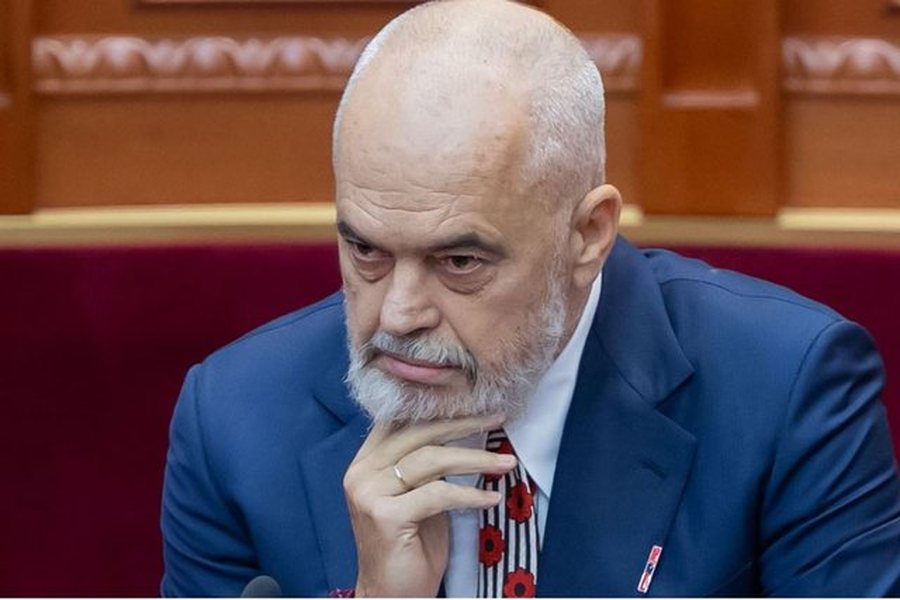
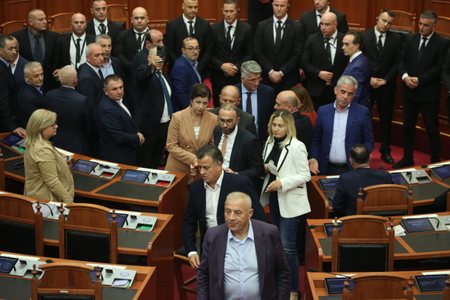
The Albanian Parliament broke another record when a debate session on the government's program, scheduled to last over 25 hours, ended in 25 minutes. The socialist deputies did not listen to the prime minister, nor to the individual ministers about their concrete objectives, nor to the opposition that could be made to them, but voted like sheep, creating a precedent unprecedented in these three decades of post-communism.
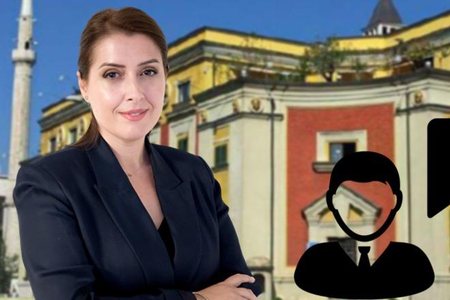
Although it is not very important, the chronicle of what happened can be summarized simply. The Prime Minister decided that for the sake of show, the AI-created minister, “Djella,” would also address the assembly with a speech. The opposition protested, calling this show contrary to the parliament’s regulations. They began to shout and throw leaflets at the government rostrum. An annoyed Rama threatened them: “if you don’t let me continue, I will go directly to the vote.” So for him, neither the obligation to disclose the program, nor the interest of citizens in hearing it, nor the supposedly democratic session of discussions mattered. The message was clear: if you don’t like my script, I will also take away your right to be present in parliament, turning it into a mere formal institution where you only vote.
Rama threatens to close the debate in Parliament if the opposition does not behave well
That's how it was done. The Socialists raised 82 cards. Albania was made with a four-year government program and everyone dispersed. The fact that the head of government was annoyed by the out-of-order interventions and the loud voices of Gaz Bardhi and Klevis Balliu was enough for Taulant Balla to request it, Niko Peleshi to implement it and everyone else to vote for the annulment of a regular session, turning the assembly into a formal notary of Edi Rama's whims.
Of course, in such a situation there will be many who will say that it was worse that it happened this way. That such a parliament, which served only to raise cards, is very similar to that of the dictatorship. That the opposition was not given the opportunity to have its say on the most important platform where its voice is heard. That the public lost the opportunity to be informed about the pros and cons of what awaits them in these four years.
But all these are arguments that have value only for the indifferent or the blind who live with the illusion that we are still in a democracy. Yes, in such a system this debate would have value. But in the autocratic regime under which we find ourselves today, where the personal needs and whims or whims of a single person have taken on the force of law, what happened in the assembly, this Thursday, is definitely the right thing to do.
It doesn't matter whether it was an attempt to trap Edi Rama in which the opposition fell in with both feet, or quite the opposite, that it was the DP that provoked this unusual situation. The conclusion is the same: the session where the budget was supposed to be discussed showed that we no longer have a normal parliament. Can one be found, in a country that is considered democratic, that devotes only a few minutes to the government's program? Can one be found where the Prime Minister's whims determine the continuation of discussions and debates?
In this sense, what happened today is the most realistic reflection of what we are living through. In a parliament emerging from the farce of May 11, where there will be no shortage of scenes of opposition desecration as in the past (illegal denial of establishing investigative committees, and development of motions or interpellations), there is no need to maintain a false facade of normality. Therefore, those who lament the opposition's plight for being left speechless or for losing the opportunity of a platform from which to shine with its criticism are wrong. The real task of the DP, which it is not known how long it will have to fulfill, is not to serve as an alibi that we still live in a democracy, but to undermine by any means the maintenance of this forced fable. This time, it must be admitted that it achieved this goal, although more than to its own credit, thanks to the spoiled humor of a capricious autocrat, who no longer has the nerve to continue the theater of democracy with aplomb.


Lini një Përgjigje