


 Shkruar nga Roland Lami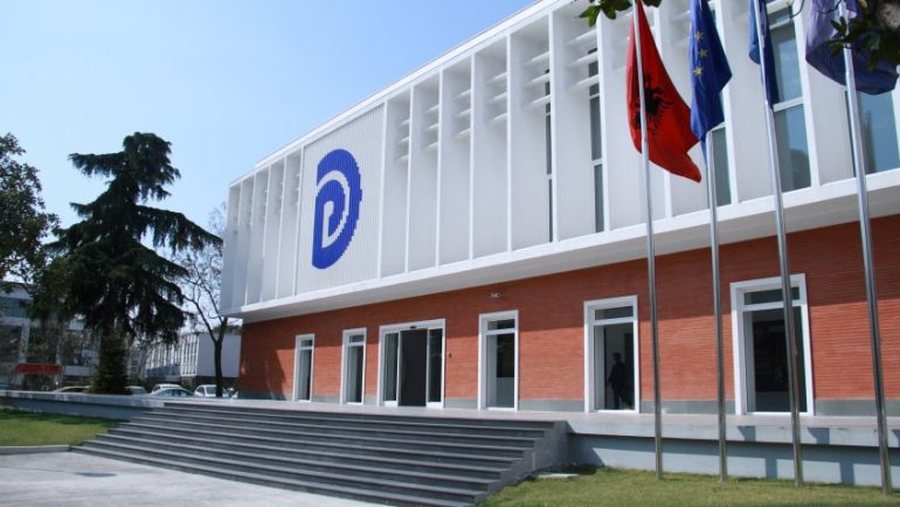
Unfortunately, the transformation, reform and democratization of a political party cannot be imposed by factors outside the DP, but must stem from the will, awareness and action of its internal structures, including its membership, forums and responsible leaders.
Pressure from outside the party for its reform and democratization is a common phenomenon in political systems, especially when political parties are perceived as closed, undemocratic or tied to narrow political or economic interests. This pressure comes from different actors and manifests itself in different forms, especially after poor election results. In this light, we can also see the increased post-election reactions addressed to the largest opposition party after its “shoddy” defeat.
Perhaps some critics naively think that by exerting pressure from the outside, the structures within the DP can be set in motion and the reorganization expected by everyone can begin. Some others, in the hope that by adding criticism, they can give the necessary courage and clarity to important figures in the DP who can remind the legendary leader Berisha of respecting the "Basha" article in the statute. Some others still have the idea that the Democratic Party is not only the largest opposition force that can stop the revenge of the autocratic Rama 4 government, but also the only hope that can offer an opposition different from the one that has existed in Albania so far, therefore it is worth contributing to this political force.
However, what has happened since the 2013 defeat until today, which we speak of differently from what we see in our sister parties, mainly those of the center-right and grouped in the European People's Party (EPP), is that nothing has fundamentally changed in the DP and there is no sign that anything can change in the future.
Unfortunately, the transformation, reform and democratization of a political party cannot be imposed by factors outside the DP, but must stem from the will, awareness and action of its internal structures, including the membership, forums and responsible leaders. Without an internal democratic process, any change suggested from the outside – whether by the media, international pressure or opinion leaders – remains unsustainable and unsupported by its base. The real changes in the Democratic Party (as in the 1990s or in moments of internal crises in 1991, 1998 or 2005) have come from internal pressure: youth movements, leadership competitions, demands for transparency, the need for a mechanical unification of forces and numbers and not as a result of calls from outside the DP. When this pressure from within has been absent, the DP has been stuck in organizational stagnation, division or personalization of power. No party is democratized with advice from television studios or international statements.
Today, the DP has been captured by the leader who founded it and cannot conceive of the DP without him. Its leadership structures are there thanks to the resistance not to reform it but to preserve the party as it is, since any possible reform of it changes their status quo. The narrow interests of a handful of MPs who have seen and heard that even in the opposition they enjoy the fruits of the favors that the government gives them, often in exchange for silence in parliament or parliamentary committees, make them silent and blind. Likewise, a considerable part of the membership has been instilled in their heads the idea that only Berisha keeps that party together, the others are dissolving it. As for the defectors who have made political adventures outside the DP, competing with other logos, they have failed successfully, seeing the return to the DP as a handout, not as a moment to impose visions and proposals. Thus, the party's organizational structures, instead of promoting internal reform, continue to function as mechanisms for maintaining the status quo.
Under these conditions, the first opposition force that enabled the change of the political regime in 1992, can today make a very valuable contribution to party pluralism, especially new parties, through the model of how a political force in opposition should not be. New parties now have a mirror where they can see themselves so as not to repeat the same image if they do not want to have the same result.
The history of political parties in post-totalitarian countries shows us that the contribution of the first pluralist parties, such as the Democratic Party in our case, does not consist only in the role they play in important historical moments by serving as founders of party pluralism and transformative of the political system, but also in the model of failure they offer by closing the political cycle. This political force has closed its political cycle, now, new political forces have emerged on the ground that have what to offer, they just need not do what the Democratic Party has done.
Soon we will have early local elections and new parties have the opportunity to change the idea that has been fixed for years that only the DP and the SP are the main political forces that exchange seats with each other and the others are simply for decoration or add-ons for modest contributions.






Lini një Përgjigje