


 Shkruar nga Mero Baze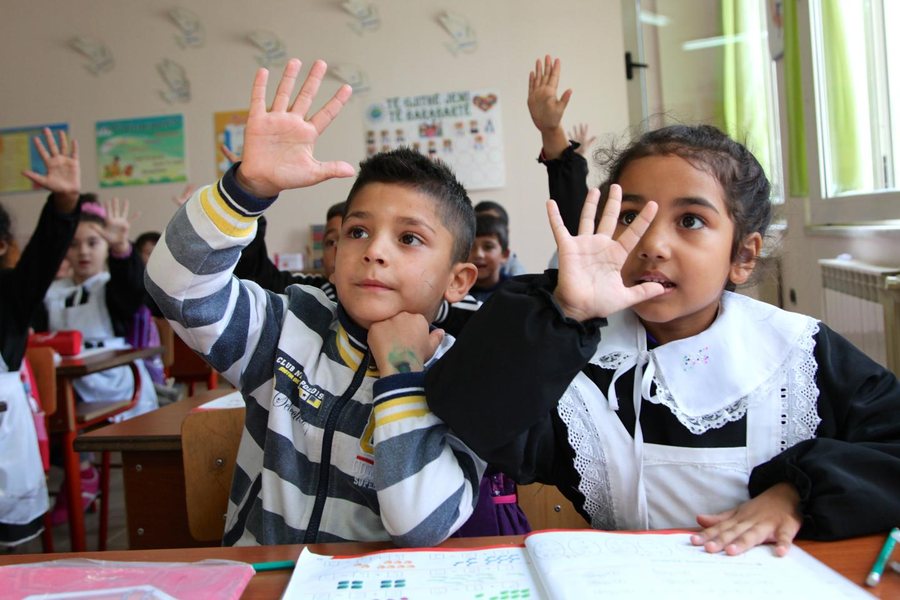
The university system began to deviate from the principles of competition, which were replaced by corruption and the degradation of university standards to the point of destruction.
There is a great debate about the destruction of quality education in Albania after 1990. The statement is true. It began to degrade along with the reasons why education was strong under communism and why there was no longer any reason for us to have quality education with the way we built capitalism.
I belong to the generation of students who graduated from school in the last year of communism. In addition to a healthy educational system from elementary school to university, my friends and I had a very strong motivation to be good students and then students, a motivation imposed by the society of that time: If I were to graduate from university as a good student, then my life would change radically and its perspective would be different from someone who could not make it to university.
The problem was that to get into university, the system was meritocratic. Apart from my peers who were deprived of their biography, at least until 1983-1984, others entered within a competitive system based on the quality of the grades earned.
By going to university, you had secured a permanent job, avoided military service, and gained a new status in society.
After 1990, this situation changed. Being a student was not necessarily linked to a job according to the degree you had received and did not have a more important status in society. On the other hand, the university system began to deviate from the principles of competition, which were replaced by corruption and the degradation of university standards to the point of destruction.
The final blow was then dealt by populist initiatives to provide every Albanian with at least one diploma through universities that were diploma printing presses.
This is the moment when higher education in Albania turned into a criminal institution, as it degraded every standard of education and lost all meaning for the reasons why you had to graduate when you could buy it.
The only salvation remained the few Albanian students who had financial means and began to study in the West. They were at least subjected to a competitive system, but many of them remained in the West. According to today's statistics, Albania has approximately as many students in the West every year as the University of Tirana had in the times of communism, that is, about 20 thousand. This figure shows that the Albanian intellectual core exists, but is exported outside Albania.
The return of students educated abroad to Albania is a problematic process, as the Albanian market is useless for them, as we no longer have a quality job market, which should be based on deep knowledge. At most, they can be placed in some administrative job where special qualifications are needed, but the salary gap keeps them away even there.
The labor market in Albania has degraded along with education, and they hold each other hostage. Albania's unregulated capitalism is no longer based on merit or knowledge, but on personal, financial connections, and business loyalty. Albania has few large corporate companies that recruit knowledgeable people to serve their companies. Most businesses are based on personal or tribal connections, not educational merit.
The most famous people in the country are no longer the well-read or educated. There are some girls who puff their lips and have rich boyfriends, some bloggers who show off waterfalls and tourist trips, and of course, at the top of the list, the Big Brother characters. All of them are successful and uneducated.
In short: the Albanian economy does not need educated people and this is the main reason that Albania's education system is in such a state, as a producer of diplomas that are mainly candidates for state administration.
So it's good that we produce weak students, but we produce them for the state and we haven't yet connected the economy to the need for quality education.
Education is not necessary to participate in the economic life of the country and as such there is no motivation for quality education. When our economy demands students and turns away those who have useless diplomas, then universities will reflect on the quality of education. As long as we demand diplomas from universities and not knowledge, they have no reason to necessarily produce cultured students.




Lini një Përgjigje