


 Shkruar nga Ben Andoni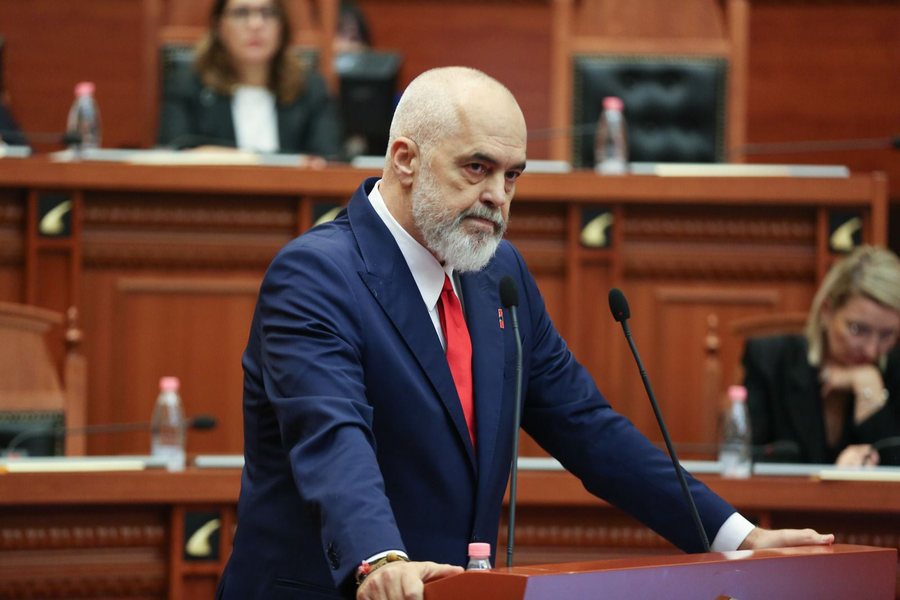
Almost 25 years later, not only has the situation not improved in the region, but in the case of Albania, the situation regarding corruption has worsened tremendously.
The first answer is that we often do not know the corrupt, and in general, corruption in politics is not easily perceived, since politicians know how to hide it, relativize it, and while not many individuals have personal experiences with this phenomenon. Aman, corruption is felt. And, feeling sometimes precedes knowledge about everything. Many Albanians watch officials and fellow countrymen who become rich in a galloping way and change their social and economic statuses in a few years! Until now, the institutions that were supposed to curb it have helped very little, while politics has known how to protect this phenomenon.
A quarter of a century ago, precisely in 1999, the World Bank published a comparative analysis of corruption in all major regions of the world for the period 1996–99 (Kaufmann et al., 1999a,b). What was shocking in the findings was not that normal expectations were not met, but that the worst region for corruption was not perceived to be Africa, nor South or East Asia, nor Latin America, but the Commonwealth of Independent States (Countries, which were born after the dissolution of the USSR). And, further, among the most corrupt parts of the world was what at the time of the Iron Curtain was simply identified as Eastern Europe.
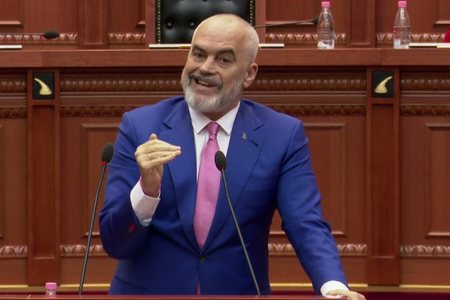
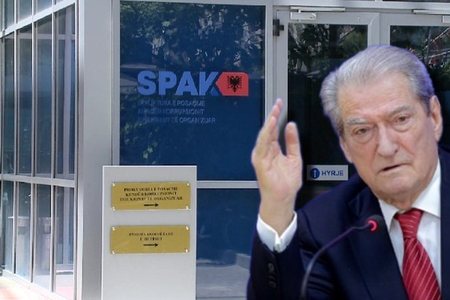
Almost 25 years later, not only has the situation not improved in the region, but in the case of Albania, the situation regarding corruption has worsened tremendously. There is a slight improvement for Albania in the index of corruption thanks to the strikes of the Justice. Despite the fact that the prime minister of the country, Edi Rama, tries to relativize it as a phenomenon, giving his trust to SPAK, his moral approach to responsibility leaves much to be desired, just like that of many other characters. Unfortunately, the badly divided opposition has shown in many moments that it is part of this unusual reality, while the former Prime Minister Berisha keeps the American and British non-women with the motivation of rampant corruption.
The draft resolution proposed by the SP on the fight against corruption and good governance, which is already at the doors of the Assembly for voting and the attitude towards it, is not that they can change anything. This is known very clearly and cleanly: Politics is itself responsible.
In the meantime, the public demands a solution and a fight against corruption, while the opposition puts all the responsibility on Rama's government. The Prime Minister shifts the blame, making misinformation responsible, even in the meeting a few hours ago in Italy, he also used harsh language for the critics, who have added quite a few. Could a better educational background change perception? Yes, if social capital had high parameters, would they affect the perceptions of today's politics?! Hard to believe. We have an educational reform that has not had any effect, not to mention that it has worsened its condition even more.
"Building strong communities in which citizens feel connected and trust each other has many benefits, one of which is that it will help improve public perceptions of the political sphere. However, neither education nor social capital is a panacea. The data shows that education generally changes attitudes to some extent, but not completely," writes Clive Bean in "Are we keeping the bastards honest? Perceptions of corruption, integrity and influence on politics" (Are we keeping the bastards honest? Perceptions of corruption, integrity and influence on politics), which helped us with the title.
It is precisely education and the knowledge it generates that help create
more accessible spheres of politics for individuals, we refer to the above researchers. In fact, the whole East is suffering from education and especially the loss of the credibility of its education, but above all how it happens that the educated individual who is recruited into the administration makes peace with corruption. Even more worrying is the irresponsibility of the governments, and especially in today's case, the failure to take responsibility. This usually happens in the majority with Rama, after accusations of corruption, but recently it was also seen in one case with the technical head of the Opposition, Mr. Noka, when an investigation was launched into his wealth. This constitutes what mostly feeds the concern of Albanian citizens: very few individuals are privileged.
The solution left to the public is obvious: Escape. Although Rama says that the figures are not the ones given in the media for the departure, the fact is according to INSTAT, that every year around 42,000 Albanian residents leave the country, so from 2012 to 2022, a total of 420,000 residents have left Albania. In other words, during each year of the last decade, a city with 40,000-42,000 inhabitants is erased from the map of Albania, since this is a figure of an average demographic population of our cities (Panorama, 2024). And, even more disturbing is the recent case related to the National Institute of Statistics, which has postponed by nine months the publication of the results of the 2023 Census, which would prove even more precisely and clearly the abandonment of the country.
But why does our country not react properly even after reports, such as that of Transparency International, which, quoted in its reports, states that: Albania differs in laws prepared on the exclusive basis of the interests of a business lobby, even a business or a certain oligarch, where he lists a total of 9 laws that are suspected to have been made to order: such as the special Law on Theater, the Law on Audiovisual Media, the Law on Games of Chance, the National Lottery, the Law on Concessions and PPPs, the Milot- Balldre, the "Air Albania" company, or on unsolicited offers for the construction of airports, such as the one in Vlora, etc., which are quickly approved by a completely subjugated majority in Parliament, in the absence of proper transparency and improper consultations. full public, the opposition is quoted (Leskaj, 2024).
But would education and higher social capital help? It is hard to believe from the current public situation or the politicians who filter into the parliament and where the level of the legislatures only goes down. The integrity that the ordinary citizen believes in many people in the most important moments and where the citizen's voice is needed does not happen. And, again, the fact that according to the International Monetary Fund and the World Bank in Albania concessionary public-private partnership (PPP) contracts not only capture over 16.5 percent of the national production, the highest figure compared to the GDP in the whole Europe, but are prepared without considering the cost-benefit ratio (Leskaj, 2024).
Would education be enough to change politics? No, because many well-educated people remain unclear about the good values of the political world. Or worse ignored by her. Many of the bastards know this, who "eat plums" behind the government and who do not know moral codes at all. The reality of Albania is showing us the ungodly for days, while SPAK's strike remains the only light, which comes from a tunnel that never ends and where you can still hear the laughter of the corrupt, which unfortunately is not ending in the poorest country of the Balkans. Then why do we keep the bastards "honest"?!


Lini një Përgjigje