


 Shkruar nga Denis Dyrnjaja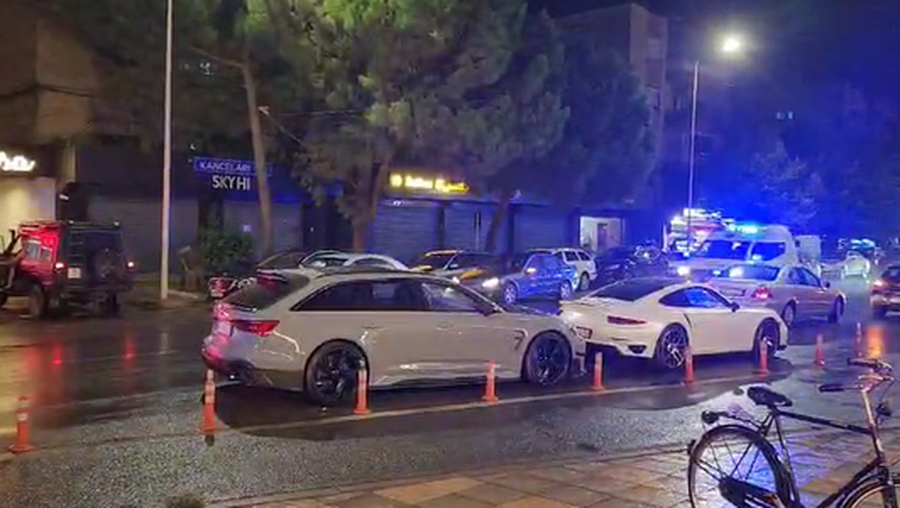
The police, which is the first instrument of dealing with crime, is dealing more with the consequences after the events occur, than with their prevention.
Every year vacationers or tourists come and go to Albania, call it what you want, this issue has turned into an annual debate that is not even worth devoting wasted time to. Were they foreigners or Albanians who came? Was it 10 ml as reported by the government, or was it less than the opposition claims? With expensive prices or with cheap prices, with bad beaches or with good beaches? It was worth the sleep, the cooking or the food, etc., etc... All these, with all the debates, doubts, allusions, hypotheses or objections, are elements that will exist and we will discuss and debate about them every year. What should not actually be discussed or debated is the issue of security and public order. This point should be almost in absolute performance values, because it has to do with the psychological state of the society, especially in times of relaxation, such as the holidays, but it also has to do with the feeling that the foreigners who come to visit and experience the holidays in Albania.
Almost every day there is a serious criminal event, or at least the perception that it will happen is expected and is even worse than the event itself when it happens. Because the perception is like a psychological walrus that keeps the population and especially vacationers psychologically trapped. Anxiety, even if it is a distant sensation, does not happen near my beach, near my family, near my children, wife, husband, boyfriend or girlfriend, it is a destructive psychosis. Don't let it happen on the street where I pass or the neighborhood where I live. And so the pressure and pressure of insecurity is created, which is like a kind of psychological suffocating loop.
This climate is multiplied by the media which, in the absence of news and often in ignorance of the consequences created by the event of the chronicle with murders and intriguing scenarios, inflates and camouflages them with bombastic scenarios, sometimes fictional and sometimes manipulative. And despite all this, again no one in these situations has more special responsibilities than the police and those who manage the police and who are responsible for ensuring order and peace. And here the situation really seems to have problems that are not of the moment or of a temporary period.
They are the accumulation of crime management and treatment in the field. This is no longer a matter of statistics, nor of comparative numbers. Peace and security is a matter of psychological experience and emotional perception. Both of these elements today are stronger and more present in public opinion, referring to the events that follow each other every day. Even from the psychological side and from the side of perception, people are not calm when they hear how violence, from barbaric beatings to assassinations with firearms in the middle of the streets, happens all the time. And prevention is either extremely negligible, or non-existent. Criminality and the behavior or approach to it require efficient and resilient measures and methods. The police, which is the first instrument of dealing with crime, is dealing more with the consequences after the events occur, than with their prevention. In this way, the costs of the work and its effectiveness increase and the results are less, having to deal with finding the perpetrators or clarifying the causes, which are more complicated to realize.
Meanwhile, if a new police vision is created in adaptation to the conditions and behaviors of crime on the ground, effective solutions can be generated. The situation requires an analysis of criminal phenomena, the areas where they occur and the social layers involved in them. The police should create working groups with psychologists, sociologists and criminologists to analyze and extract the exact causes for the situation, criminal conditions and people exposed to criminal activity. What typologies do they have, the areas where they live, the social conditions they live in, the level of education, etc. For example, all neighborhoods of the capital have their own specifics of the social/criminal situation. So we don't have the same conditions as in the combine, in new Tirana, or in Babrru. In the same way, the cities between them do not have the same conditions of criminal behavior. Përmet is not the same as Shkodra, Tirana or Durrës with Saranda, Elbasan, Fieri or Vlora with Gjirokastra. Therefore, an analytical combing of the situation and a strong preventive intervention is needed by creating a register of all elements and active contingent with social risk who must be isolated and neutralized by legal methods to prevent criminal events. Social networks also play a big role in promoting crime. A separate study is needed for this aspect as well. If social networks are a strong source of generating crime and inciting violence, legal measures should be taken to shut them down at least temporarily. If you follow the Tik Tok network, you can clearly see that there is a social decadence that generates degradation and violence. The state therefore acts as a regulator and preventer.
Only by engaging in a large, deep and long analytical, tracking and striking work of the police in cooperation with other scientific links, the possibilities of preventing crime and criminality as a phenomenon will increase. So after you have a clear overview of the reality, it is the turn of the operative, effective and striking work of the police that leads to prevention. All people know who are the problematic elements in their cities, neighborhoods or settlements. But the police don't know or pretend they don't?! The territory is controlled either by the police or crime, but the worst version is when both cooperate to control it together in cooperation. And today there is a perception that the police is not up to the level of integrity that the population demands and for this perception to be extinguished or mitigated, the police must take control of the territory and be its master, not to replace crime to receive bribes or benefits , but to restore people's confidence.




Lini një Përgjigje