


 Shkruar nga Mero Baze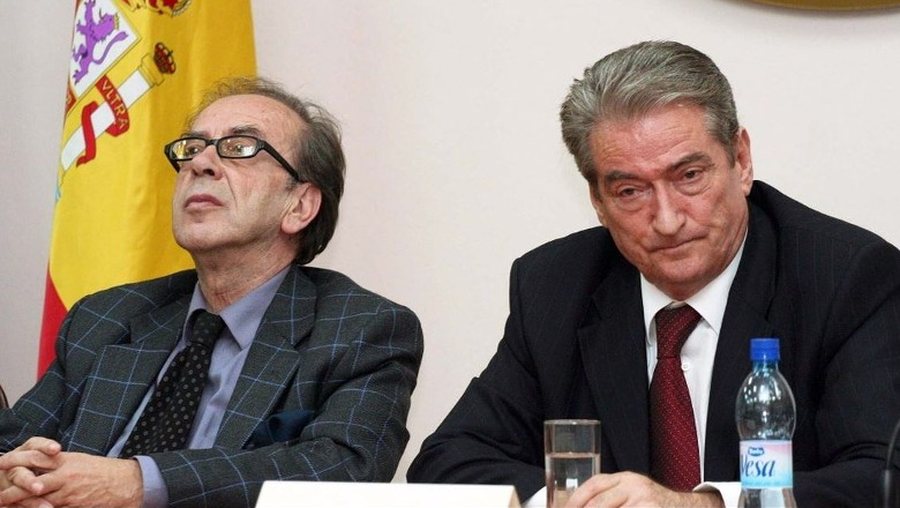
The only national treasure of Albania still alive, now resembles a prisoner in a cell, who is serving two sentences.
He has returned to his apartment in Tirana. His desk now looks like a construction foreman's desk. Three meters away is a construction scaffolding covered with a plastic net, while the balcony where he used to relax while contemplating Dajti is now closed by a monster that has sprouted in front of him. The writer whom many Albanians accuse of not putting Enver Hoxha in prison, today lives in a cell that Sali Berisha and his son's friends built for him for three months, after an angry letter that the writer wrote to former Prime Minister Berisha.
He did not answer him in writing or verbally, but with deeds. The writer inadvertently revealed to Sali Berisha, the panic he had and that could force him to stop sitting at his desk in Tirana. It is one of those fatal mistakes that Kadareja does not allow as a trait, even for his weak characters in the books, but that in this case he allowed himself, in front of someone he did not take seriously as an evil avenger. He had told Sali Berisha and Lulzim Basha the nightmare he had that some builders from Tropoja, close to him and sponsors of PD, could build a building just three meters away from his window and balcony, locking him in a cell for alive. After that, within three months, an 18-story concrete monster, on a degraded 15-year-old foundation, was erected and everything has now turned to rubble.
The only national wealth of Albania still alive, now resembles a prisoner in a cell, who suffers two punishments: The first is the loss of Dajti and the reason why he decided to return to Tirana and live there, and the second is the nightmare that a day the building opposite, built for three months, without a foundation on 15-year-old rusted iron, can collapse without Edi Rama demolishing it and wreaking havoc.
He is already nervous and can no longer invite anyone to his home. And why we were forced to have lunch at the Sky Tower on the 18th floor of the building, we had to turn our backs on the monster that has sprouted in the window. He, because he couldn't see the monster, and I, who don't know why it seemed to me, that Sali Berisha's son was working across the pier.
This whole entry I wrote is actually my hostage, why I couldn't have lunch at the writer's house. He didn't say a word about it. Like any knight, he has no desire to talk about a battle he cannot win. He finds it insulting to enter a place where they beat him, with malice, hypocrisy and power. He wanted to talk about a much bigger battle that he thinks must be won. For language.
I have rarely seen such attention to talk about the danger to the Albanian language from a writer without whom our language would be a poorly pruned tree.
His first concern was that the attack on the language came from the indifference that politics, institutions and society have to the danger that threatens it. In this climate, then mediocre scholars appear, who explain their failures with language, half-witted politicians who find an alibi for their failures in language, and many other people, who, in order to have their voice heard, throw a stone at it. There is so much hatred towards her from this breed of writers, he said, that in their creative constipation, they scream that after hundreds of years there will be neither Albanians nor Albania. The rage of the untalented is a great destructive force.
According to him, the accusation made against the language is malicious, since it is made from a provincialist position, while the Congress of Bitola, which has sealed the Albanian language, was led by Gjergj Fishta and gave Albanian the Latin alphabet and some canonical norms that make it that a lively, functional, expressive language down to the details, and aristocratic. So good that it often inspires admiration in neighboring cultures.
Kadareja is portrayed in this debate by opponents as a nationalist writer, but he is dismissive of these voices. According to him, the Albanian language is one of the ten basic languages of Europe and one of the most successful in translating world masterpieces. Shakespeare, according to him, after German, perhaps better than in any other translated language, is in Albanian and will illustrate the power of Albanian.
Another vicious charge against which the language is combated is the idea that Communism has promoted writers who write the literary norm. Kadare dismisses this with contempt. The most popular writer in the Albanian educational system is Migjeni, he says, a talented poet who wrote in Greek and who prevented anyone from worshiping him.
But Kadareja has a scathing argument against those who attribute the official standard to Enver Hoxha. For him, Enver Hoxha was far from linguistic culture. He spoke a sub-dialect of Gyrokastrite and for a long time, in his youth, he wrote Gehenish. He brings to mind the letters he used to send to Nexhmija, written in Georgian, which illustrate the idea that he had no fixation with the official standard, nor any provincial feelings about it.
Në këtë pikë ai i ul pak rëndësinë dhe Kongresit të Drejtshkrimit më 1972, të cilin, sipas tij, e konsiderojnë gabimisht si Kongres të Gjuhës Shqipe. Si i tillë për të është Kongresi i Manastirit. Kongresi i Drejtshkrimit ka vendosur disa rregulla, që bazohen tek ajo çfarë ndodhi me gjuhën e shkruar qysh pas vendosjes së alfabetit në Manastir. Në atë Kongres shqiptarët e Shqipërisë dhe Kosovës, nuk i diktoi ideologjia për të vendosur rregullat e drejtshkrimit. Bile ana groteske është se komunizmi këtu po akuzohet se ka qenë në anën e versionit perëndimor të shqipes, të asaj shqipeje që vendosi Gjergj Fishta, gjë që është absurde.
Pastaj kalon në argumentet e tij për fuqinë e shqipes:
-Kam dëgjuar ca zëra thonë se larmia e fjalëve, sjell pasurinë e gjuhës. Gjuha është nga ato gjëra, ku jo shumësia, por ngurtësia dhe unifikimi i fjalëve është pasuri. Një gjuhë që përdor një fjalë që shpreh shumë gjëra, është shumë më aristokrate se një gjuhë që ka 50 versione për të shprehur një gjë.
Është i pafundëm në shembujt që jep për këtë, që nga versionet dalldisëse të gjuhës arabe, që në të vërtetë e bëjnë gjuhën e tyre pa formë dhe standard dhe deri tek aristokracia e anglishtes, që nuk të lejon të shprehesh për gjënë më të fortë në botë, dashurinë, përveçse me fjalën “I love”.
Është e çuditshme të shikosh sa vigjilent është shkrimtari për çdo shigjetë të ngulur mbi origjinën e shqipes. Mbi të gjitha i kishte ngelur në mendje, se disa prej sulmuesve, për t’i hequr identitetin shqipes, paskëshin thënë që fjala “Komb” vjen nga arabishtja. Ishte aq i mllefosur për këtë, sa shtrëngonte duart në atë formë, sa më dukej se donte ta tregonte dhe me gjeste se ajo fjalë ishte vendosur me kujdes dhe shumë mençuri nga një fjalë shqip që identifikohet me nyjen, me diçka që lidh një gjë, që vendos një shenjë të rëndësishme në një hapësirë, me atë që ne themi se është lidhur komb.
-E bëjnë qëllimisht, tha, se duan ta godasin tek gjërat e shenjta që ajo ka.
Dhe, ndjehet nervoz për këtë gjë. Ndjehet nervoz që gjuhëtarët tanë janë tulatur dhe u lënë hapësirë diletantëve dhe delirantëve të flasin për gjuhën. I tregova jo pa shqetësim se zhargoni i rrugës i të rinjve në Prishtinë, po shkon larg gjuhë së prindërve të tyre. E priti aq keq, sa nuk pati fuqi as të aprovonte verifikimin e rrezikut që sapo kishte folur. I mbajti nofullat shtrënguar, dhe s’foli për pak kohë.
-Ndoshta është dhe çështje brezi, i thashë, për ta lehtësuar. Janë fëmijët që nuk janë shkolluar mirë, që kanë kaluar sistemin paralel.
Tundi kokën i trishtuar.
-Duhet një debat i guximshëm për këtë çështje, tha. Askush nuk mund ta prekë gjuhën. Ajo është garancia që ne jemi shqiptarë, është si ai thesari që shtetet mbajnë të groposur në banka për të garantuar ekzistencën e tyre. Kombi s’ka gjë tjetër që e mban të bashkuar, veç asaj.
I would not have published these lines, unauthorized by him, from a private lunch two days ago, if I did not see the day after, in the official newspaper of the opposition Democratic Party, an article denigrating Ismail Kadare and embarrassing for a political party that has weight in the history of this country. Today, this party is convinced that it sees the writer as an enemy who clearly pointed the finger at those who shed blood on January 21. It was one of those cases when the Albanian language looks ugly, even though Kadareja is ready to start a historic battle for it.
The only institution that will not collapse in this country, when we are all forgotten, will be Ismail Kadareja. Perhaps many of his characters, from those he invented at the work table that is now back in prison, will be remembered more than these characters that he did not even deserve to create.


Lini një Përgjigje