


 Shkruar nga Joschka Fischer
It must become a self-sufficient world power, and this requires a common concept of "Europe", and taking the necessary steps to embody a single supranational political will...
Donald Trump is proving to be very efficient in the process of self-destruction. Just a few months into his second presidency, he has already destroyed the transatlantic alliance between North America and democratic Europe. By launching trade wars against US allies and casting doubt on the US guarantee of Europe's security, he has also destroyed trust in the United States for at least a generation.
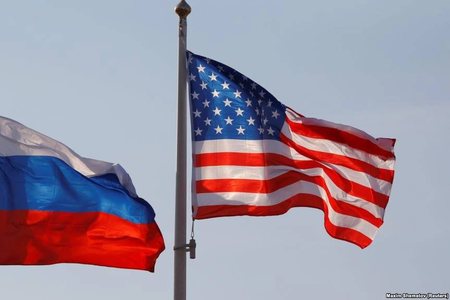
America's role in the world is rapidly fading. The Trump administration's word is now completely worthless, as demonstrated by its betrayal of Ukraine, which continues to fight for freedom, democracy, and other core Western values. From now on, Europe will be alone in confronting its aggressive and imperial neighbor, Russia.
If it does not want to suffer the same fate as Ukraine, it must answer some pressing questions without delay. America's withdrawal from its role as the leading global power, which maintained order and guaranteed free trade, will lead to the creation of a new world order.
And it will not revolve around American power, but around rivalry between major nuclear-armed states. As Russia's behavior is already showing, those who have the bomb will not shy away from blackmailing those who don't.
The rules-based order is now a thing of the past. From now on, the world order will function according to the whims of power, or it may not function at all. In this scenario, Europe has the worst possible cards, because it is not a “real” global power, in the sense that it is not a military power capable of defending itself.
The current European political structure - made up of small and medium-sized nation states - is incapable of adequately confronting the current threats. What unites Europeans now is above all a common destiny, born of a desperate situation.
Will Europeans finally come together? Do they aspire to become a true power? The answers to these questions will determine the future of the continent and hundreds of millions of its citizens. Currently, the choice for Europeans is between freedom and subjugation.
But it remains unclear whether Europeans still have the courage to assert their sovereignty and independence in matters of security. The Trump administration is not just questioning Europe's military security. It is also casting doubt on the global trade that underpins the European economy.
Europe no longer has the luxury of being technologically dependent on non-European great powers, especially in the new era of Artificial Intelligence. The same applies to dependence on raw materials, as they can quickly damage other sectors and endanger national or regional security.
Europeans must identify all the areas where they relied on America until yesterday and invest in their self-sufficiency. “European sovereignty” must be achieved now or never. After the two devastating world wars of the 20th century, the core of Europe - starting with France and Germany - managed to achieve a balance of interests and a certain solidarity.
But Europe never took the decisive step towards embodying a common political will. National egoism always proved to be stronger, also because the security umbrella that America's presence offered Europe mitigated the need for it. But now this need is more obvious.
Europeans must take the final step that previous generations always found ways to avoid. Charles de Gaulle, France's savior in its darkest hour - when the country faced military defeat at the hands of Nazi Germany - and its great modernizer during the 1960s, opened his memoirs with these unforgettable lines: "All my life, I have had a certain idea of France. It was inspired as much by feeling as by reason."
In 1940, he had been an unknown general, broadcasting messages of hope and encouraging continued resistance in occupied France, his lonely voice from exile in London. His idea was invincible and ultimately victorious.
Contemporary Europe has much to learn from De Gaulle's example. Like it or not, Europeans must either learn to live with uncontrollable security risks or become "Gaullists." There is no third way.
Now, more than ever, we need a strong ideological core: a shared idea of Europe as a continent of freedom, human rights, solidarity and the rule of law. Europe must remain the planet's bastion of progress and basic decency. These values can only be preserved if we act as one people, to become a true world power./ In Albanian: Pamphlet
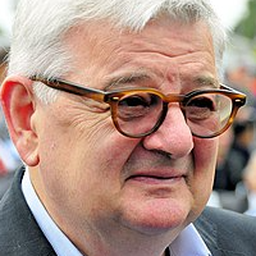
Note: Joschka Fischer, German Foreign Minister and Vice Chancellor from 1998 to 2005.


Lini një Përgjigje