


 Shkruar nga Mero Baze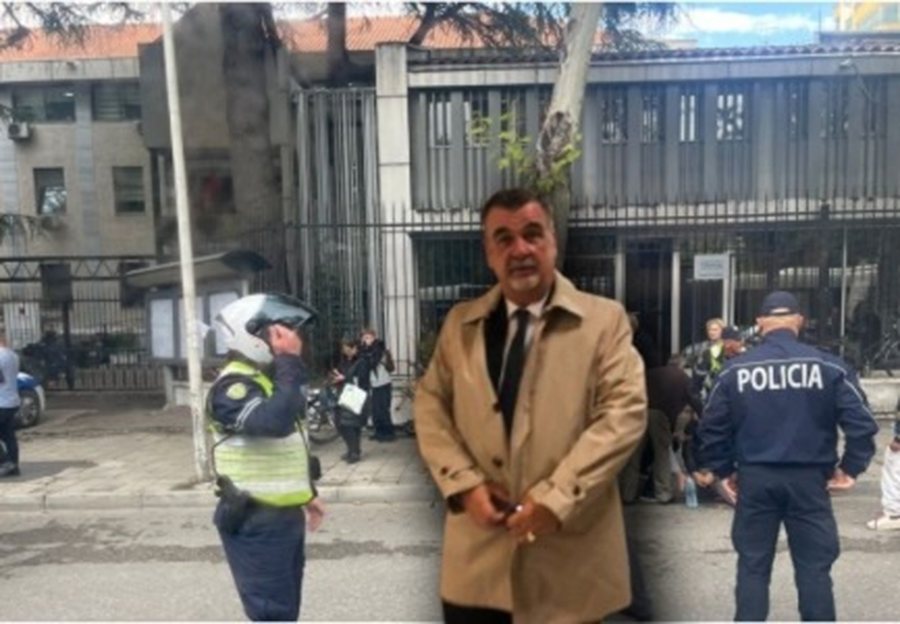
Even if justice seems to be on the side of the murderer, it should never be justified or amnestied. The institution of the judge is accepted as inviolable by the parties to the conflict and is sacred to society.
The cremations on the body of judge Astrit Kalaja in Tirana will long ring in our ears, as a sign of powerlessness to stop evil.
His murder is not just a matter of security in the courts. That is also there, but it is not the main reason. The main reason remains the decision to kill him.
The reactions of state and justice institutions show a capitulation. If you really think that in the future judges will be safe, that you will simply make a tender for a better scanner, or strengthen the Criminal Code for the illegal possession of weapons, you are simply helping the murderers. Those who make the decision to kill are also ready to be killed, and not just punished.
The problem is how to discourage the killing of a judge, and how to strengthen the myth of their impunity. The killing of a judge has no justification, no alibi, and above all there should never be an amnesty. In this case, it is a very serious act of violence, a clear attack on justice to protect a corrupt act of a local leader against 31 families sheltered in a particular facility.
Even if justice seems to be on the side of the murderer, it should never be justified or amnestied. The institution of the judge is accepted as inviolable by the parties to the conflict and is sacred to society.
To discourage attacks on judges, it is necessary, first of all, that our political actors who are the most vocal people in the country do not make judges the object of public attack by personalizing them. I know that politics that speaks does not kill, but by demonizing the figure of the judge we make them vulnerable to ordinary people and we enter into a competition with the scum of society to condemn and eliminate them. Criticism of justice is normal. Society cannot shut up when justice makes mistakes, but the personalization of attacks and public bullying of judges, as often happens before SPAK with Sali Berisha, who every time attacks a judge and his prosecutors, making them targets for criminals.
To discourage the killing of judges, public trust in justice must be increased, and this is done through strong institutions. The Ministry of Justice and the High Inspector of Justice, as institutions that oversee judges, should not leave the trial to the people; they should be in charge of taking disciplinary measures, monitoring public trust in the judiciary, and ensuring that cases are not resolved “at the barrel of a gun” but with the tip of a pen and institutional instruments.
Likewise, the Supreme Court of Justice must be careful and solemn when selecting the lists of judges to enter into the system: the selection must reflect the public's trust in justice and not be the result of friendly or clientelist internal bargaining.
A truly independent relationship must be established between the responsibility of investigation and trial, so that judges are not identified with prosecutors.
The prosecution, by the nature of its work, needs professional autonomy to raise many doubts, but the court is the one that verifies only the provable truth and judges according to the evidence. If not, we will head towards popular trials and ugly and humiliating reactions.
To prevent the murders of judges, we must, above all, strengthen the myth of their inviolability not only physically, but also professionally. To this end, the new justice system must function with all its mechanisms of appeal, of increasing public trust, of comparing decisions with Strasbourg, and of adopting the standards of European justice in our courts.
Only when the cases that go to Strasbourg are resolved and the decisions of our courts reflect international standards, then public trust in justice increases. Otherwise, our justice becomes unreliable and loses its moral sanctity, when we start to give the European Court of Justice a second thought.
The only way for justice to be secure is to protect it from loss of authority: from public bullying, from clientelism, corruption, and the lack of institutions that control its standard.
Judges are not protected only by adding guards to the courts. Whoever makes the decision to kill finds a way to do it. We must stop this decision from being made, and we do this not by adding guards, but by increasing our attention, institutional and civic, to Albanian justice. We must not leave its judgment to the popular courts on the street.








Lini një Përgjigje