


 Shkruar nga Charlie Gammell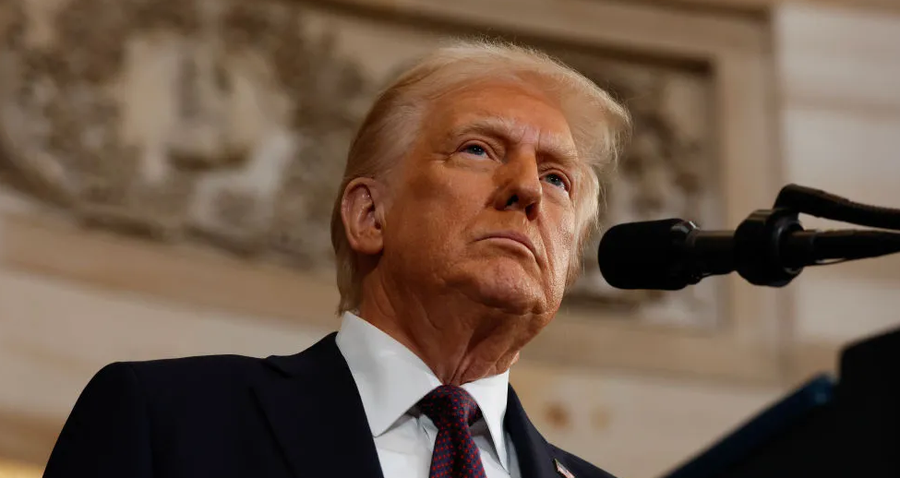
Tehran faces tough choices on both sides. Whatever it decides, the year 2025 will be decisive for the Islamic Republic of Iran and its adversaries...
To talk or to prepare for war? This is the great dilemma being discussed most today among politicians in the Islamic Republic of Iran, both hardliners and reformists.
Donald Trump has made it clear that he hopes Iran will abandon its nuclear program through a new deal with Washington. According to him, this will reduce the need for a major Israeli air strike to achieve the same goal.
However, with all the attention on Trump's appointees to key positions in the Pentagon, State Department, and White House, perhaps when it comes to Iran, we can draw more accurate conclusions by analyzing the positions of those who have been left out this time: Mike Pompeo, John Bolton, and Trump's former envoy for Iran during the first presidency, Brian Hook.
All of them, all of them, have radical approaches towards the Iranian regime, and tried to pressure Trump to adopt a particular policy when it came to Tehran. And they have paid a high price for their harshness.
The current coalition of Middle East advisers, from the Pentagon, the White House and the State Department, includes a range of officials from "doves" to "hawks," suggesting that Trump wants to keep his options open, with negotiation being his first instinct.
From what we can glean so far from what we've heard, a deal is the most desirable. But as with all deals, it has to work for all parties. And when we talk about Iran, we mean Israel.
Benjamin Netanyahu will be the first foreign prime minister to visit the White House. It is said that the Islamic Republic of Iran, its nuclear program, the ruined state of what was until yesterday the "Axis of Resistance" led by Tehran, but also the internal stability of the theocratic regime will be at the top of the agenda.
The ayatollahs look weaker than ever, both at home and abroad. Netanyahu has played the role of saboteur for White House administrations for a generation whenever it comes to negotiations with the Islamic Republic, distributing photos of bombings and posing deftly next to crates of nuclear documents stolen from Tehran warehouses.
He will therefore be horrified by the suggestion of toning down or negotiating with Tehran, and will present Trump with a picture of a shaky regime in Tehran, of infighting within the elite of Iran's Islamic Revolutionary Guard Corps (IRGC), with the aging Ayatollah Khamenei unable to appoint his successor.
Now, Bibi says, is the time to increase the pressure on Tehran, to see where it can lead. Perhaps to regime change. Given Trump's stated desire for a deal (like the meeting with Kim Jong-un in Singapore), it will be interesting to see how this dynamic plays out.
Unless the deal Trump is trying to offer Tehran is designed to put Khamenei in a bind, from which he will have a hard time getting out with dignity, stability, and power intact. Iran's economy is not in crisis. Inflation and unemployment are rising steadily. The value of the currency is falling, and Iran ranks among the top on the Misery Index (a calculation that takes into account unemployment, inflation, and corruption, among other things). The regime is facing serious challenges, including electricity.
Iran, one of the world's most energy-rich countries, is currently unable to heat its schools, shops and government buildings. Meanwhile, voices in Tehran are seeking a way out of this endless cycle of inflation, unemployment and global isolation.
Some of these voices come from within the regime, who are beginning to worry about the regime's survival. The Islamic Republic's economy would seriously benefit from domestic investment, the easing of sanctions, and the opportunity to be part of an economy that also uses the dollar.
However, this would be opposed by China and Russia. China benefits greatly from a sanctions-ridden Iranian economy, as it buys cheap energy products from Iran. Russia also needs Iranian help in its great geopolitical balancing act. However, easing sanctions on the mullahs and the IRGC would not be a popular move among the restless youth, angry with the regime, and many secularists, for whom anything that prolongs the regime’s life would be anathema.
America must understand this too, if it truly wants to influence the majority of the people in Iran. Among many Iranians who oppose the clerical elites, there is a real risk that Khamenei's acceptance of talks with the US will be interpreted as a sign of the regime's weakness, which in turn could fuel more protests against the regime.
By allowing the Ayatollahs to make money, Washington would favor the people who have viewed the US as enemies for decades; the IRGC and the Khamenei clique.
But on the other hand, easing sanctions on the IRGC and Khamenei could turn out to be poisoned candy for the Islamic Republic, a state mired in corruption from top to bottom.
For every billion invested, perhaps 1 or 2 are secretly sent to Geneva or Dubai (or London). This cycle of corruption will continue to rot the regime from within, potentially hastening its downfall.
So it may be that the very policy that aims to save the revolution is actually accelerating its destruction, enriching only a small number of people at the top of the country. Iran is a state built on resistance to American cultural and political dominance.
It was the fruit of a revolution whose leading voices were unanimous in condemning American imperialism, the corrupting effects of the dollar, and everything it represented: slavery, vassalage, and so on. The formative years of the Islamic Republic's war with Iraq pitted it against an enemy armed to the teeth with American weapons and directed by US intelligence.
The intervening years have hardly been easier. Trump, who withdrew from the Joint Comprehensive Plan of Action (JCPOA) nuclear deal and killed the regime's most favored man, Qassem Soleimani, embodies the archetype of the bold, godless American leader so hated by Tehran.
Being in a position where the fate of the Islamic Republic could rest on Trump’s whims will be a sobering thought for Tehran’s most ardent revolutionary supporters now turned into theocratic kleptocrats. So to talk to Trump or not? Tehran faces tough choices on both sides. Whatever it decides, 2025 will be a defining year for the Islamic Republic of Iran and its adversaries. But also for its allies.





Lini një Përgjigje