


 Shkruar nga Alessandra Muglia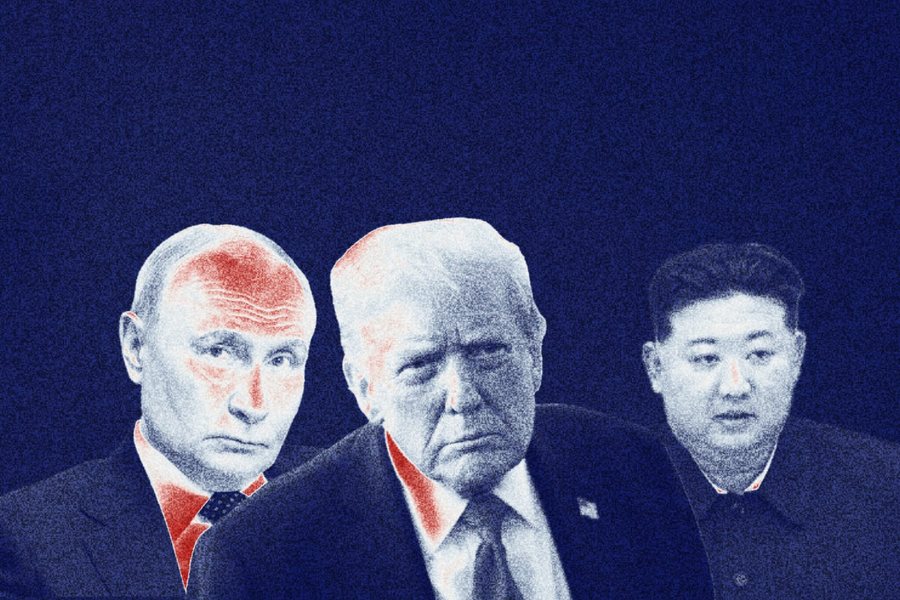
Niccolò Machiavelli, in his book, "The Prince" (1513), suggested that a ruler could take advantage of pretending to be insane, to confuse and intimidate his enemies...
An ancient strategy based on the idea of making opponents believe that a leader is willing to do anything, with the aim of intimidating opponents and gaining advantages without fighting.
Make your enemy believe you can bring hell to their house and you will win without fighting a day: a high-cost gamble.
Many leaders have embraced the "Madman Theory," a political and diplomatic strategy based on the idea of making opponents believe that a leader is unpredictable, even irrational, and willing to do anything in order to intimidate the enemy without using weapons.
The idea, in short, is to exploit the unpredictability or perceived ferocity of your leader to gain political and military advantage.
The expression, coined sixty years ago by President Nixon, refers to a strategy relaunched on a global scale in recent years by Donald Trump, who claims to have the power to instill fear in his opponents without having to resort to military means.
The same strategy has been used by Vladimir Putin, who has long voiced his nuclear threats against the West, as well as by Kim Jong-un, often portrayed as an eccentric madman capable of unpredictable acts, but his aggressive and belligerent stance seems to be a pure deterrent.
Nixon made the Madman Theory one of the fundamental principles of his foreign policy, precisely during the years when the United States was engaged in the bloody Vietnam War, in the midst of the Cold War. Frustrated by the inability to achieve quick results on the ground, Nixon decided to change the rules of the game: his strategy involved intimidating the communist enemy by convincing it that it could be attacked with large and disproportionate responses. The goal was to force the North Vietnamese government to negotiate a peace.
But this concept has older roots: Niccolò Machiavelli, in his book, "The Prince" (1513), suggested that a ruler could take advantage of pretending to be insane, to confuse and intimidate his enemies. A leader who appears unpredictable and willing to make drastic decisions can discourage his opponents without having to use direct force./ Adapted from "Pamphlet" by "Corriere Della Sera"






Lini një Përgjigje