


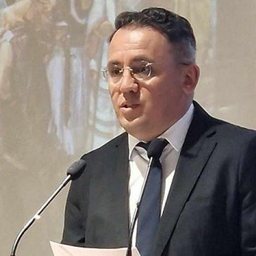
 Shkruar nga Skënder Asani
Ukshin Hoti's academic training in the United States of America constitutes an essential element for understanding his political and diplomatic orientation. The alliance with America was not conceived as an automatic guarantee of success, but as a political framework within which Kosovo had to demonstrate state maturity, strategic clarity and institutional capacity. For him, internal fragmentation on issues of sovereignty constitutes structural weakness and not functional pluralism.
Re-evaluating Ukshin Hoti's political thought in the context of contemporary Kosovo constitutes an analytical necessity for studying the nature of unfinished statehood and the structural challenges that the Republic of Kosovo faces in the international system. This re-evaluation does not aim at the symbolic rehabilitation of a historical figure, but rather at using his thought as a theoretical framework for interpreting the relationships between sovereignty, diplomacy, and state functionality. Ukshin Hoti should be treated as a thinker of state formation and ethical realism, not as a mythical figure or emotional reference.
At the heart of Ukshin Hoti’s political philosophy lies the concept of statehood as an ongoing political, institutional and diplomatic process. For him, the state is not the result of a single legal act, but the product of a sustained interaction between domestic legitimacy and international acceptability. In this perspective, Kosovo’s declaration of independence would represent only a transitional phase towards the consolidation of full international subjectivity. This approach remains essential for understanding the paradox of today’s Kosovo: a formally independent state, yet still challenged in its capacity to act as an equal subject in the international system.
Ukshin Hoti's academic training in the United States of America constitutes an essential element for understanding his political and diplomatic orientation. His studies in an environment where politics is treated as a discipline of state interest, balanced with moral responsibility and institutional order, directly influenced his conception of the state, sovereignty and strategic alliances. Hoti did not perceive politics as a field of improvisation or collective emotion, but as a rational process of building legitimate power within a structured international order.
Në këtë kontekst, vlerësimi që Ukshin Hoti i bënte aleancës me Shtetet e Bashkuara të Amerikës ishte thelbësisht strategjik dhe jo instrumental. Për të, SHBA-të përfaqësonin jo vetëm mbështetësin kryesor të çlirimit dhe mbijetesës së Kosovës, por aktorin kyç për rrumbullaksimin e shtetësisë së saj në planin ndërkombëtar. Aleanca me Amerikën nuk konceptohej si garanci automatike e suksesit, por si kornizë politike brenda së cilës Kosova duhej të dëshmonte pjekuri shtetërore, qartësi strategjike dhe kapacitet institucional. Hoti e kuptonte se mbështetja amerikane është e qëndrueshme vetëm kur përputhet me një subjekt politik të përgjegjshëm dhe koherent.
Ndryshe nga qasjet pasive që e trajtojnë aleancën me SHBA-të si zëvendësim të vullnetit politik vendor, Hoti e shihte këtë marrëdhënie si partneritet asimetrik, por aktiv. Në këtë partneritet, Kosova duhej të hynte jo si objekt i mbrojtjes ndërkombëtare, por si subjekt që artikulon interesa të qarta dhe të përputhshme me rendin perëndimor. Kjo perspektivë përkon me teorinë e shteteve të vogla në marrëdhëniet ndërkombëtare, sipas së cilës aleancat funksionojnë në mënyrë efektive vetëm kur shteti aleat ruan kapacitetin për të formësuar agjendën e vet strategjike.
Artikulimi i kërkesës për Republikë në vitin 1981 duhet parë edhe në këtë dritë. Ajo nuk ishte akt rebelimi simbolik, por projekt politik i ndërtuar mbi leximin e parimeve të rendit liberal ndërkombëtar dhe të të drejtës për vetëvendosje. Hoti e kuptonte se legjitimiteti i Kosovës nuk mund të mbështetej vetëm në narrativën historike, por duhej të përkthehej në gjuhë politike të kuptueshme dhe të pranueshme për aleatët perëndimorë, veçanërisht për Shtetet e Bashkuara.
Një element qendror i mendimit të tij është perceptimi realist i Serbisë si projekt shtetëror afatgjatë. Hoti e refuzonte interpretimin e Serbisë si regjim kalimtar, duke theksuar kontinuitetin e strategjisë së saj shtetërore. Ky realizëm politik e çonte në përfundimin se çdo dialog me Serbinë, i zhvilluar pa vetëdije të plotë sovraniteti dhe pa mbështetje të qartë strategjike perëndimore, rrezikon të prodhojë asimetri strukturore në dëm të Kosovës.
Në këtë kuptim, dialogu, sipas mendimit të Hotit, nuk duhet të shndërrohet në proces të menaxhimit teknik të konfliktit, por të mbetet instrument për përmbylljen e tij. Çdo negociatë që relativizon subjektivitetin shtetëror ose e trajton sovranitetin si çështje të hapur kompromisi përbën regres në procesin e shtetndërtimit. Ky parim ofron një kriter akademik për vlerësimin e dialogut Kosovë–Serbi dhe të rolit të ndërmjetësimit ndërkombëtar.
Another essential dimension of Ukshin Hoti's thought is the artificial non-separation between domestic and foreign policy. For him, internal fragmentation on issues of sovereignty constitutes structural weakness and not functional pluralism. Minimal state consensus on territorial integrity and constitutional order is a prerequisite for any effective diplomatic action, especially in relation to strategic allies.
In conclusion, Ukshin Hoti's political thought offers a clear synthesis of principles for the statehood of Kosovo: statehood is not consolidated with declarations, but with political discipline; it is not defended with improvisation, but with strategy; it is not concluded with unoriented dialogue, but with full awareness of sovereignty. Hoti's message is clear: Kosovo must act as a state, before seeking to be treated as such. This implies a minimum internal consensus on territorial integrity and constitutional order, a clear articulation of national interests in relation to Serbia, and an active rather than passive alliance with the United States of America, conceived as a strategic partner in the conclusion of international subjectivity.
In Hoti’s logic, the West does not build the state in place of Kosovo; it supports it only if Kosovo demonstrates state maturity, conceptual clarity, and moral courage. The alternative is familiar and historically dangerous: either Kosovo speaks and acts as a sovereign subject with a consistent Western orientation, or it remains an open issue, managed by others. This is the Hoti test of statehood, and it still remains open.





Lini një Përgjigje