


 Shkruar nga Pamfleti
Rome's police chief, Roberto Massucci, has raised the alarm about the strengthening of the Albanian mafia in Italy, stating that Albanian criminal groups have a dominant role in drug trafficking, especially in managing cocaine networks in the Italian capital. During a report to the Anti-Mafia Commission, he said that the huge profits from narcotics are being recycled through investments in Albania, especially in the construction sector…
Organized crime in Rome no longer operates according to the logic of gang warfare, but according to a model of coexistence and territorial division to maximize profits. This was the strong warning made by Rome's police chief, Roberto Massucci, during a hearing at the Italian Parliamentary Anti-Mafia Commission.
In his analysis, Massucci described a criminal reality deeply rooted in the suburbs of the Italian capital, where drug trafficking, money laundering and infiltration of the legal economy are increasingly intertwined.
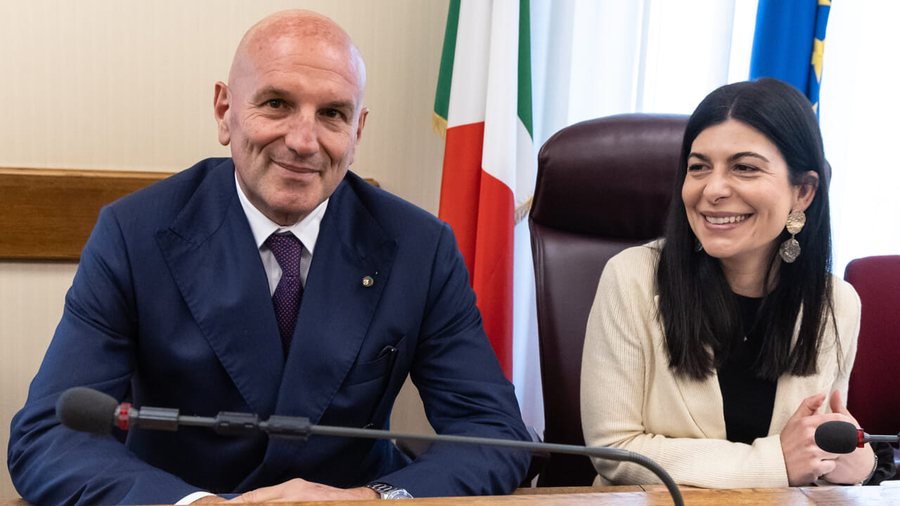
According to him, institutions must keep "control antennas always raised" to identify the mafia's penetration of the formal economy and to counter the control that criminal groups exercise over certain territories.
Drug trafficking and the role of the Albanian mafia
Massucci focused particularly on drug trafficking areas in Rome, describing them as the heart of criminal activity in the city.
He cited Tor Bella Monaca as "the largest drug distribution point in Europe," while emphasizing that the demand for narcotics continues to grow.
The phenomenon, according to him, also extends to other problematic areas such as Quarticciolo and San Basilio.
In this context, the Italian police chief highlighted the dominant role of Albanian criminality in controlling drug trafficking. According to Massucci, Albanian groups have a hegemonic position in managing the narcotics market and collaborate closely with the Calabrian mafia organization 'Ndrangheta for the circulation of large quantities of cocaine.
He added that behind the drug dealers on the streets lies a criminal structure with a large circulation of money, which is often invested outside Italy, including in the construction sector in Albania.
The “business mafia” and money laundering
Another aspect highlighted during the reporting was the infiltration of crime money into the legal economy through what Massucci called the "business mafia".
According to him, criminal organizations use intermediary figures considered "clean", who serve as bridges for the legalization of illegal profits from drugs and extortion.
This mechanism, he said, has been used for years in Rome and has been clearly demonstrated in major investigations such as the "Nuova Alba" operation in Ostia, where criminal groups had taken control of coastal businesses through mafia methods.
Massucci also listed a series of recent operations against mafia clans in Rome. In 2025 alone, assets worth millions of euros were seized from the Alvaro clan, the Casamonica family and the Morando group with links to the 'Ndrangheta.
The seized assets include restaurants, bars and companies active in the food and services sector.
According to the police chief, during the nearly three years of his mandate in the capital, property seizures worth around 23 million euros have been carried out, dozens of special surveillance measures have been imposed, and anti-mafia orders have been issued against suspected businesses.
He described the financial crackdown on criminal organizations as one of the most effective instruments in the fight against the mafia.
"Territorial respect" between gangs
One of the strongest elements of Massucci's analysis was the way criminal groups in Rome avoid open conflict to preserve profits.
According to him, in the Italian capital, a kind of "territorial respect" between criminal organizations has existed for decades, similar to the old model of the Magliana Gang.
"I'll go this far, then your territory begins," he described the logic of dividing areas between criminal groups.
This tacit agreement, according to Italian police, allows the various organizations to operate without bloody clashes, guaranteeing stability for illegal activities and profits.
The “Diabolik” case and extremism in stadiums
The murder of Fabrizio Piscitelli, known as "Diabolik", a former leader of Lazio's ultras fans and a well-known figure in Rome's criminal underworld, was also discussed during the session.
Massucci acknowledged that recent judicial developments, including the acquittal of Raul Esteban Calderon, have changed the investigative framework, but stressed that the case is not considered closed.
According to him, the group linked to Piscitelli had combined criminal activity with forms of political extremism and the use of violence to control territory.
He also warned of the dangers posed by ultras groups in stadiums, citing the operation against the "Quadrato" group in Rome's southern stand, where investigations revealed suspected links to the Senese clan and drug trafficking.
Although Italian authorities boast of a football season without major incidents, Massucci stressed that vigilance against criminal infiltration into sports venues remains very high. / Adapted from "Pamfleti" by "Roma Today"




Lini një Përgjigje