


 Shkruar nga Pamfleti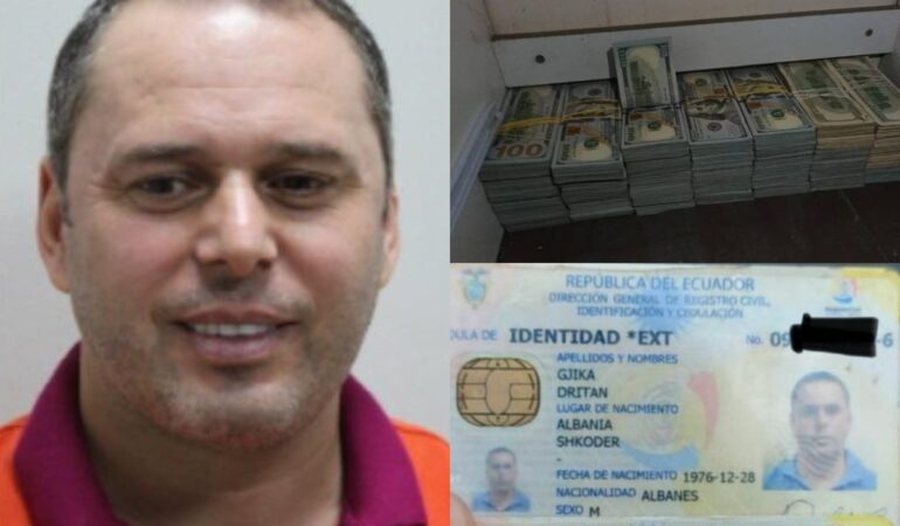
Details from the operation of Spain and Ecuador against the Albanian mafia are disclosed.
Police carried out 21 raids in Spain, the most prominent being checks in Marbella and Malaga, and further searches took place in Barcelona, Valencia, Sevilla, Granada and Cadiz. Simultaneously, across the Atlantic, Ecuadorian police carried out 56 raids in various locations across the country.
The Albanian mafia had managed to establish connections with the highest officials in Ecuador to fill Europe with cocaine produced in Colombia. Authorities said the criminal operation aimed to import at least 3.2 tons into Spanish ports disguised as bananas, taking advantage of Ecuador's position as the world's number one exporter of the fruit.
Over 30 members of the international crime group, led by the suspected "king" Dritan Gjika, 48 years old, have been arrested, while 12 have been handcuffed in Spain. Albanian citizen Gjika, who settled in Ecuador in 2013, was among 18 suspected cartel members arrested in the South American country.
Gjika, who allegedly oversaw the production of cocaine in Colombian drug labs, had shady business ties to Ecuadorian President Guillermo Lasso.
Other detainees come from other nations including Argentina, Albania and Colombia, and even China. The comprehensive operation has led the authorities in Spain to seize a number of villas and luxury properties worth over 13 million euros. Luxury real estate of the kind that spreads around Marbella and the Costa del Sol has long been a key vehicle for laundering drug money.
According to Ecuadorian authorities, the complex criminal cooperation involved the transportation of cocaine grown and cultivated in Valle del Cauca in Colombia to the port of Guayaquil in Ecuador. From there, the drugs were cunningly hidden among banana shipments and loaded onto cargo ships bound for the port of Malaga and other entry points into Europe. In addition to logistical efforts, the cartel was involved in the bulk money laundering of drug proceeds, believed to be around €32 million. Not only content with moving large quantities of cocaine, the cartel also had an extensive network of businesses and companies to mask these cash flows.
Willian Villarroel, the anti-narcotics director of Ecuador's National Police, said the group used six companies in Ecuador and four in Spain to place the drugs among the banana shipments. "They had a large commercial activity through which they facilitated money laundering," he told a news conference.
Despite managing to maintain a clean criminal record in Ecuador since arriving in the country, crime boss Gjika raised suspicions with his business operations. A two-year investigation revealed his position in charge of production and logistics in South America, overseeing not only production but also the crews that shipped the cocaine to Ecuadorian ports. His name became known after his connection with the murdered businessman Ruben Cherres, whose body was found with signs of torture in Santa Elena, on the coast of Ecuador. Cherres was a friend of the brother-in-law of the corrupt ex-president Guillermo Lasso, Danilo Carrera.
The ongoing operation has so far seized more than 400,000 euros in cash, a large number of properties, high-end vehicles and various financial assets.
This is just the latest multi-jurisdictional crackdown on the cocaine cartels flooding Europe through Spain's ports. On Monday, police announced the arrest of a senior Malaga port official who acted as an 'insider' for another cocaine cartel.
The head of the port's Risk Analysis Unit was part of a smuggling operation which effectively controlled the drug inspection scanner at the facility 'for a year and a half'. And just last week, another Dutch-Moroccan cocaine kingpin was arrested in Marbella after a years-long police chase. He was the brother of notorious criminal Samir 'Scarface' Bouyakhrichan, who was shot dead outside a bar in Benahavis in 2014





Lini një Përgjigje