


 Shkruar nga Pamfleti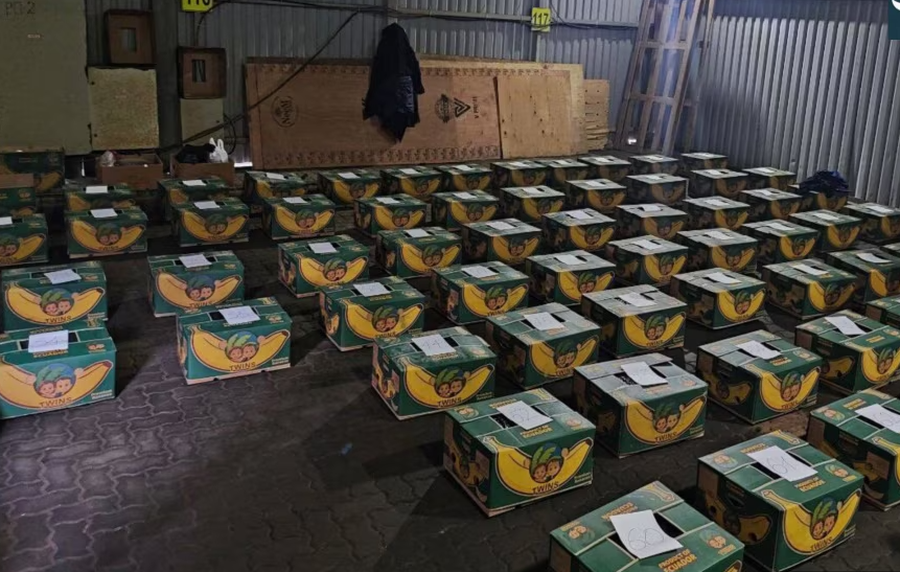
Russian authorities claim that they were informed in advance by their colleagues abroad about the possibility that narcotics were hidden in the banana shipment from Ecuador.
Banana shipments to St. Petersburg sometimes hide a contraband cargo: cocaine. An investigation by Systema, the Russian investigative unit of Radio Free Europe (RFE/RL), reveals that two companies involved in the transportation and further distribution of the fruit are controlled by Russian citizens with ties to longtime associates of Russian President Vladimir Putin.
On a morning in late August last year, the cargo ship Cool Emerald slowly entered the port of St. Petersburg, Russia, where customs officials and Federal Security Service (FSB) agents awaited it on the shore.
Russian authorities claim that they were informed in advance by their colleagues abroad about the possibility that narcotics were hidden in the banana shipment from Ecuador. And, according to them, their suspicions turned out to be correct: several thousand packages wrapped in white powder were found. Tests, according to Russian authorities, showed that it was about 1.5 tons of cocaine, which on the black market is worth 20 billion rubles ($257 million).
For Russian customs, it was the largest drug seizure ever recorded. For Cool Carriers, the Cyprus-based commercial operator of the Cool Emerald, it was just one of several incidents in recent years in which one of the company's dozens of ships was suspected of being used to transport drugs.
Among them are these cases: in October 2023, British authorities announced that they discovered 137 kilograms of cocaine attached to the hull of the Cool Express ship; in the spring of 2024, St. Petersburg customs said they found 60 kilograms of cocaine on the same ship; while in August of that year, over 575 kilograms of cocaine were allegedly dumped into the sea by the Cool Express, near the coast of Denmark.
Cool Carriers “has no hand in drug trafficking and strongly condemns the use and distribution of narcotics,” a company representative said in an emailed response to questions from Systema, Radio Free Europe’s Russian-language investigative unit.
"The company is not under investigation in any jurisdiction and investigative authorities have not contacted us," the Cool Carriers representative added.
According to him, Cool Carriers is “the world’s largest operator of refrigerated vessels,” the representative said, adding that the company transports perishable goods to destinations on several continents and that St. Petersburg “is not one of the main destinations on the port itinerary where our ships call.”
Connections with Putin
Drejtori i përgjithshëm dhe pronari i Cool Carriers është Mikhail Ganyushin, i cili jeton në Qipro dhe më herët ka qenë i angazhuar në industrinë e transportit detar në Shën Petersburg.
Një nga agjentët portualë të Cool Carriers në Shën Petersburg është kompania Baltic Shipping, e cila është themeluar në vitin 1999. Sipas regjistrit rus të kompanive, aksionarët e saj fillestarë ishin Ganyushin dhe Vladimir Borisenko. Ganyushin u largua nga Baltic Shipping në vitin 2023 dhe kompania tani është plotësisht në pronësi të Borisenkos, 63 vjeç, i cili ka diplomuar në të njëjtën akademi detare në Shën Petersburg si Ganyushin, 53 vjeç.
Një hulumtim i Systema zbuloi se si Ganyushin ashtu edhe Borisenko kanë lidhje me bashkëpunëtorë dhe aleatë të presidentit rus, Vladimir Putin, nga Shën Petersburgu, qyteti ku presidenti i kamotshëm rus hodhi hapat e parë në pushtet si zëvendëskryetar i bashkisë dhe drejtues i Komitetit për Marrëdhënie të Jashtme Ekonomike në fillim të viteve ‘90.
Këto lidhje përfshijnë edhe një lidhje mes Borisenkos dhe biznesmenit Oleg Rudnov, një mik i vjetër dhe bashkëpunëtor i Putinit, i cili vdiq në vitin 2015. Në vitin 2004, Borisenko dhe Rudnov ishin në mesin e gjashtë anëtarëve themelues të një shoqate pronarësh në kompleksin rezidencial HappyJarvi, që ndodhet në periferi të Shën Petersburgut.
Borisenko dhe Ganyushin mund të kenë lidhje edhe me një tjetër të njohur të kamotshëm të Putinit, Ilya Klebanov, përmes MGS Terminal, një terminal në portin e Shën Petersburgut, i cili, sipas deklaratave të drejtorit të tij në vitin 2024, merrej me pjesën më të madhe të bananeve të konsumuara në Rusi, si edhe një pjesë të konsiderueshme të atyre që transportoheshin drejt vendeve të tjera të rajonit.
Në vitin 2025, Rusia importoi rreth 1.4 milion tonë banane, ndërsa nga kjo sasi, rreth 1.24 milion tonë hynë në shtet përmes portit të Shën Petersburgut.
Drejtori i MGS-Terminal, Vladimir Burlev, tha gjatë një interviste në vitin 2024 se klienti kryesor i terminalit ishte Baltic Shipping, kompani për të cilën tha se përbën dy të tretat e bananeve që furnizohen në treg, duke iu referuar me gjasë tregut rus.
Deri në fund të vitit 2025, Ganyushin dhe Borisenko ishin anëtarë të bordit drejtues të MGS-Terminal, i cili ishte pjesërisht në pronësi të trashëgimtarëve të Dmitry Kozharsky, një biznesmen nga Shën Petersburgu që jetonte në të njëjtin kompleks banesor me disa bashkëpunëtorë të Putinit. Kozharsky, i cili vdiq në vitin 2022, kishte qenë partner biznesi i Klebanovit në një kompani të industrisë së peshkimit dhe sipas raportimeve ishte gjithashtu një mik i tij. Përfaqësuesi i Cool Carriers tha se Ganyushin nuk është më anëtar i bordit drejtues të MGS-Terminal.
Klebanov kishte drejtuar një ndërmarrje të industrisë së mbrojtjes në Shën Petersburg gjatë viteve ‘90 dhe mori vlerësime nga Vladimir Putin, kur ky i fundit ishte zëvendëskryetar i bashkisë së qytetit. Kur Putini mori detyrën e presidentit në vitin 2000, Klebanov shërbeu si zëvendëskryeministër. Po atë vit, Putini e emëroi në krye të komisionit të ngritur për trajtimin e katastrofës së nëndetëses bërthamore Kursk, pasi ajo u fundos në gusht të atij viti. Tashmë 75 vjeç, Klebanov u largua nga qeveria në vitin 2003 dhe deri në vitin 2011 shërbeu si i dërguar presidencial për Qarkun Federal Veriperëndimor të Rusisë, ku përfshihet edhe Shën Petersburgu.
Përfaqësuesi i Cool Carriers tha se “MGS-Terminal, i specializuar në shkarkimin dhe magazinimin e mallrave që transportohen në kushte ku kërkohet frigorifer, përdoret për shkarkimin e ngarkesave me fruta të anijeve të Cool Carriers që kanë për destinacion Shën Petersburgun”.
Ai tha se Ganyushin ishte emëruar në bordin drejtues të terminalit “si drejtor i pavarur joekzekutiv dhe pa pagesë”, me qëllim që të “siguronte funksionimin e pandërprerë” të terminalit, por më pas kishte dhënë dorëheqje. Ai shtoi gjithashtu se Ganyushin dhe Klebanov “nuk njihen me njëri-tjetrin”.
Përfaqësuesi i Cool Carriers deklaroi se as Ganyushin dhe as kompania Cool Carriers nuk janë aksionarë të MGS-Terminal. Nga ana e saj, MGS-Terminal nuk iu përgjigj kërkesës për koment.
Systema gjeti po ashtu prova që tregojnë për lidhje të mundshme me disa nga aleatët që, së bashku me Vladimir Putin, themeluan në vitet ‘90 kooperativën e vilave Ozero, pranë Shën Petersburgut. Mes tyre përmenden vëllezërit Andrei Fursenko dhe Sergei Fursenko, si edhe Yury Kovalchuk, bankier miliarder që vazhdon të jetë një nga bashkëpunëtorët më të afërt dhe më të besuar të Putinit.
Kovalchuk besohet të jetë pronari kryesor i Bank Rossiya, ndërsa Andrei Fursenko – një këshilltar i kahershëm i Vladimir Putinit dhe ish-ministër i Arsimit dhe Shkencës – ka qenë një nga bashkëpronarët e mëparshëm të bankës. Sergei Fursenko, ndërkaq, ishte anëtar i bordit drejtues të Gazprom Neft, degës së naftës të gjigantit shtetëror rus të gazit Gazprom, nga viti 2013 deri në vitin 2019.
I pyetur nga Systema nëse Cool Carriers ka marrëdhënie biznesi me Gazprom Neft apo me ndonjë kompani tjetër shtetërore ruse, përfaqësuesi i kompanisë u përgjigj: “Absolutisht jo”.
As Borisenko dhe as Baltic Shipping nuk iu përgjigjën kërkesave të Systema për koment. Përfaqësuesi i Cool Carriers tha se Borisenko nuk ka asnjë lidhje me kompaninë dhe se megjithëse ai dhe Ganyushin kanë bashkëpunuar në të kaluarën në disa projekte që lidhen me transportin detar, aktualisht “nuk kanë asnjë projekt të përbashkët”.
Immediately after the collapse of the Soviet Union in 1991, St. Petersburg became a major drug trafficking hub. In 1992, the Cali cartel from Colombia began using the city's large port on the Baltic Sea as a transit point for cocaine shipments to Europe.
Putin, a former KGB officer who served for a long time in the intelligence service, survived a series of corruption charges and scandals during the period 1991-1996, when he held a key post in the foreign trade administration of St. Petersburg. In one of these cases, security forces led by another former KGB member seized over a ton of cocaine, hidden in cans of beef. However, the drugs disappeared and no trial was held in Russia in the case.
For years, banana imports into Russia were dominated by Vladimir Kekhman, a businessman known as the “Banana King.” In 2010, he denied any involvement after 120 kilograms of cocaine were found on a ship chartered by his company, JFC, in the port of St. Petersburg. JFC declared bankruptcy in 2015.
In a 2011 interview with the independent Russian media outlet Dozhd, Kekhman suggested that transporting drugs on ships carrying bananas was a fairly common practice, but that the primary responsibility fell on the crews and not on the owners of the ships or cargo.
In its response to Systema's questions, the representative told it that the company "does not own or manage any of the ships that have been mentioned in the media in connection with drug smuggling."
He added that Cool Carriers is only the commercial operator of these ships and "has no role in their day-to-day operations."
"Operational control, including hiring and managing crews, as well as loading and unloading cargo, rests entirely with the third-party owners. Cool Carriers has no role in these decisions ," he said.
"It is widely known that South American cartels are actively working to infiltrate or gain access to commercial ships that load at local ports, using them as vehicles for drug trafficking," the representative stated.
"Criminal groups constantly seek and find weak points where they can penetrate, corrupting, threatening or harming people involved in this industry, while moving from one jurisdiction and port to another to reduce the possibility of detection by security authorities."





Lini një Përgjigje