


 Shkruar nga Pamfleti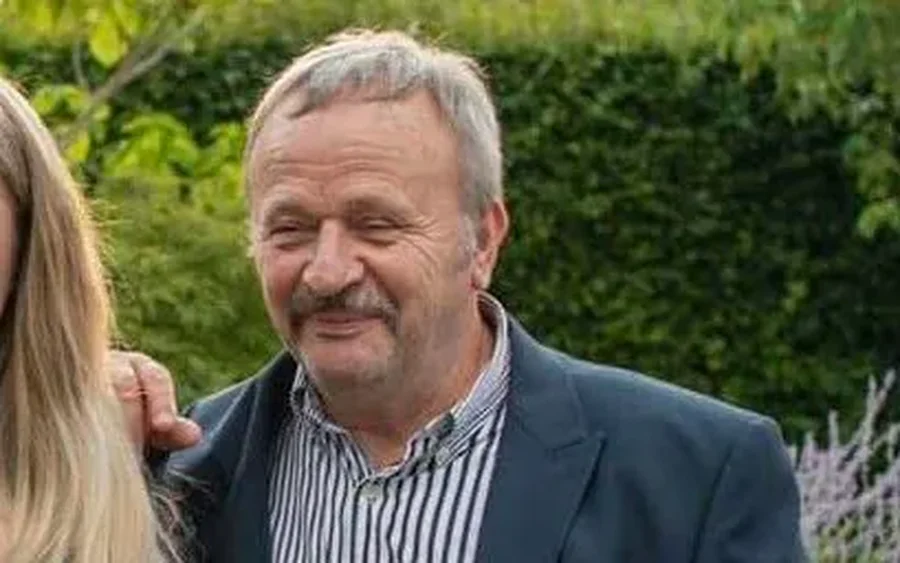
An Albanian wanted for murder in his country has won the right to stay in Great Britain according to the European Convention on Human Rights.
Fatmir Bleta, 64, fled Albania two months after allegedly shooting a man in the head with a Kalashnikov, for which he was sentenced in absentia to 13 years in prison.
He went to Britain with his family and sought asylum by falsely claiming to be Kosovar, a fraud for which he was jailed for 33 months and two weeks in 2018.
Bleta, who has four children, successfully fought an extradition bid from Albania to serve his sentence, claiming he would not be entitled to a retrial and was not given advance notice of the proceedings.
In a new decision - revealed in documents seen by the Telegraph - Bleta has managed to resist a Home Office attempt to deport him on the grounds that it would breach his Article 6 rights to a fair trial according to the ECHR.
Deportation 'excessively harsh' on family
He also appealed under Article 8 of the convention that deportation would violate his right to a family life as it would be "excessively harsh" on his loved ones.
The case comes after The Telegraph revealed earlier this week that an Albanian criminal who secretly returned to Britain after being deported won the right to stay because his deportation would be "too harsh" for his family and to violate Article 8 of the ECHR.
This sparked renewed calls for the UK to leave or seek reform of the ECtHR. Robert Jenrick, former immigration minister and Conservative leadership contender, said: “Once again the ECtHR has been used by activist judges to prioritize the rights of a criminal over the safety of the British public. It's a shame. We can only get thousands of dangerous foreign criminals out of our country if we leave. Reform is a fantasy".
The Telegraph has also confirmed that two of Bleta's children have been convicted and imprisoned for drug offences. Son Dorian, 37, is serving an 18-year prison sentence for cocaine trafficking, while daughter Sara, 28, a former actress, was jailed for four years for supplying class A and B drugs.
Bee came to the UK in 1998 after the alleged murder in September of that year, before being jailed for 13 years in December.
On arriving in the UK, Bleta falsely claimed to be a Kosovar refugee and was joined by his wife and children in 2000. Although they were refused asylum, they were granted indefinite leave to remain.
He gained British citizenship in 2017 but was convicted of making a false statement to obtain a passport the following year, along with three other charges of dishonesty. He was jailed for 33 months and two weeks.
Judges reject extradition
Judges rejected an extradition request from Albania on the grounds that he was never arrested and that there was "no material to show that he knew or should have known the date and place of his trial and that the trial could proceed in his absence his".
They also admitted that there was "sufficient certainty" that Bleta would receive a retrial or a review that would amount to a retrial, meaning there was a "real risk" that his return to Albania would be a violation "flagrant" of the rights, according to Article 6 of the ECHR, for a fair trial.
After completing his prison sentence in 2018, the Home Office sought to deport him. His legal team then claimed that this would violate his right to family life under the ECHR.
They dismissed the Home Office's deportation appeal because they said there was a "real risk that the applicant's return would constitute a flagrant breach of Article 6 of the ECHR".
Contacted by The Telegraph at his home in west London, Bleta admitted he had arrived in the UK in 1998 but denied having been convicted of murder. Instead, he claimed to have been acquitted of the crime in multiple courts.
"I am clean of everything," he said.
Asked if he explicitly denied the murder, he replied: "No, no."
His daughter said: “The facts are completely wrong. My father was cleared of that [murder]. He was blamed for it and it turns out, if you actually look at the documents and documentation that I can send you, he was cleared of it. He wasn't even there when it happened. He was not in the country at that time."
She added that “my father is very ill and the only reason he has ever received a deportation order is as a result of the Home Office's inability to do its job.
The Royal Court of Justice decided that my father did not know of any crime committed and that is why he was released."
A Home Office spokesman said it would be "inappropriate to comment while there are ongoing legal proceedings".




Lini një Përgjigje