


 Shkruar nga Pamfleti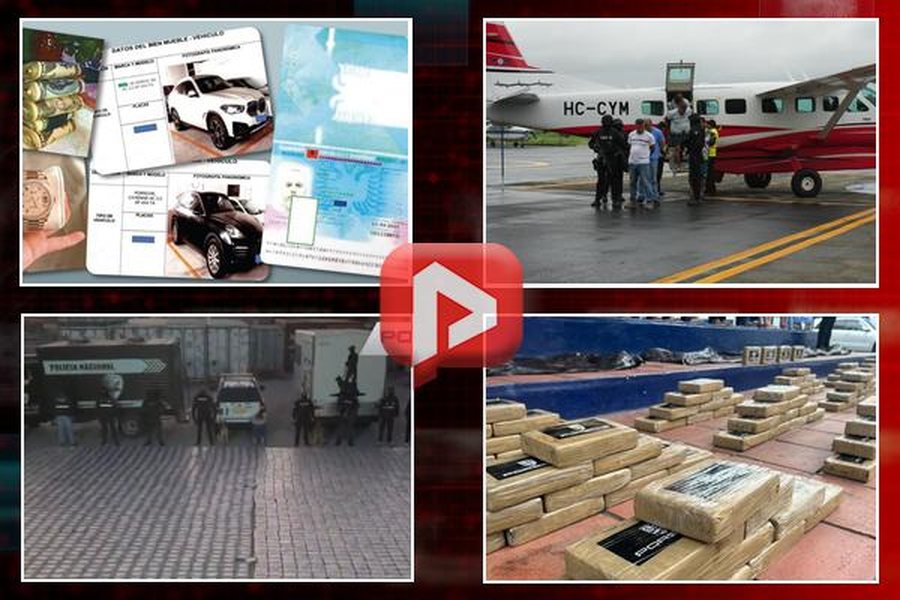
Ecuadorian authorities have dismantled a multi-million euro drug trafficking and money laundering scheme linked to criminal groups from Albania and local gangs.
Ecuadorian authorities have uncovered a vast drug trafficking and money laundering network linked to the Albanian mafia, following two major police operations recently conducted in the country. The news was reported by Ecuadorian media outlet Primicias.
Operation "Bremen", conducted yesterday, led to the arrest of 26 people suspected of links to the criminal organization Los Lagartos and a transnational network originating from the Balkans. According to the investigation, the network used sophisticated methods to hide cocaine in shipments of bananas and gold concentrate, destined for the European and Canadian markets.
This operation followed Operation Costa, carried out a week earlier, in which 16 Ecuadorian citizens were arrested on suspicion of collaborating with the Los Lobos group in cocaine trafficking. The investigations also revealed the involvement of a former assembly member from the Social Cristiana party in this criminal network.
The roots of the criminal network in Ecuador
According to investigations by authorities, the presence of Albanian criminal groups in Ecuador dates back to around 2009. Emissaries from Europe were stationed in the country, taking advantage of weak border control and the dollarized economy, which facilitates the circulation of capital.
Initially, they presented themselves as businessmen and investors, using large amounts of capital to buy cocaine at low prices from Colombia and Peru. Unlike traditional cartels, these groups eschewed territorial control and preferred to cooperate with local criminal organizations.
According to investigations, the Balkan mafia formed alliances with some of the country's most dangerous groups, including Los Choneros, Los Lobos, Los Tiguerones, Mafia-18 and Los Lagartos. In this structure, local organizations provided protection and logistics, while network intermediaries coordinated international transport and the corruption of officials at ports and institutions.
Traffic routes to Europe
The drugs were transported from warehouses to major ports in Ecuador, including Guayaquil, Posorja, and Puerto Bolívar. From there, the containers were sent to major ports in Europe, such as Antwerp, Rotterdam, Algeciras, Valencia, and Vigo, as well as to terminals in Germany, Italy, Romania, Albania, and other countries.
Investigators identified several methods for hiding cocaine in containers. One is a technique called “blind hooking,” where the drugs are placed in the container without the knowledge of the exporting company and then retrieved by corrupt employees at the destination port. Other methods include building double bottoms in containers or loading the drugs offshore with the help of corrupt crew members.
In many cases, cocaine was disguised in legitimate shipments, such as boxes of bananas, cans of tuna, bags of organic fertilizer, or shipments of gold concentrate.
Money laundering through shell companies
The investigation also uncovered a vast money laundering scheme. According to authorities, the ringleaders simulated multi-million dollar international transactions, invested in cryptocurrencies, and created fictitious contracts with domestic manufacturers.
The laundered money was used to purchase luxury real estate, yachts, and expensive vehicles, such as a Porsche Cayenne, Jeep Gladiator, Chevrolet Corvette, and BMW.
Part of this scheme involved the creation of a network of companies in various sectors, including banana exports, the meat industry, real estate and private security. Among the companies named in the investigation are Agricomtrade, Sentilver, Damascosëeet, Cresmark, Neoglobal, Carniproduccion and Holtexsa, as well as several other firms linked to fruit exports and security services.
Arrests and murders online
The investigations have led to the arrests of several well-known figures in this network. Among them is the Albanian Dritan Gjika, considered the leader of a criminal structure uncovered in the "Pampa" case, arrested in Abu Dhabi in May 2025. Authorities are working on his extradition.
Another figure mentioned is Dritan Rexhepi, known as one of the leaders of cocaine trafficking, who was arrested in Turkey and extradited to Albania in early 2025.
However, several people associated with this network have been killed before facing justice. Among them is Albanian Adriatik Tresa, who was killed in Guayaquil in 2020 by people disguised as police officers, as well as Croatian Milan Milovać, who was killed in the same city after an internal criminal conflict.
According to Primicia, recent investigations show that criminal networks from the Balkans have built a stable presence in Ecuador over the past few years, using collaboration with local groups to control part of the cocaine traffic to international markets./ Adapted from "Pamphlet"






Lini një Përgjigje