


 Shkruar nga Diplomatico | Pamfleti.net
The Balkans' Dark Alliances: Why Serbia and Turkey Collaborate Against Albania and the West
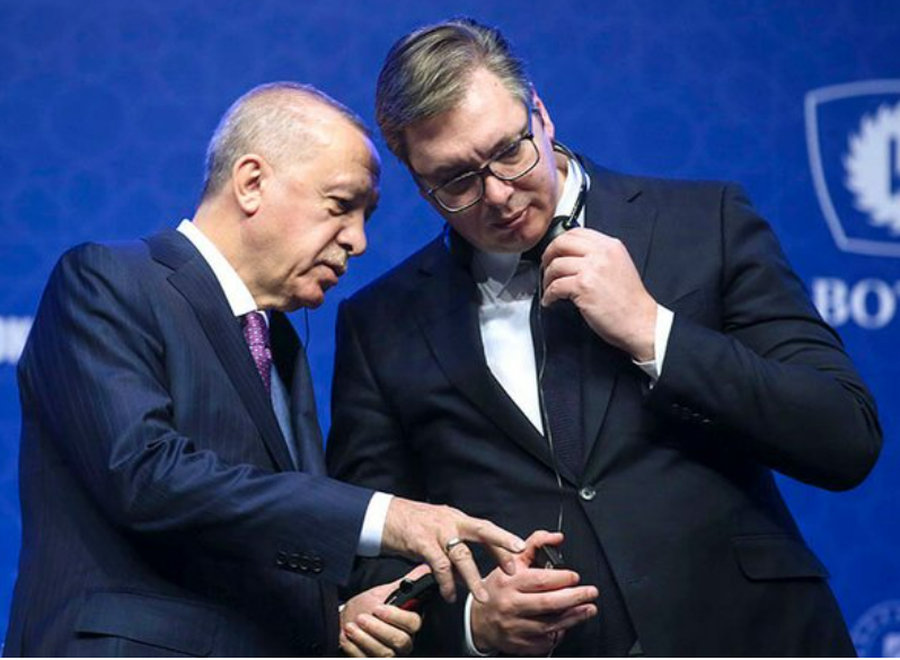
History, politics, and the influences of great powers that have created an inseparable bond between Turkey and Serbia, marginalizing the Albanian position in the region
In the international arena, powers are not judged solely by economic development or prosperity, but by the mentality, historical concepts, and strategies of their societies. In this context, Germany has always been more developed than Britain, but London has maintained the greatest global influence due to its imperial concept of state and society. The same is true of Albania in the Balkans, where historical influences and complex alliances play a decisive role.
One of the strongest and most enduring alliances in the region is that between Turkey and Serbia, which has historical roots dating back to the Battle of Kosovo in 1389 and continues to be consolidated through political, cultural and military relations to the present day. This alliance was also strengthened through the historic marriage of Mara Branković to Sultan Murad II, which made her one of the leading figures of the Ottoman Empire. This cooperation has continued uninterruptedly from the Ottoman period, to Ataturk's modern Turkey, and to the government of Recep Tayyip Erdogan.
Studies by British institutions, including those by the renowned James Pettifer and Miranda Vickers, show that for Turkey, although Albanians are an important factor in the Balkans, the most important allies are the Serbs, with whom historical and political ties are much stronger. This alliance constitutes a strategy to curb Western empowerment in the region, which is seen by Belgrade and Ankara as the main threat to their influence.
In contrast, Albania and Albanians are considered natural allies of the West, and this has caused distance and tension between them and the Serbian-Turkish alliance. Meanwhile, relations between Serbia and Turkey have strengthened even though they maintain opposing alliances in the region, such as Serbia's relationship with Greece and Turkey's with the Albanians.
This political and historical reality explains why Serbia and Turkey cooperate closely at the expense of Albanian interests, trying to minimize Western influence and maintain their regional influence. This complex challenge constitutes one of the greatest political and geopolitical challenges of the Western Balkans today./ Pamphlet







Lini një Përgjigje