


 Shkruar nga Pamfleti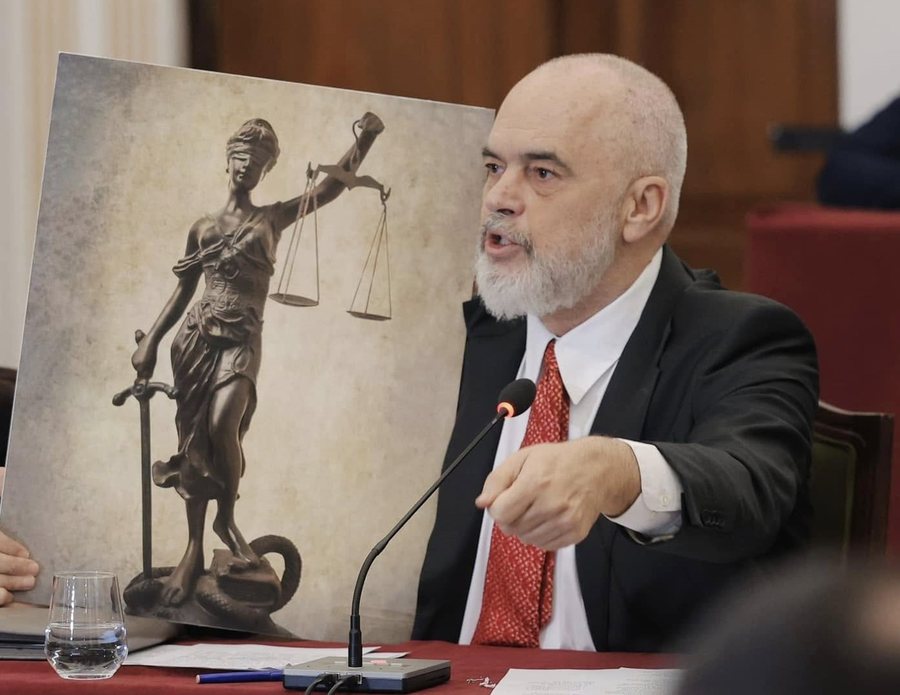
According to the approved decisions, the 2.5% indexation is applied to the salary of the President of the Republic and, subsequently, to the basic reference salary for judicial and prosecutorial functions, which serves as the basis for constructing salaries in the justice system.
The Council of Ministers has approved a package of decisions that provides for the indexation of 2.5% of salaries and their constituent elements for several categories of public administration for the year 2026. The decisions affect constitutional functions, security sectors, civil administration and the health system, while maintaining the budgetary framework approved for the following year.
According to the approved decisions, the indexation of 2.5% is applied to the salary of the President of the Republic and, subsequently, to the basic reference salary for judicial and prosecutorial functions, which serves as the basis for building salaries in the justice system. In parallel, the updating of the salary structures for the Guard of the Republic, the Prison Police, anti-corruption coordinators, support employees and a number of specialties in public administration is foreseen.
The package also includes healthcare personnel, reflecting a general approach of nominal indexation in several key sectors of the state.
This decision of the Council of Ministers to index the basic reference salary for judges and prosecutors by 2.5% further ignites the debate on the financial treatment of the justice system. On one side stands the government, which implements the existing legal formula. On the other side are the demands of judges, who have long raised concerns about the real level of salaries and the impact of inflation.
According to the approved act, the basic reference salary for judicial and prosecutorial functions is indexed by 2.5%, reaching 156,825 lek per month. This salary is calculated on the basis of the coefficient 0.36 of the salary of the President of the Republic and serves as a fundamental element for building salaries at all levels of the justice system. The Government determines that the financial effects are covered within the 2026 budget and that the decision does not create additional obligations outside the approved budgetary framework.
What do judges look for?
Judges have long articulated demands for real salary increases, not just formal indexation. The main argument is related to the loss of purchasing power as a result of inflation in recent years, as well as the need to guarantee the economic independence of the judicial function. In some public statements, it has been emphasized that automatic indexation does not fully compensate for the increase in the cost of living and that the current salary structure remains under pressure compared to the constitutional responsibilities of the function.
It should be noted that there is no unified official request accompanied by new concrete figures beyond the principle of real growth, which makes the debate more institutional and political than technical.
The 2.5% indexation represents a nominal correction, but not necessarily a real increase in income, if cumulative inflation is taken into account. The judges' demands, in this context, are more related to the protection of purchasing power and the relative positioning of salaries in the public sector.
The clash between the government's decision and the judges' expectations is not a legal conflict, but a difference between a formal application of the formula and a request for deeper economic review.







Lini një Përgjigje