


 Shkruar nga Pamfleti
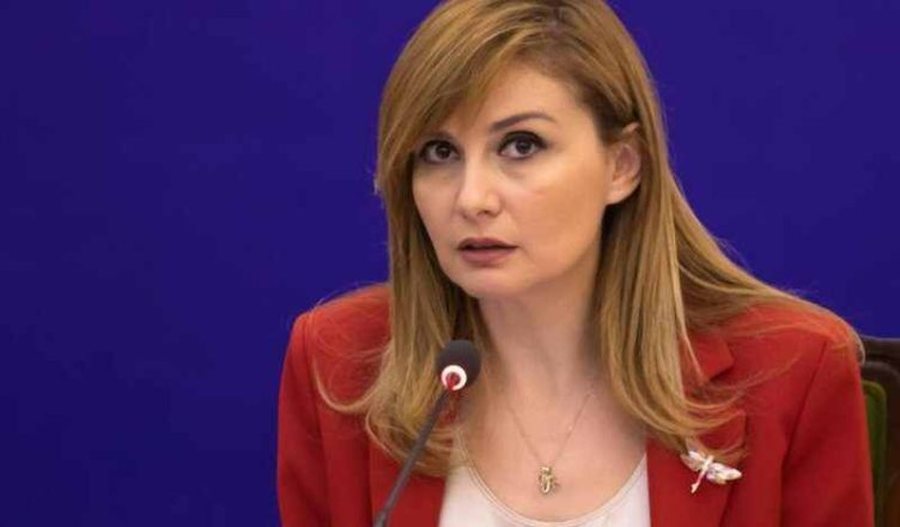
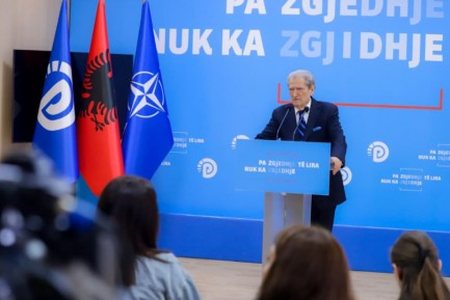
MP Jorida Tabaku has stated that the economic model in the country is producing unequal consequences and is weighing on the middle class.
She argues that economic growth does not rely on the productive sectors. According to her, construction and expansion of public administration constitute the main source of growth, while agriculture and industry have continued to shrink for several years.
Tabaku also discusses the structure of budget revenues. She emphasizes that the majority of them come from taxation of salaries and contributions, increasing the burden on professionals and the middle class.
In her assessment, sectors such as construction and tourism generate revenue, but do not reflect the same contribution to public finances.
Regarding wages, she states that the reported increase is not linked to improved productivity or competitiveness. For this reason, according to her, this increase does not translate into a real improvement in well-being.
In conclusion, Tabaku raises concerns about the direction of economic development and the distribution of the fiscal burden.
Tabaku: Who is talking about economic growth today? The same government that after 12 years has left Albanians with the lowest incomes in the region. So there is something wrong. There is a reason that the growth shown to us in numbers is not what is felt in everyday life. It is not what a family sees at the end of the month, nor what a young person experiences when trying to buy a house or build his life here. The problem is not simply how much the economy grows. The problem is how it grows and who this growth serves. Today, economic growth does not come from production.
It comes mainly from construction and state expansion. These two sectors alone account for about 2/3 of all economic growth, while agriculture and industry, the sectors that keep the real economy afloat, have been declining for years. About 78% of the increase in budget revenues comes from taxes on wages and contributions. That is, from working people. This means one thing: the state is increasing revenues by taking more from the same layer, the middle class and professionals, not by expanding the real economy. Meanwhile, the sectors that should bring in revenue, construction and tourism, do not contribute proportionally to the profits they generate. This is an economy that does not produce enough, but taxes those who work more.
And when an economy does not produce, the consequences are paid by the citizen. Inflation has not disappeared. It has shifted. You don't see it only in the price of food, but you see it in the price of apartments that have become unaffordable, in rents that increase every year, in the fact that a young couple, even with two salaries, cannot afford to buy a house in their own country. At the same time, families continue to pay more for their daily living. Because an economy that does not produce enough is forced to import more and the citizen pays the cost. This creates a double reality: high prices for living and unaffordable prices for property. Meanwhile, wages increase on paper, but not as a result of a stronger economy. They do not come from productivity and competition, so they do not translate into more well-being for the majority. Added to this is the lack of competition. In many sectors, the market is dominated by a few actors.
Monopolies and oligopolies keep prices high and block the path to honest development. And above all lies corruption. Not as an isolated case, but as a way of functioning. When corruption becomes a system, investments do not go where the economy needs them, but where there are narrow interests. And this distorts everything, from prices to opportunities. The result is clear: an economy that looks strong on the surface, but is weakened from the inside. A rotten apple from the inside! An economy that builds towers, but does not build opportunities.
An economy where the few get richer, while the majority face ever higher costs. Albanians today are paying double: with higher taxes on wages and an ever higher cost of living. So it is not about sustainable growth but a facade that cannot last and does not serve the citizens! Albania needs a different model. A model that produces, that competes and that turns economic growth into well-being for every citizen. Because the economy is not measured by numbers but by the real lives of people.



Lini një Përgjigje