


 Shkruar nga Pamfleti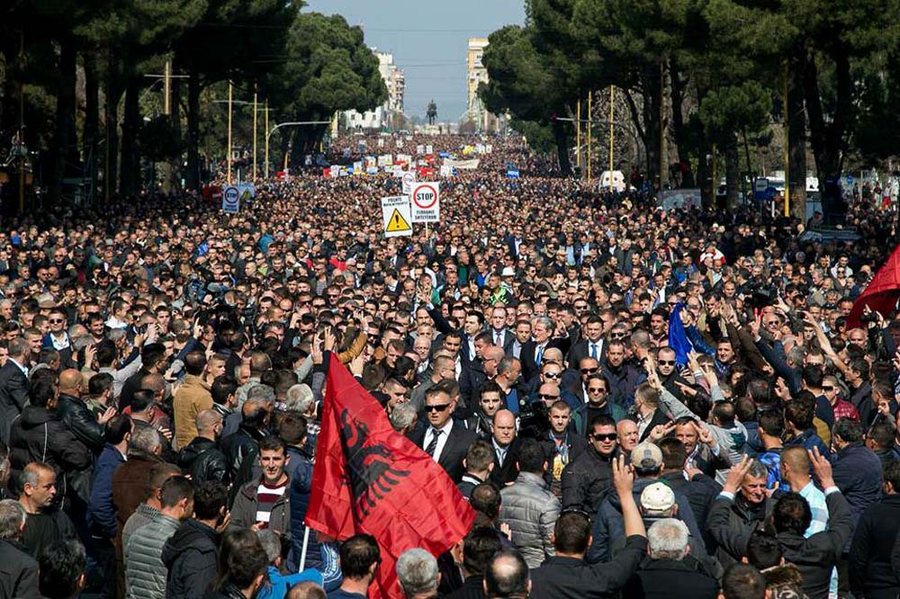
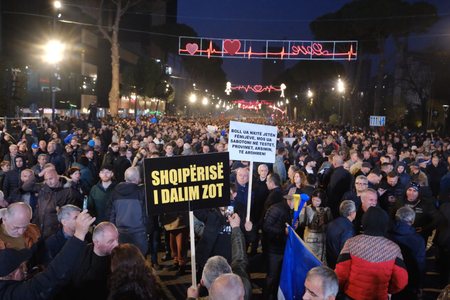
The Democratic Party and its allies are holding their first national protest today since losing the May 11 elections. Democratic leader Sali Berisha announced the date of the protest amid internal pressures, with many members of the National Council and leaders of structures demanding a national response, following the scandals involving Edi Rama's government.
Berisha started with several small weekly protests that he dubbed "citizen-parliamentary rostrums," where opposition MPs and various individuals took the floor and delivered their messages.
This protest format was weekly, until the moment when the member of the DP Presidency, Ervin Salianji, started a movement in the DP, which he also baptized as a "pulpit" with the members of this party, while demanding tougher reactions from the democratic leadership towards Edi Rama.
Berisha had warned several times of the start of a wave of protests, but never gave a date for when they would start.
About 10 days ago, Berisha declared that the protest would be held on December 22, in front of the Prime Minister's Office, announcing that this would be the first of a series of protests that would only stop when Edi Rama was ousted from the post of Prime Minister.
In order to organize the protest, Berisha held consecutive meetings with the Presidency, Parliamentary Group and National Council of the Democratic Party, and in parallel held meetings with democrats in several of the branches of this party.
Today's opposition protest will start at 18:00, while it is not known how long it will last. The Democrats are also keeping secret the details of how the protest will be held, which Berisha has defined as a revolt. It is not known whether Adriatik Lapaj, who has been protesting in front of the Prime Minister's Office for two weeks, will also join this protest, while from time to time there have been clashes between supporters of 'Albania Becomes' and the Police. Berisha has praised Lapaj's protest, while an invitation to join the national rally called by the Democrats has reportedly been given to him as well.
Citizens are expected to gather initially at the DP headquarters, from where they will then march towards the Prime Minister's Office building. Sali Berisha may join the protesters by starting from his apartment, a few meters away from the government building, where a large podium will be set up, where numerous speeches are expected to be made.
Citizens, well-known figures, and then MPs and leaders of opposition parties, are expected to give their messages, depending on which there may be a precipitation of the situation.
The main branches of the Democratic Party in the districts are expected to organize groups of opposition supporters who will come to the capital, while the main weight of participation is expected to be in Tirana and Kamza, which are also considered the largest branches of the opposition. Likewise, the branches of cities close to Tirana, such as Elbasan and Durres, have been asked for maximum commitment to bring as many supporters to the capital as possible, which seems to be the strongest test today for the Democrats will be participation in the protest.
Depending on the turnout, it seems that the scenario that the opposition will use for the continuation of the protests, how frequent they will be, and how resistant they will be in terms of duration, will also be decided.
Usually, the protests called by the DP at different times have lasted 4 or 5 hours, creating chaos, because forms of civil disobedience have been applied. But after May 11, the notion of civil disobedience and its forms have been erased from Berisha's political vocabulary, which in fact, when used, have not yielded any results.
So far, Berisha and many of the DP figures have not given importance to citizen participation in organized protests or rallies.
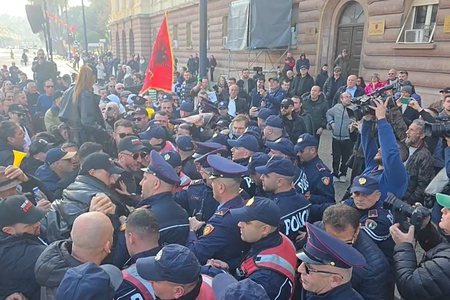
On the other hand, the Police are expected to deploy up to 1,300 police forces, including units of the RENEA and Rapid Intervention forces, while the first line of defense for order and security will be basic police officers, as well as members of the Eagles.
Reports indicate that police forces will be stationed in the area near the Prime Minister's Office and the Assembly Presidency building, but also in the inner courtyard of the Parliament, where plenary sessions are held. From previous experiences, forces stationed near institutions intervene only in cases where there is a precipitate situation, or when basic role police officers are attacked by crowds.
The use of flamethrowers or Molotov cocktails by protesters could escalate the situation and lead to clashes with law enforcement, a scenario that also seems to be included in police measures, involving a large number of blue uniforms. /Pamphlet/


Lini një Përgjigje