


 Shkruar nga Pamfleti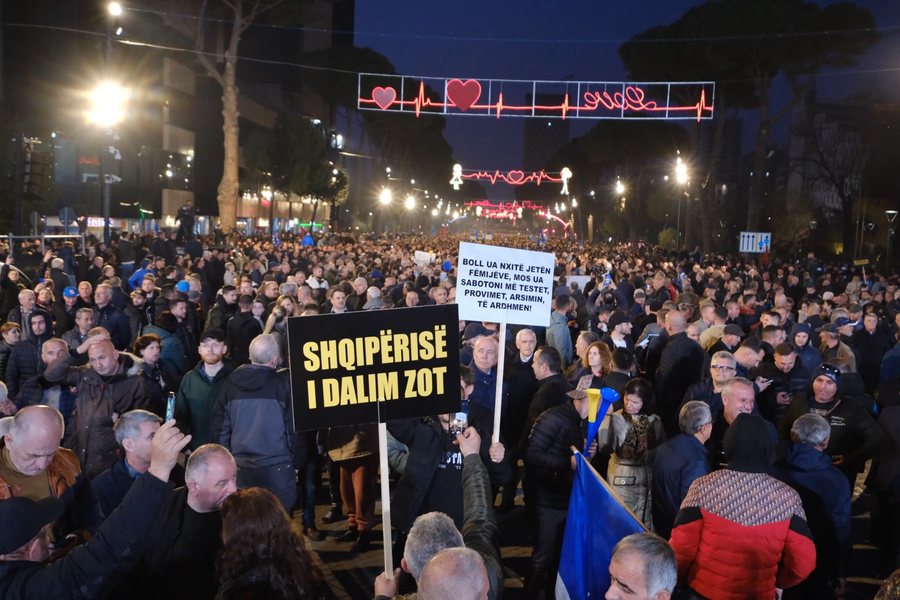
Will the 4 opposition parties that have risen up in protests unite in a front?
Around the world, Generation Z is emerging as the newest force of political upheaval. In many countries, it is precisely the young, the children of the internet age and the Great Disillusionment, who have taken to the streets, overthrowing prime ministers, challenging states. They are not represented by the old parties, they do not want leaders with tired speeches, but they demand a new order that does not revolve around power and money. They do not question protocol; they protest as they live: raw, fast, honest.
Meanwhile, in Albania, we find ourselves in another chapter: a government that is daily mired in corruption scandals, a justice system that brings indictments to the heart of the dome, a parliament that represents no one, and a society that seems to watch everything through the glass of its phone, without an organized reaction.
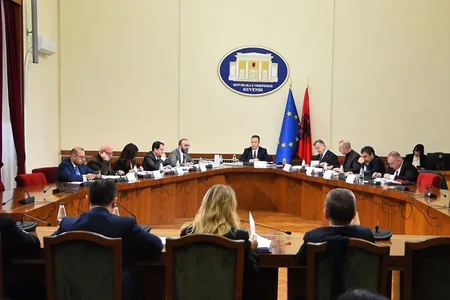
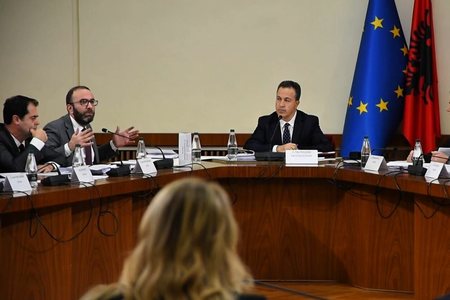
Four protests, separated in time but essentially the same, are evidence that there is a fermenting concern. On Monday, the Democratic Party announces a protest in front of the Prime Minister's Office. Meanwhile, Adriatik Lapaj, one of the most coherent and independent voices in the public arena, has been holed up in that same square for weeks, demanding the overthrow of the culture of impunity. Yesterday, the Together Movement was also in front of the Parliament. Today, the Opportunity Party protested in the same place, while the immunity of Deputy Prime Minister Belinda Balluku was being discussed.
In any normal country, four consecutive protests would be enough to ignite a national debate, to alarm the majority, to unite the forces of change. In Albania, what has made the difference in international cases is still missing: a sense of community. A clear feeling that regardless of logos, ideas, or political wings, the confrontation is one and only: against a rotten system that has gripped most of the country.
The fact that the protests are divided, fragmented, and still weak in numbers speaks not to a lack of anger, but to a lack of connection between people. Essentially, everyone is revolted, but each in his own corner. And this is where regimes escape: not because they are stronger, but because their opponents are scattered, vocal, but disorganized.
Albania does not need a single leader to call the people. It needs a collective consciousness that understands that at this stage, silence is complicity. All these voices, Lapaj, the parliamentary opposition, the new parties, the civic movements, have more in common than they divide. What is missing is a coordinate that connects them, not an ideology that divides them.
In the end, the fuse of revolt is not always lit with a scandal. It is often lit with a feeling. And that feeling is more present today than ever, but it is waiting to be transformed into joint action. Because corruption is not overthrown with statuses, nor with silent protests. It is overthrown with unity. And this unity must happen now, before we return to a place where hope will be rarer than justice. /Pamphlet



E vertet
Sakte por dhe shumica e gjenerates 0 eshte e tredhur, jane bij baballaresh e mamallaresh koti, pa ideale
Pamfleti! Po na rekomandoni që ti bashkohemi foltores së Lapajt? Apo ti bashkohemi faltores së Berishës? Po na rekomandoni riciklim?
kesaj radhe e meriton PAMFLETI kritiket tuaj......
Hidhu-pirdhu këta janë, duhet me zgjedh njërin.
Ky Llapaj nuk durohet ne opozite, imagjino te kete pushtet. Nga te gjithe keta qe kryesojne opoziten me natyral eshte Rama. Komplet i degjeneruar por leket i ka gjet vete, nga krimi dhe droga. Ska vjedh leket e punes se Shqiptareve si Saliu. Ivetmi qe hahet pak eshte ky Agron Shehaj.