


 Shkruar nga Pamfleti
Socialists are in doubt whether they have the right or not not to implement the decision of the Constitution. For this reason, they ask the court to obtain an opinion from the Venice Commission regarding this interpretation.
Prime Minister Edi Rama seems to have changed his mind regarding Olta Xhaçka's mandate.
After defending it with "flesh and soul" by stepping on the court's decision with both feet, today a surprise request came from the Assembly.
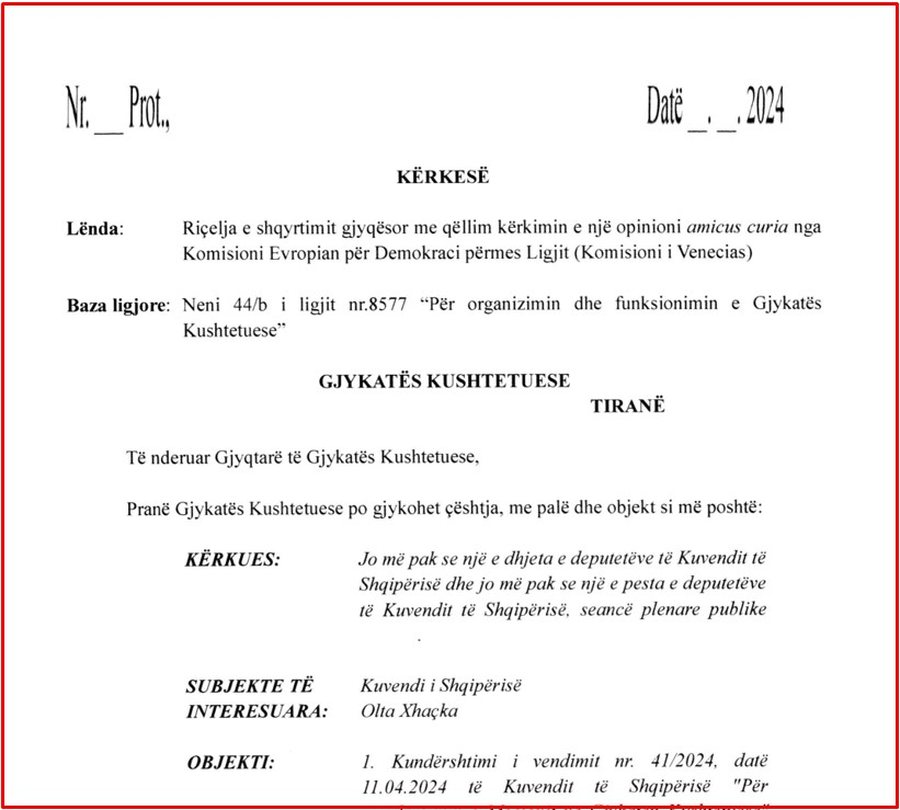
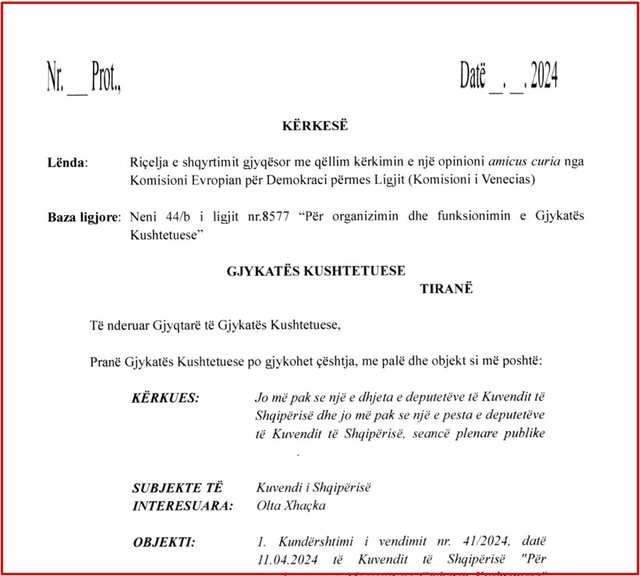
According to the sources, the Assembly addressed a letter to the Constitutional Court to reconsider whether Olta Xhaçka is in the conditions of a conflict of interest or not. But even here there is a catch. SP requests that an opinion be obtained from the Venice Commission.
DP demanded the removal of Olta Xhaçka's mandate with the argument that she is in a conflict of interest. Her husband was declared a strategic investor, benefiting from land on the coast and facilities from the government. But SP broke every law and regulation, rejecting DP's request, although the Constitution is clear that the file must go to the Constitutional Court.
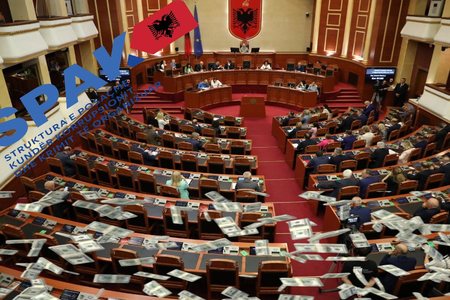
The DP appealed the decision in the latter and the court forced the Assembly to vote in favor of the DP's request and then they decide whether to remove the mandate or not. However, the SP, for the first time in history, decided to interpret the court's decision, stating that it cannot dictate the vote of the deputies. In this way, the second request to remove the mandate of the member of parliament, Olta Xhaçka, was rejected. PD sent you to the court again, but today a surprise letter arrived.
The SP seems to regret the action it has taken. Socialists are in doubt whether they have the right or not not to implement the decision of the Constitution. For this reason, they ask the court to obtain an opinion from the Venice Commission regarding this interpretation.
" From the totality of the characteristics that the parliamentary mandate carries, it is clear that the deputy during the exercise of his duty is not subject to orders, unlike the rest of the civil service employees. He accepts his mandate completely freely and decides with his full responsibility on the manner of exercising the mandate. His activity as a deputy must be permeated throughout the time that he exercises this function by responsibility, honesty and correctness. This obligation for the deputy begins at the moment of the beginning of the parliamentary mandate".
From the passages presented above, a contradictory situation is created in the way deputies should vote, where on the one hand they are free to choose to vote or not to vote, without being bound by any different request that may come from anyone. and on the other hand are again forced to vote in a certain way. Clearly, such a situation creates tension for representative democracy...
So, the deputies have the right to abstain without giving any reason why they decide in this way. So, as long as the deputies are free to vote as they think and judge for themselves, they can also decide to abstain, without discussing or giving an opinion about their vote...
For this reason, we consider it necessary to request an advisory opinion from the Venice Commission, regarding the relationship between representative parliamentary democracy and the role of the Assembly in the case of examining motions for the incompatibility of the mandate of the deputy ", the Assembly states, among other things.





Lini një Përgjigje