


 Shkruar nga Pamfleti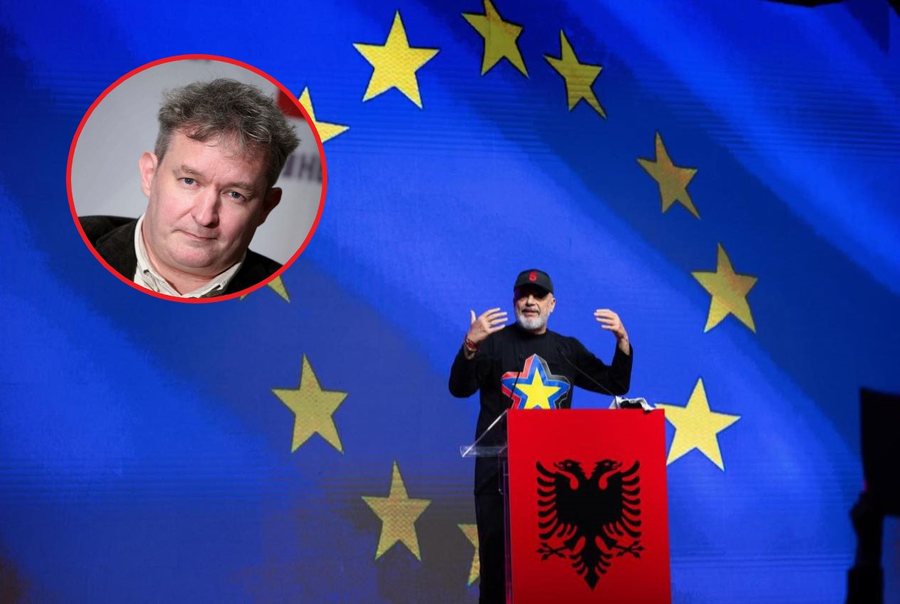
Michael Martens clarifies BILD's article on the government coalition agreement in Germany...
The Germans continue to hit Edi Rama. After BILD announced that the new coalition that will govern Germany will be restrictive, another journalist has come out and announced that the integration of the Balkans will be slightly delayed.
Contrary to Edi Rama's statement that membership will occur in 2030, in fact the new German coalition has part of the agreement that there can be no expansion without first reforming the Union.
German journalist Michael Martens writes that the Balkans should think about a different move now. According to him, this will serve to continue with reforms.
“ If the EU were to admit all countries that have expressed a desire to join, this would mean that, for example, in foreign policy, nothing could be decided against Belgrade, Chisinau, Kiev, Sarajevo, Skopje, Podgorica, Pristina or Tirana. Anyone who knows the internal situation and the foreign policy orientation of these states can easily imagine the possible consequences that this could have in some cases. It is therefore a sign of responsible policy not to admit new states to the EU ,” he writes.
The journalist's full post on "X"
There is a four-sentence passage in the coalition agreement of the next federal government that has received little attention so far, even though it could have a significant impact on foreign policy. “The enlargement of the EU and its capacity to absorb new members must go hand in hand. We therefore need internal consolidation and a reform of the EU, which will strengthen it institutionally, at the latest by the next enlargement,” the first part reads.
Second: "The principle of consensus in the European Council should not become a brake on decision-making. This also applies in principle to the remaining decisions that require unanimity in the EU Council." De facto, this is Berlin's rejection of all previous EU enlargement rhetoric. It emphasizes what has long been the case: the EU's lack of decision-making capacity is a central obstacle to the admission of new full members. Each new full member would bring with it an additional veto right in those policy areas in the European Council that require a unanimous vote. What does this mean in concrete terms? If the EU were to admit all countries that have expressed a desire to join, this would mean that, for example, in foreign policy, nothing could be decided against Belgrade, Chisinau, Kiev, Sarajevo, Skopje, Podgorica, Pristina or Tirana.
The new German government has effectively spoken out against EU enlargement—ie, against the admission of new full members—in its coalition agreement. This could actually be good news for the Western Balkans - if the right conclusions are drawn from it. pic.twitter.com/L9o8lOuX7g
— Michael Martens (@Andric1961) April 14, 2025
Anyone who knows the domestic situation and foreign policy orientation of these states can easily imagine the possible consequences that this could have in some cases. It is therefore a sign of responsible politics not to admit new states to the EU. In short: A shift to majority voting in the European Council is unlikely to be impossible, although the opposite has been claimed for years. (Apparently, a reform was in the works – it just never came). To abolish unanimity requires unanimity, which is nowhere to be seen. So if Berlin announces the abolition of something that is nowhere on the horizon as a prerequisite for enlargement, this means: EU enlargement is not on the horizon. However, this should not be bad news. Because for years there has been a good idea of how to offer candidate countries (Western Balkans, Moldova, Ukraine) an attractive target WITHOUT burdening the EU with new members with a veto.
It involves a model in which those countries could gain access to the EU single market – after having met almost all the criteria that would also be required for full membership. The requirements would therefore remain high. But they could be easier to meet because the goal is both realistic and attractive. Such an approach would expand the EU’s legal space without burdening its political structures.
It can unlock the reform potential in candidate countries. If the offer is real and credible.






Lini një Përgjigje