


 Shkruar nga Pamfleti
But not only the opposition DP, which was divided by the struggle for power, but also Sali Berisha, who was no less discredited by investigations into judicial corruption, caused many of those qualified voters who went to vote to trust Edi Rama again.
The May 11 elections in Albania have attracted the attention of international media. It seems that Edi Rama's 4th consecutive victory as Prime Minister of Albania has surprised the German media "Neue Zürcher Zeitung", radio 'DlF', "Frankfurter Rundschau" and Zeit, which have analyzed what happened with the elections in Albania, while also making a portrait of Edi Rama.
"Neue Zürcher Zeitung " in the article titled "Edi Rama will be Prime Minister of Albania for the fourth time - portrait of a permanent non-conformist" underlines that we should not be deceived by Rama's image as an outsider in politics.
"The likely winner of the elections is a politician hungry for power," writes NZZ.
German media writes that on Sunday, 60-year-old Edi Rama won the parliamentary elections for the fourth time, according to initial polls in the election, making him one of the long-term rulers in the Balkans (Milo Djukanovic, Aleksandar Vučić, Milorad Dodik), who have appeared most frequently since the Yugoslav wars.
Although Berisha hired a Trump advisor who tried a toned-down version of the MAGA (“Make Albania Great Again”) slogan, the DP leader posed no threat to the incumbent Prime Minister.
Andreas Ernst, after mentioning Rama's success as mayor of Tirana, refers to the change in the capital and emphasizes that everything that goes wrong in Albania is centered on this construction boom in Tirana.
"The crony economy issues building permits for its own, and the awarding of tenders depends on political connections, black money, and returning favors."
NZZ also looks at the expected election victory by the Socialists and emphasizes that "Rama's well-oiled clientelistic system is one explanation for the Socialists' electoral success. The other explanation is his opponent, the 81-year-old Sali Berisha. Unlike Rama, he is an old-fashioned autocrat, not original, cosmopolitan or charming."
In its article, NZZ describes Rama as a power-hungry politician who knows only friends and enemies in politics.
"Rama established a power apparatus as is known in many countries in the region: He is the head of a party that controls the administration, the courts, and much of the media."
Rama is portrayed as a truly pro-European, unconventional artist who is very well received in Brussels, because his politics are EU-compliant, but also quite contested.
"Sunday's vote is seen as an important test of will on Albania's path towards EU membership," the German media continues.
Meanwhile, DlF , a German radio station, paying attention to the situation in Albania, asks: "elections in Albania: How authoritarian is Edi Rama?"
"Edi Rama is a welcome friend in the EU, and it seems that both ideologically and geopolitically he stands steadfastly on the side of Europe. But critics fear that Albania's successes on issues related to the rule of law and democracy are successes only on paper, and that the country is not ready for EU membership. This also has to do with Edi Rama showing authoritarian traits," reports DlF.
" Frankfurter Rundschau " writes that the current head of the Albanian Government, Edi Rama, will continue in office again, after the May 11 elections, with another governing mandate.
The seemingly endless chain of corruption scandals that rocked Rama's cabinet during his last term alone would probably have cost the former basketball player his term as prime minister long ago in a Western European democracy.
But not only the opposition DP, which was divided by the struggle for power, but also Sali Berisha, who was no less discredited by investigations into judicial corruption, caused many of those qualified voters who went to vote to trust Edi Rama again.
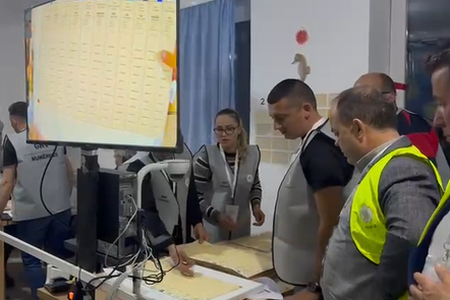
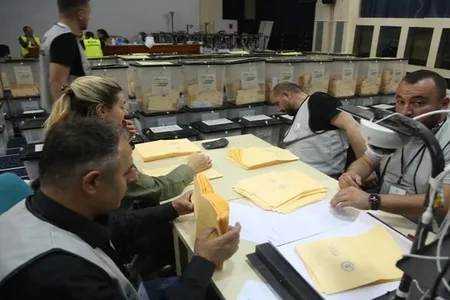
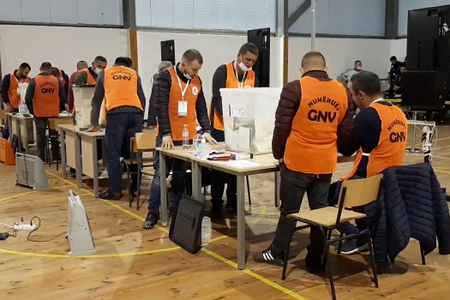
But the fact that voter turnout was 42.2 percent shows that many disappointed voters preferred to stay home.
"Zeit " writes in its article that after the parliamentary elections in Albania on Sunday, a victory for the Socialist Party (SP) of Prime Minister Edi Rama is emerging.
Rama, 60, has led the Socialist Party since 2005 and is seeking a fourth consecutive term as prime minister.
During the election campaign, he declared that he would continue efforts for EU membership in 2030, so that all Albanians would benefit from 'the same rights as citizens of other European countries'.
Rama has been repeatedly accused by the opposition of having contacts with organized crime, which Rama denies.” /Adapted from Pamphlet/



Lini një Përgjigje