


 Shkruar nga Gjergj Zefi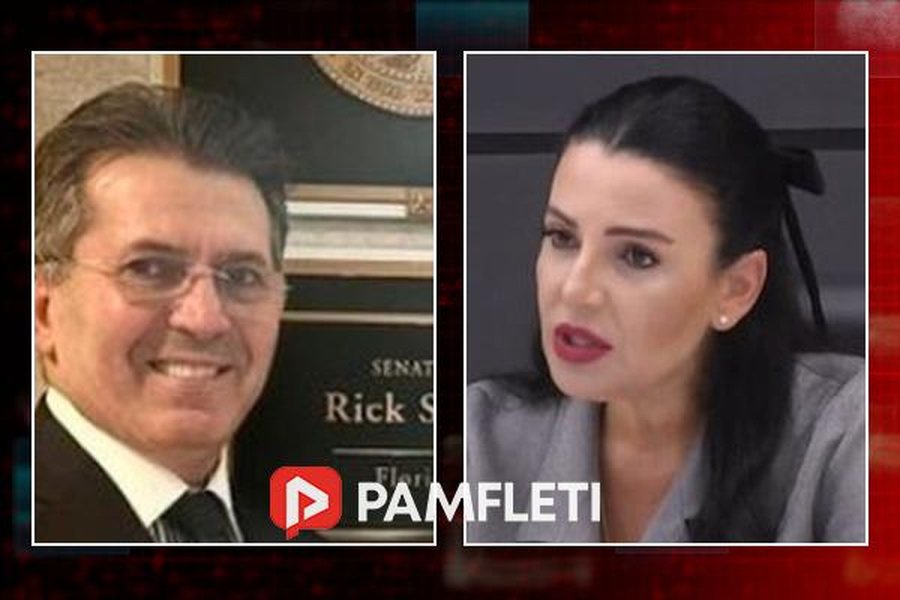
From Mediu, Berisha and Xhaçka at large, to the request for deprivation of liberty against Belinda Balluku, the debate on austerity measures deepens...
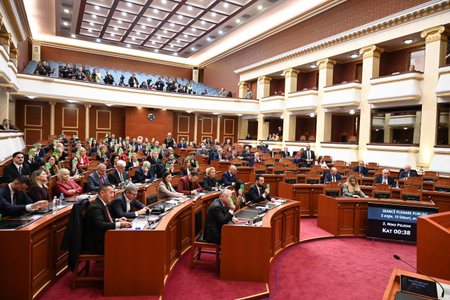
A number of high-ranking political figures, accused of serious criminal offenses, continue to be investigated while at large and exercise their public functions. Meanwhile, SPAK has requested from the Parliament authorization to detain Deputy Prime Minister Belinda Balluku for “violation of equality in tenders”. The contrast between the cases has raised debate on the standard of use of coercive measures, on their proportionality and on the boundary between criminal investigation and constitutional protection of political mandate.
Fatmir Mediu has been a defendant for several years in the Gerdec disaster, where 28 people died and hundreds were injured, and continues to face trial. However, he enjoys parliamentary immunity and travels to the US and Europe, participating in conferences on security and democracy.
Sali Berisha has been indicted for three years by SPAK for corruption, related to the issue of public property in the “Partizani” file, as well as for money laundering and illicit enrichment. The file has been in court since last year and the trial is in its early stages. However, he enjoys freedom of movement and exercises his political functions as the leader of the opposition. He is currently under a security measure of “compulsory appearance” once every two weeks.
Immunity or a request for harsher measures against him was not requested because of the criminal offense he was charged with, but because he initially failed to comply with the mandatory reporting requirement.
Olta Xhaçka, a Socialist Party MP and former minister, has been indicted by the Special Court Against Crime and Corruption for abuse of office and money laundering, in connection with the acquisition of a plot of land in Dhërmi with the status of Strategic Investor. SPAK continues the investigation and, according to procedural deadlines, the file is expected to go to trial. The MP is exercising her mandate and no permission has been given for measures such as home searches, wiretapping or restrictions on personal freedom. A dozen MPs such as Luan Baçi, Termet Peçi, etc. are in such a situation.
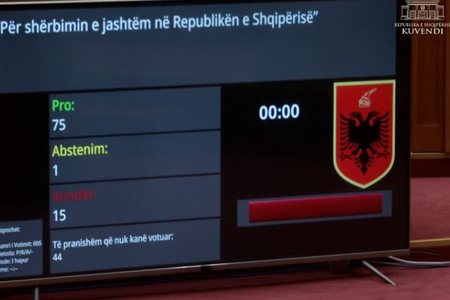
Meanwhile, SPAK has submitted to the Parliament a request for authorization to deprive the Deputy Prime Minister and Minister of Energy and Infrastructure, Belinda Balluku, of personal freedom and movement, who has been charged with "violation of equality in tenders."
The investigation against her has been ongoing for two years, since the former director of the Albanian Anti-Corruption Agency, Evis Berberi, was put under investigation. The file contains wiretaps and other communications collected during the investigation.
In other cases for the same criminal offense, the defendants were investigated at large. In the case of the State Police uniform tender, the defendants were prosecuted without arrest and the file went to trial. Although the damage of 13 million euros was proven, several low-level officials ended up in prison, and neither the minister nor the Secretary General of the Ministry of Interior was affected.
Even in the case of former minister Ilir Beqaj, the arrest measure was not imposed for the sterilization issue, but for another criminal offense related to conflict of interest.
Most of the cases investigated by SPAK in the field of infrastructure contracts are related to actions carried out in the past, with documentation administered and deposited in state institutions. In these circumstances, a debate arises on the necessity of coercive measures such as restrictions of freedom or searches of the apartment.
In this case, we are not dealing with a flagrant event, or even a serious and obvious offense such as death and multiple injuries. A criminal offense, for which Fatmir Mediu is the defendant.
Which means that both legally and logically, there is no reason to request the removal of personal freedom or movement. All official acts on tender contracts were taken in the past, and they all exist in the archives of state offices. Which means there is no reason to request permission for control or interception.
Then why is the prosecutor in a hurry to request a coercive measure only for this case, following a double standard?
If there are no conditions, precedents or context to do this, there are reasons that are not related to the event, but outside it. Which could be political or personal reasons, so precisely for this, to stop the undertaking of non-legal revenge,
The Constitution provides for immunity for elected representatives, in order to protect the exercise of their mandate. They may be investigated according to the law, but interventions that affect personal freedom and political function require authorization and must be based on clear procedural conditions./ Pamphlet



Lini një Përgjigje