


 Shkruar nga Diplomatico | Pamfleti.net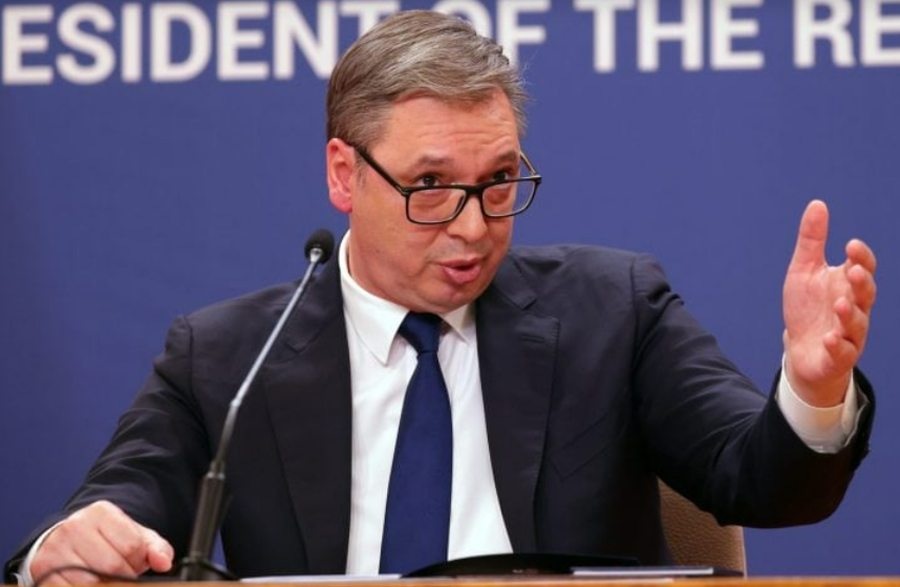
Experts warn: Serbia is sinking into autocracy controlled by fear...
In one of his most tense public outings since the violent crisis in northern Kosovo, Serbian President Aleksandar Vučić leveled direct accusations at the Serbian Organized Crime Prosecutor’s Office, describing it as infiltrated by foreign interests and warning of criminal charges against the chief prosecutor himself. This event is not just an institutional clash; it represents a dangerous turning point for Serbia’s legal order and internal stability, with consequences that extend far beyond its borders.
What is really happening in Serbia?
On Thursday, the Organized Crime Prosecution Office detained two important former ministers of the regime: Tomislav Momirović and Goran Vesić, as part of an investigation into serious abuse of public funds in the "Nadstrešnica" project. Their arrest came after international pressure for a real fight against corruption in Serbia; a repeated demand from Brussels as a condition for advancing accession negotiations.
Instead of supporting the justice institutions, Vučić used the moment to make wild accusations, claiming that the arrests were ordered from abroad, in a "coordinated attack to weaken the state."
Aleksandar Vučić's strategy: nationalism to protect clientele
This is not the first time that Vučić has used the narrative of a “Western conspiracy” to avoid cracking down on those close to power. He has built a system where the law is applied selectively and where justice punishes enemies of the regime but pardons collaborators.
The arrest of Momirović and Vesić came as a surprise. Both are key figures in his party, and perhaps more than anyone else, know about Vučić's parallel economic network.
The president's immediate reaction shows real fear that the chain of attack could reach him himself.
The announcement that it will prosecute Chief Prosecutor Mladen Nenadić, without any legal basis, constitutes direct political pressure on an independent institution. Lawyers and legal experts have called this a flagrant violation of the separation of powers, a signal that Serbia is sliding towards autocracy.
With this act, Vučić sends a clear message: there is no separation of powers, there is only one center of power; himself.
The claims that “Europeans” are ordering arrests are a direct blow to the European Union, which has repeatedly demanded that Serbia meet the standards of the rule of law. This is a dangerous deviation from the path of integration, and a signal to Brussels that Vučić is returning to old alliances with the East, Russia and China, in order to survive politically.
Meanwhile, Western diplomats have begun signaling that Serbia could face a freeze on funds, as well as diplomatic isolation, if it further escalates this course.
Vučić, alarm for regional stability
For Albania and Albanians in the region, such actions represent a red alert for the potential destabilization of the Balkans. A Serbia where justice is intimidated and nationalism is fueled for domestic purposes is an unpredictable Serbia in relation to Kosovo, Montenegro, and regional stability itself.
As Kosovo faces pressure to establish the Association, and the Albanians of the Valley are under systematic discrimination, every radicalized act by Belgrade strengthens fears of destabilizing intervention in the region./ Pamphlet




Lini një Përgjigje