


 Shkruar nga rel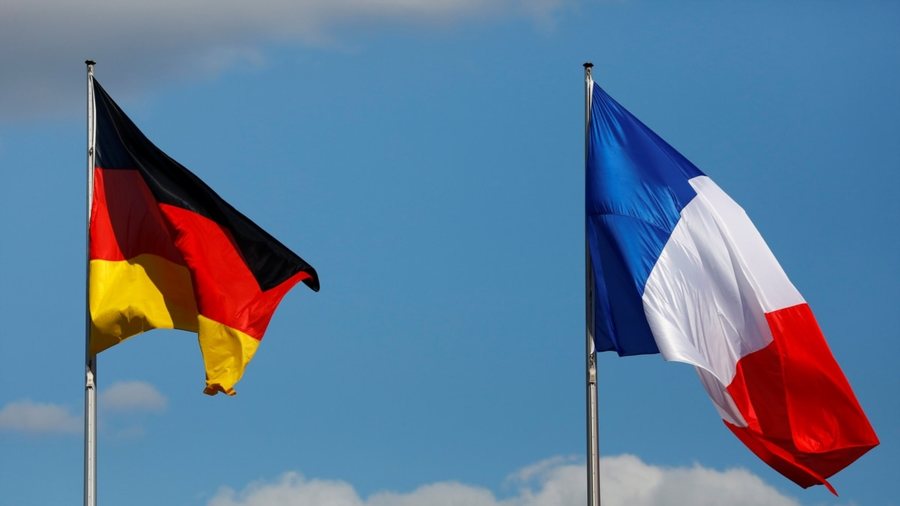
The situation regarding Kosovo's membership in the Council of Europe is changing from hour to hour. It is not very clear what will happen on May 17, in Strasbourg, when the Committee of Ministers of this organization meets for an annual meeting. As the main topic of the last few weeks has been the Association of municipalities with a Serbian majority in Kosovo, not a few have criticized the West for making the inclusion of Kosovo in the Council conditional on taking steps towards its establishment.
The approach of France and Germany by conditioning Kosovo's membership in the Council of Europe (CoE) with taking steps towards the establishment of the Association of municipalities with a Serbian majority is not to be admired, especially due to the fact that they are convinced that Kosovo should be part of this organization, that they are QUINT countries, and that they speak out loud in support of Kosovo - this is how Engjëllushe Morina from the European Council for Foreign Relations assesses, in several answers to Radio Free Europe.
She claims that Kosovo's announcement that it is preparing a draft statute for the establishment of "a mechanism for self-management, coordination and cooperation of municipalities with a Serbian majority in Kosovo", should be sufficient argument for the West, because, according to her, it shows the readiness of Kosovo to address concerns about the Serbian community.
"Each movement, no matter how small, in terms of the formation of the Association, will be enough at these moments", says Morina for REL. According to her, this is the moment when Kosovo should be supported, as membership in the Council - the leading organization for human rights - would bring many benefits to the citizens of this country, including minorities.
But Bodo Weber, senior fellow at the non-governmental Council for Democratization Policy in Berlin, is not optimistic.
"I am skeptical, considering that the refusal of [Kosovo Prime Minister Albin] Kurti's Government to present its own draft has pushed [European envoy for dialogue, Miroslav] Lajcak and QUINT to draft their proposal, and due to the fact that Pristina is asking Berlin, Paris and Rome to vote this week for something they will be able to see later".
The Committee of Ministers of the Council of Europe will meet on May 16 and 17. Kosovo is not on the agenda, and there is little chance of being included.
Asked if Kosovo's decision to draw up a draft statute for the Association will convince France and Germany, Gerald Knaus from the European Initiative for Stability tells Radio Free Europe that diplomacy is about argumentation, although, according to him, the letter that Kosovo has written to the Council of Europe about the steps towards the Association, it came a little late.
"Kosovo needs strong arguments, it has them... It is up to the Government of Kosovo to convince everyone that it is serious, that it has been serious in recent months", asserts Knaus, who believes that the Parliamentary Assembly of the Council of Europe has had its say, when on April 16 it supported the report of the Greek MP, Dora Bakoyannis, which recommends Kosovo's membership in this organization with headquarters in Strasbourg.
"If the Committee of Ministers does not respect the recommendation of the Parliamentary Assembly, then we have a crisis. It is not a crisis for Kosovo, it is a crisis for the institution", Knaus assesses.
Analyst Weber believes that the West has continuously had an unfair approach to Kosovo in recent years, and, according to him, this approach is based on the "failed dialogue" between Kosovo and Serbia.
The two main reasons, according to him, are:
All the discussions about whether or not Kosovo will be able to join the Council of Europe this week are not something unheard of before for Weber.
He recalls that something similar happened in the past, citing the example of Kosovo's non-membership in the International Police Agency (INTERPOL).
According to the German analyst, something like this has happened and may happen again in the future, not because there will be opposition from unrecognized countries, but because Kosovo is not properly coordinated with its allies.
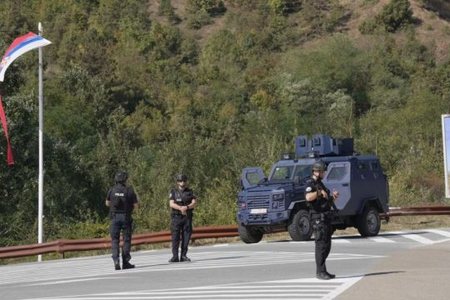
In addition to the conditions related to membership in international organizations, Weber sees the West's approach to Kosovo as unfair, even with the imposition of punitive measures against Pristina for the tensions in the north, in May 2023, while not punishing Serbia for the armed attack in Kosovo, in the village of Banjské, that same year - for which Belgrade denies involvement - or for the way the December elections were held in Serbia.
Weber is pinning his hopes on the new diplomatic composition after the elections in the European Union, since, for now, Pristina does not have much to do.
"I hope that there will be a new opportunity to push the West to change its approach to dialogue, and to admit that the current approach is not working, and that there is a need for a new strategy," says Weber.
Morina assesses that the dialogue process should be reviewed, "...to see how much this designed process can bring benefits, or if it should be completely redesigned." Here, the Government of Kosovo must have its own contribution and must be committed to show how Kosovo envisages the solution of the Association through the dialogue process".
The subject of the Association is frequently updated in Kosovo, since 2013, when the country reached an agreement with Serbia on its formation.
In 2015, the Constitutional Court of Kosovo found that the agreement is not in full harmony with the Constitution. Serbia insists that Kosovo implement the agreements reached, but the Government of Kosovo has declared several times against a mono-ethnic association./ REL



Lini një Përgjigje